ThirdEye Gen — from real-time field operations to classified environments: secure, validated, intelligent AR workflows.

ThirdEye Gen logo MR / AI Solutions

Tactical Spatial Computing & Defense Intelligence

Tactical Defense AR Headset: Global Procurement, C4ISR Integration & Future Battlefield Readiness

An authoritative technical evaluation guide for defense prime contractors, military procurement officers, and international security agencies. Explore MIL-STD ruggedized optics, air-gapped secure computing, thermal overlays, and tactical intent-mining frameworks built for mission-critical operations.

Get a Quote
US Air Force Contract Holder ITAR Aware Engineering ISO-Aligned Production 45+ Global Deployments
2016Pioneering Defense AR
45+Nations Deployed
USAFContract Awarded
AES-256Zero-Trust Security

Executive Overview: The Paradigm Shift in Tactical Augmented Reality Headsets

Modern combat theaters and high-threat security environments demand an unprecedented level of real-time situational awareness. Traditional battlefield displays—ranging from handheld tactical tablets to bulky, helmet-mounted monoculars—force operators to continuously break eye contact with their threat environment. This friction creates deadly cognitive latency during high-stress operations.

A Tactical Defense AR Headset represents a foundational technology shift: fusing live sensors, telemetry, spatial mapping, and command instructions directly into the warfighter's optical line of sight. By overlaying dynamic tactical data onto the physical world without occluding ambient vision, tactical AR bridges the gap between raw intelligence and kinetic decision-making.

As a leading supplier of extended reality systems to the US Armed Forces and international partners, ThirdEye Gen engineers spatial computing platforms that balance rugged environmental tolerance with complex edge computing capabilities. This guide establishes the strategic evaluation framework for defense procurement specialists, prime system integrators, and military technology program managers seeking to deploy tactical AR hardware and software at scale.

Strategic Procurement Portal

Need direct technical specifications or custom military hardware integration? Speak with our defense engineering specialists.

Key Information Gain Benchmarks for Defense AR Headsets

When evaluating a Tactical Defense AR Headset, standard commercial augmented reality criteria (such as consumer aesthetic design or social gaming SDKs) are entirely invalid. Defense procurement teams must evaluate hardware and software against five non-negotiable mission parameters:

  • Optical Luminance & Daylight Readability: High-efficiency micro-display engines capable of delivering over 3,000 nits of brightness, ensuring tactical HUD visibility under direct, unshaded sunlight.
  • Anti-Detection Light Signature Mitigation: Polarized optical coatings and shrouded displays designed to prevent forward-facing light bleed that could compromise an operator's position under night-vision surveillance.
  • Zero-Trust Air-Gapped Execution: Dedicated spatial computing hardware capable of executing SLAM (Simultaneous Localization and Mapping), 3D spatial anchoring, and object recognition entirely on-device without active RF, cellular, or cloud connectivity.
  • Helmet & CBRN Mask Compatibility: Modular mounting mechanisms that interface directly with standard FAST, MICH, and ACH military helmets, as well as sealed chemical, biological, radiological, and nuclear (CBRN) protective masks.
  • Low-Latency C4ISR Data Ingest: Native integration protocols for ATAK (Android Tactical Assault Kit), NATO STANAG streams, thermal optical cores, and unmanned aerial system (UAS) telemetry links with sub-20ms display latency.

Product Lineup & Architecture

Defense-Grade Hardware & Secure Software Stack

ThirdEye Gen provides a vertically integrated spatial computing hardware and software ecosystem engineered specifically for modern defense forces, first responders, and aerospace teams.

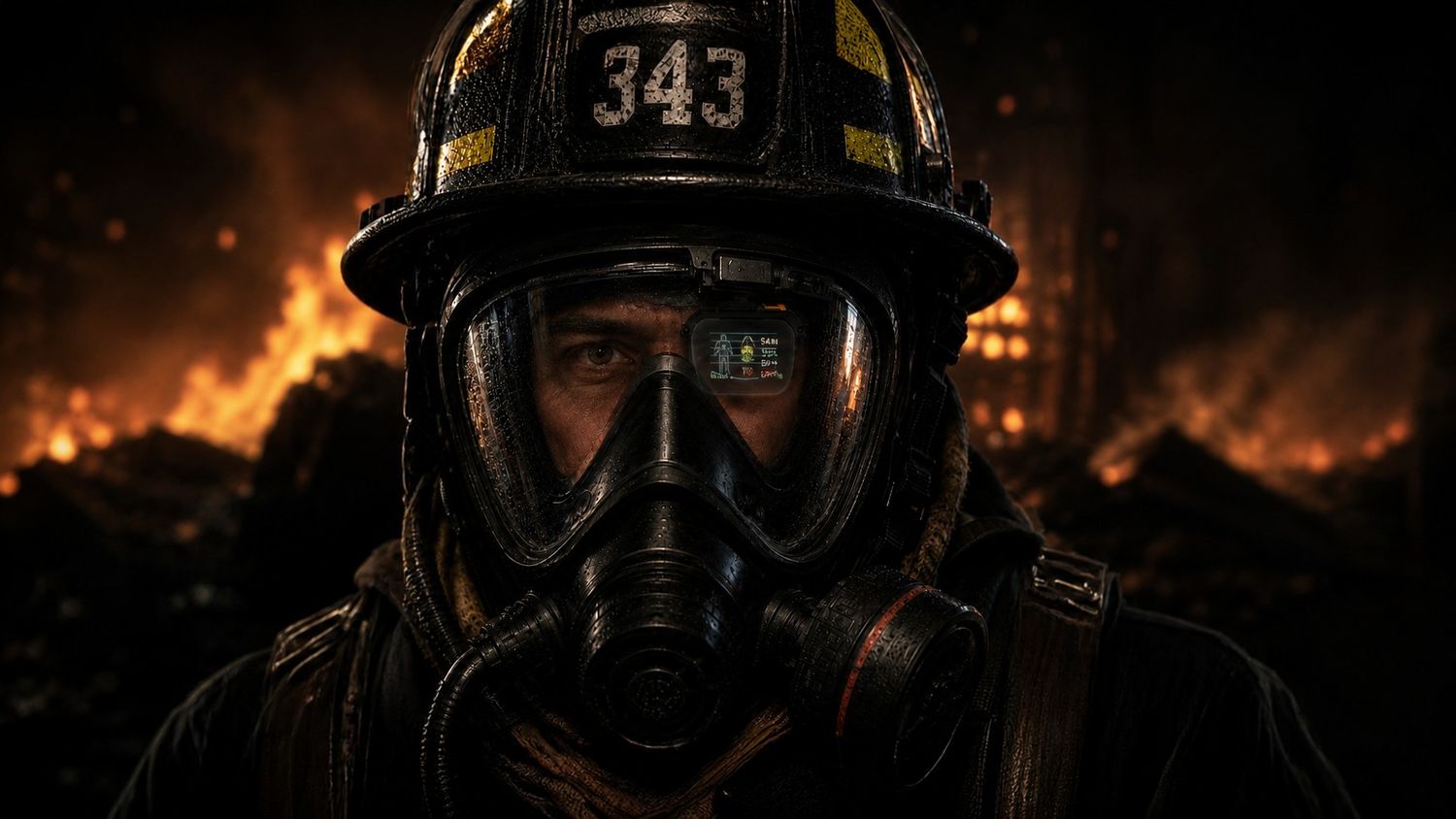
MIDAS AR Display Mask integrated into protective mask

MIDAS AR Display Mask

The Modular Integrated Display Augmentation System (MIDAS) embeds an AR optical engine inside certified protective masks. Perfect for CBRN units, hazmat teams, and zero-visibility smoke or toxic environments.

  • Monocular waveguide engine
  • Zero air-seal disruption design
  • Hot-swappable external power block
Request Defense Specs →
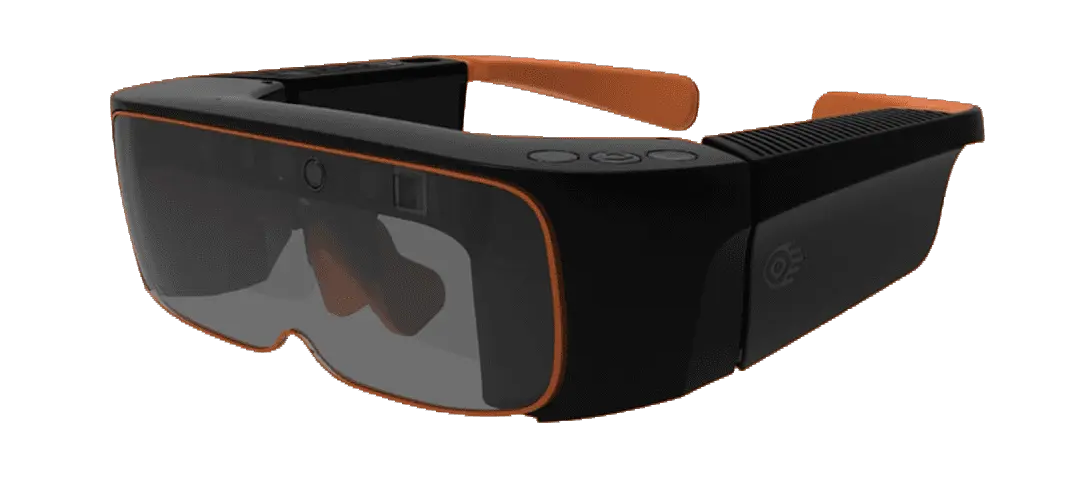
ThirdEye X2 Tactical Defense AR Headset

ThirdEye X2 MR Smart Glasses (Defense Edition)

A standalone, untethered tactical defense AR headset equipped with dual wide-angle tracking cameras, thermal sensor compatibility, and an open Android architecture built for field maintenance and tactical ops.

  • On-board spatial AI processing
  • Hands-free voice & gesture controls
  • Prescription compatibility
Request Defense Specs →
Secure Extended Reality SXR Software Platform

Secure Extended Reality (SXR) OS

The industry's leading defense-grade software suite providing end-to-end encrypted telemetry, remote expert telepresence, local digital twin overlays, and air-gapped security protocols for classified networks.

  • AES-256 encrypted video streams
  • On-device AI neural models
  • ATAK plug-in compatibility
Request Software Demo →

Tactical AR Hardware & System Integration Matrix

Evaluating defense hardware requires objective technical comparison. Below is the systems baseline standard enforced across ThirdEye Gen's tactical hardware ecosystem designed for global defense partners:

Performance Metric ThirdEye MIDAS AR Mask ThirdEye X2 Defense Edition Military Standard Requirement
Optical Architecture Monocular Waveguide Optic Binocular Optical Waveguide High-transmissivity clear visor compatibility
Max Display Brightness > 3,200 Nits adjustable > 2,500 Nits daylight readable Min 2,000 Nits for outdoor operations
Operational Temperature -20°C to +60°C (-4°F to 140°F) -15°C to +55°C (5°F to 131°F) MIL-STD-810H Temperature Shock Method 503.7
Tracking Engine Inside-Out Inertial + Thermal Tracking 6DoF SLAM + Dual Optical Tracking Zero external beacon spatial positioning
Environmental Rating IP68 Waterproof / Dustproof IP66 Ruggedized Outer Shell MIL-STD-810H Drop, Vibration & Immersion
On-Board Security SXR Air-Gapped Secure Boot Hardware Root-of-Trust + AES-256 FIPS 140-3 Encryption Compliance
Weight Distribution Mask-Balanced Ultra-Light Optic Ergonomic Low-Moment Weight Dist. Sub-300g optical payload limit
Get a Quote

Strategic Procurement Trends

Future Procurement Trends in Tactical AR Hardware (2025–2030)

Global defense budgets are shifting rapidly toward dismounted warfighter modernization and spatial command capabilities. Procurement directors and prime integrators should anticipate five critical structural trends when architecting long-term procurement programs:

  • Shift to Modular Retrofit Kits: Rather than replacing multimillion-dollar helmet or respirator inventories, defense organizations favor modular display accessories (like MIDAS) that attach directly to existing helmet rails or CBRN facepieces.
  • Sensor Fusion at the Spatial Edge: Future tactical headsets must aggregate multiple raw sensor inputs—combining thermal imaging (LWIR), low-light intensification, SWIR, and drone video—into a unified, aligned stereoscopic overlay.
  • Strict Air-Gap and Jamming Resilience: Modern electronic warfare environments disrupt GPS and satellite links. Modern tactical headsets utilize visual-inertial odometry (VIO) to maintain accurate spatial maps without satellite reliance.
  • Open Architecture vs. Vendor Lock-In: Defense forces now reject proprietary "black box" platforms, preferring Android-based operating systems with open SDKs that allow sovereign nation-states to build custom, confidential military applications.
  • Reduced Weight & Thermal Dissipation Profiles: Thermal engineering innovations are allowing higher processing power without active fans that produce audible signatures or draw high battery loads.
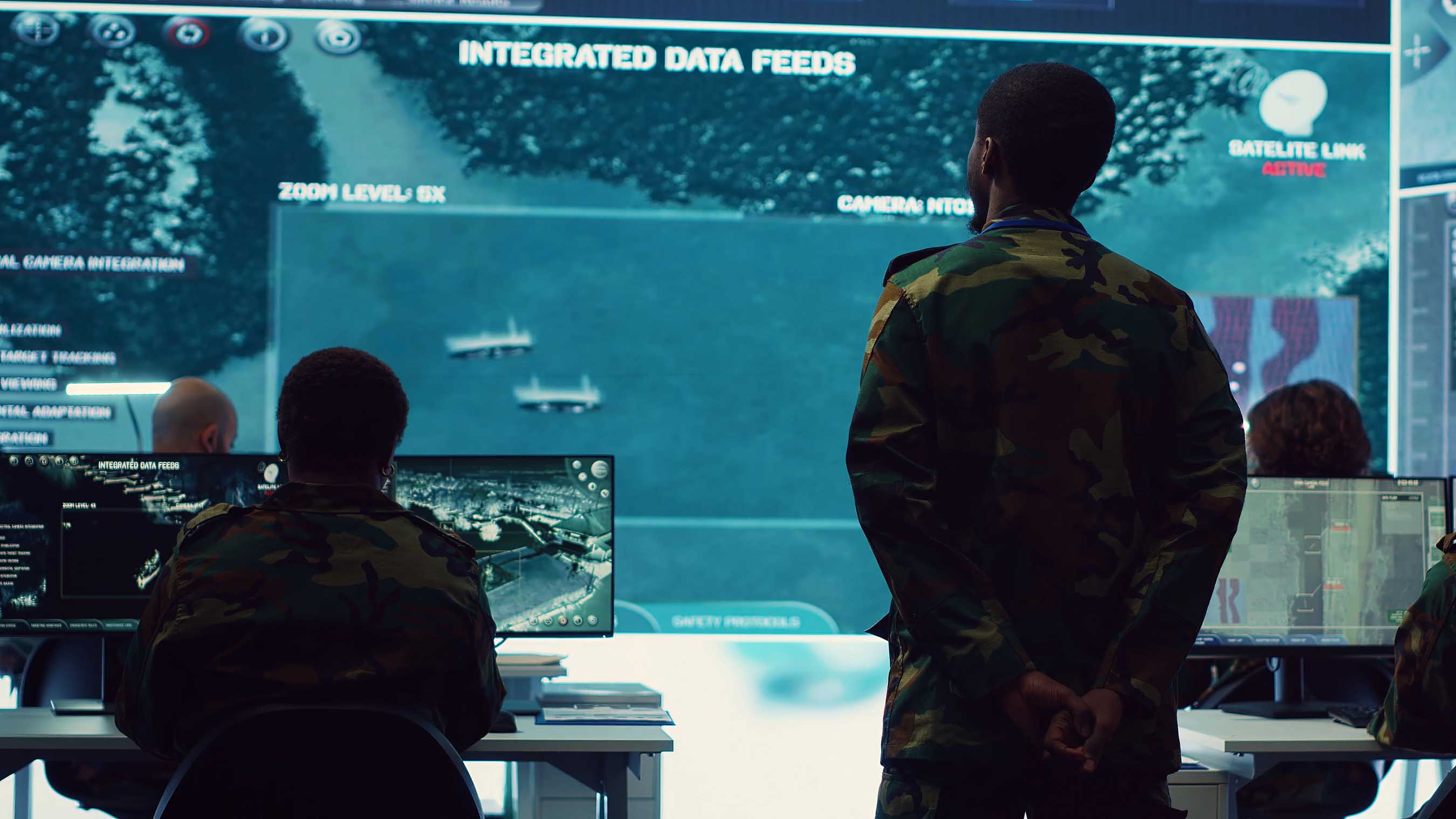
Tactical Command Center Platform Integration
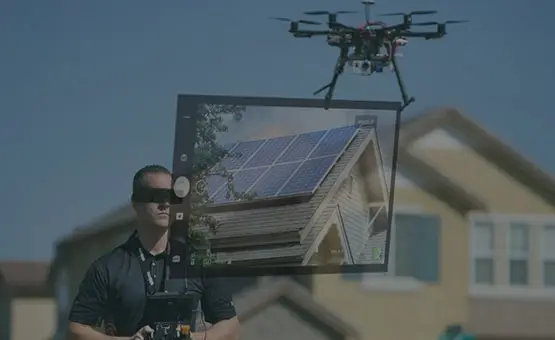
DroneEye AR Piloting Integration on Tactical AR Headset

Technology Evolution

Development & Technological Trends in Tactical AR Headsets

The spatial computing landscape is evolving at a breakneck pace. Key technical trajectories shaping next-generation tactical defense AR headsets include:

  • Micro-OLED & Waveguide Breakthroughs: Micro-OLED panels paired with diffractive surface relief waveguides are delivering 90%+ optical transparency while generating crisp, high-contrast tactical reticles and maps under glaring sunlight.
  • Edge AI Threat Analytics: Low-power neural processing units (NPUs) integrated on-device allow real-time facial recognition, vehicle classification, and weapon tracking at 60 FPS directly within the headset.
  • Unmanned Systems Telemetry Overlay (DroneEye): Operators can pilot reconnaissance drones or unmanned ground vehicles (UGVs) using a Picture-in-Picture (PiP) head-up display inside their glasses while maintaining complete visual awareness of their physical surroundings.
  • CBRN Zero-Seal Disruption: Pioneering optical mounts project digital data through mask visors without breaching gas-tight elastomer seals, preserving chemical and biological protection integrity.

Why Global Defense Integrators Partner With ThirdEye Gen

Enterprise Strengths & Proven Defense Heritage

US Air Force Contract Validation

ThirdEye Gen was awarded a high-profile US Air Force AR Headset Contract, validating our hardware durability, software security, and engineering reliability in rigorous defense environments.

ITAR & Defense Compliance

Headquartered in Princeton, NJ, our product development follows strict ITAR-aware guidelines, ISO-aligned quality systems, and secure US manufacturing standards for defense trade integrity.

Complete Ecosystem Control

Unlike hardware-only vendors, ThirdEye Gen engineers the smart glasses, the spatial OS (SXR), the AI telepresence engines (RealEye), and the Command Center platform for total system reliability.

Ready to Request Defense Tender Documentation or Technical Demos?

Our defense engineering team works directly with sovereign forces, prime contractors, and certified resellers.

Get a Quote

Defense Procurement FAQ

Tactical Defense AR Headset Questions & Intent Analysis

Direct answers to high-intent questions asked by global defense procurement officials, C4ISR systems integrators, and military logistics officers.

What defines a Tactical Defense AR Headset compared to commercial smart glasses?

A Tactical Defense AR Headset is purpose-engineered to military-grade specifications (such as MIL-STD-810H and IP67/IP68 dust/waterproofing). Unlike commercial AR glasses designed for ambient indoor lighting, tactical AR headsets feature ultra-high luminance displays (exceeding 3,000 nits) for daylight readability, zero-glow optical coatings to prevent light signature detection under night-vision surveillance, seamless integration with tactical helmets and CBRN protective masks, and on-board zero-trust encrypted compute capable of functioning in GPS-denied or air-gapped combat networks.

How does a Tactical Defense AR Headset integrate with existing C4ISR systems and tactical radios?

ThirdEye Gen tactical headsets utilize open Android-based architecture with robust SDKs and standardized API bridges. This allows direct data ingest from ATAK (Android Tactical Assault Kit), C4ISR network nodes, tactical Software Defined Radios (SDR), thermal optics, and unmanned aerial system (UAS) telemetry directly into the operator's line of sight without requiring secondary handheld monitors.

Can ThirdEye Gen tactical AR solutions operate in completely offline or GPS-denied environments?

Yes. Built upon our Secure Extended Reality (SXR) software platform, ThirdEye tactical AR headsets run localized spatial computing algorithms, SLAM tracking, and edge AI processing entirely on-device. The headsets operate seamlessly in air-gapped, RF-silent, or GPS-jammed operational theaters without reliance on external cloud servers or active wireless connections.

What export control and compliance frameworks apply to ThirdEye Gen defense products?

ThirdEye Gen operates under strict US defense trade compliance frameworks. Products are engineered in the USA under ISO-aligned quality management systems. Exports to international allied defense procurement partners are managed via ITAR awareness protocols and standard U.S. Department of State and Commerce export licensing procedures.

How do tactical AR headsets preserve warfighter situational awareness and mitigate cognitive overload?

Through adaptive AI threat prioritization, conformal 3D waypoint spatial anchoring, and decluttering algorithms. The visual interface dynamically filters data based on mission phase, presenting critical azimuths, squad telemetry, or thermal target overlays only when required, keeping the operator's central field of vision clear for immediate physical threats.

What are the battery life runtime parameters during active field operations?

ThirdEye tactical headsets feature optimized power management engines providing 2 to 4 hours of continuous compute and optical rendering on internal battery modules. For long-duration missions, the system supports hot-swappable external battery packs mounted on tactical vests or helmet counterweights, extending active operation indefinitely without requiring device reboots.

How does the MIDAS system attach to protective respirators without causing air leaks?

MIDAS (Modular Integrated Display Augmentation System) utilizes a specialized external rail and optical coupling mount that clamps around the outer housing of standard CBRN masks. The monocular display optics project high-resolution data through the transparent facepiece from the outside, eliminating any internal mechanical breach or face seal degradation.

What is the lead time and procedure for international defense evaluation units?

Authorized defense agencies, government contractors, and security prime contractors can request evaluation units directly through our defense procurement team. Depending on export licensing requirements and custom software configurations, standard evaluation packages typically ship within 2 to 4 weeks upon approval.

Get a Quote
Tactical Spatial Computing Defense Deployment

Engage Defense Engineering

Deploy Tactical AR Technology to Your Operational Units

Evaluate MIDAS, X2 Defense Edition, and SXR against your mission requirements, security protocols, and field integration standards. Contact our team to initiate technical evaluations, RFIs, or direct procurement quotes.