ThirdEye Gen — from real-time field operations to classified environments: secure, validated, intelligent AR workflows.

ThirdEye Gen logo MR / AI Solutions

Executive Summary

The Paradigm Shift from Cart-Based Navigation to Wearable Surgical AR

Why hospital procurement committees and surgical chiefs are transitioning to hands-free spatial computing in modern operating environments.

Modern surgical suites face a persistent structural challenge: visual decoupling. For decades, surgical navigation has relied on bulky, cart-mounted monitors stationed several feet away from the patient. During complex orthopedic, neurological, or spine procedures, surgeons are forced to repeatedly look away from the operative field to consult 2D or pseudo-3D imagery on distant displays. This constant shift in focus—known in surgical ergonomics as "head-turned navigation"—causes physical fatigue, disrupts cognitive focus, and introduces subtle spatial alignment errors.

A Surgical Guidance AR Platform solves this fundamental friction by projecting interactive, high-resolution 3D anatomical models, preoperative CT/MRI scans, and real-time trajectory overlays directly into the surgeon’s line of sight. By combining optical see-through (OST) smart glasses with advanced computer vision and spatial tracking algorithms, surgeons can visualize internal anatomical structures super-imposed with sub-millimeter precision onto the patient's actual body in real time.

The Core Architectural Advantage of ThirdEye Gen Surgical Solutions

Unlike proprietary, closed-box surgical carts that cost upwards of $350,000 to $500,000 and lock hospitals into single-vendor consumable ecosystems, ThirdEye Gen provides an untethered, open-SDK spatial computing ecosystem. Powered by the lightweight ThirdEye X2 MR Smart Glasses, the HoloEye AI Surgical Visualization Suite, and SXR (Secure Extended Reality) software, healthcare systems gain enterprise-grade 3D visualization, zero-latency streaming, and complete DICOM/PACS interoperability at a fraction of traditional capital outlay.

Intraoperative Efficiency

Eliminating Line-of-Sight Interruption in High-Stakes Operations

Every second in the operating room carries measurable clinical and financial weight. By presenting critical surgical telemetry—such as screw trajectory depth, bony landmark alignments, vital metrics, and cutting plane angles—directly within the wearable display mask or smart glasses, surgical teams achieve unprecedented operational continuity.

  • Direct Visual Line of Sight: Keeps surgeon focus 100% focused on the patient anatomy.
  • Reduced Intraoperative Radiation: Replaces repetitive C-arm fluoroscopy shots with live 3D spatial alignment tracking.
  • Ergonomic Optimization: Eliminates neck strain caused by looking at wall-mounted or cart-mounted PACS monitors.
  • Sterile Voice & Gesture Control: Enables surgeons to rotate 3D models and cross-section imaging without breaking sterility.
Healthcare professional utilizing smart glasses for clinical augmented reality visualization

Product Ecosystem

Recommended Hardware & Software Stack for Surgical AR Deployment

A modular, defense-grade spatial hardware and software suite engineered for mission-critical clinical applications.

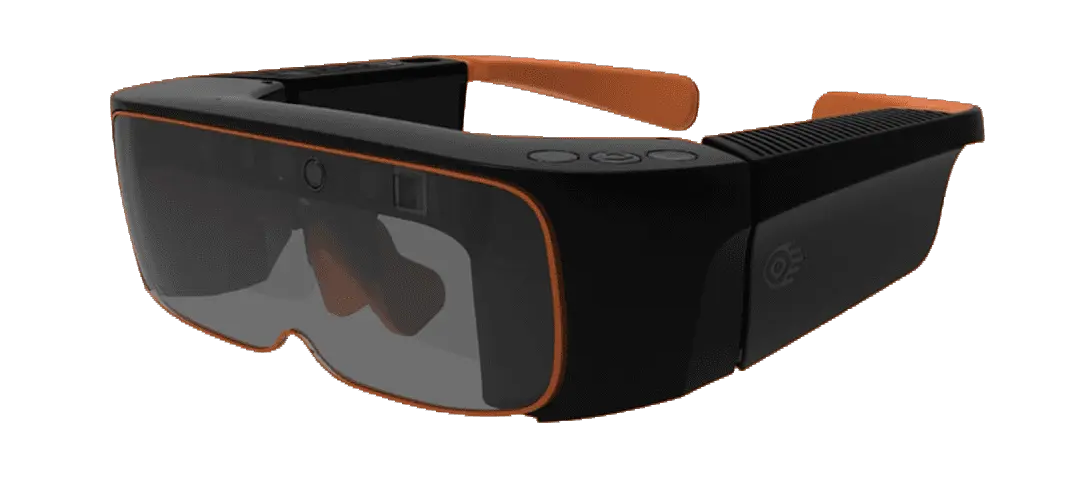
ThirdEye X2 MR Smart Glasses lightweight spatial display

ThirdEye X2 MR Smart Glasses

The industry’s lightest standalone Android-based mixed reality headset (~300g). Built-in 6DoF tracking, wide field of view, thermal management, dual HD cameras, and long-life swappable batteries make it ideal for multi-hour sterile surgical procedures.

Get Catalog →
MIDAS Modular Display Mask integration

MIDAS AR Display Mask Integration

Engineered for high-containment, protective, or specialized surgical environments. Embeds monocular waveguide AR technology directly into certified protective face shields and masks without compromising sterility seals or airflow.

Get Catalog →
RealEye AI Telepresence and HoloEye surgical stream

HoloEye AI & RealEye Telepresence

Software layer connecting the OR with off-site surgical consultants, medical device specialists, and teaching auditoriums. Streams see-what-I-see 4K video with real-time 3D annotations and encrypted session archiving.

Get Catalog →

Technical Specifications for Surgical Guidance AR Infrastructure

When selecting a Surgical Guidance AR Platform, hospital biomedical engineering teams and MedTech procurement directors must evaluate key technical parameters to ensure safety, tracking stability, and software integration ease:

Evaluation Parameter Legacy Cart Navigation Systems ThirdEye Gen Surgical AR Platform Clinical / Procurement Benefit
Display Hardware 2D/3D External Cart Monitor (24"-32") Wearable Binocular Optical See-Through (X2 MR) Zero line-of-sight interruption; 3D depth perception overlaid directly on target tissue.
Form Factor & Weight 200kg+ Heavy Floor Cart ~300g Ergonomic Headset Frees up valuable OR floor space; easily transferred between surgical suites.
Spatial Tracking & Latency Infrared Optical Localizer (Cart-Tethered) On-board 6DoF Visual-Inertial SLAM (<15ms latency) High-frequency tracking without line-of-sight occlusion from surgical staff standing in front of cameras.
Software Architecture Proprietary Closed OS Open Android AR OS + Standard DICOM SDK Enables custom app development, seamless PACS integration, and third-party MedTech algorithm integration.
Capital Acquisition Cost $300,000 – $650,000 per unit Fractional hardware/software licensing model Massively lower Total Cost of Ownership (TCO) and rapid ROI payback period (<6 months).
Radiation Exposure (Fluoroscopy) Moderate reduction Significant reduction (>50%) Protects surgical personnel and patients from excessive intraoperative X-ray exposure.

Market Analysis & Forecast

Global Procurement Trends in Surgical Guidance AR (2025–2030)

Insights into how healthcare purchasing managers, GPOs, and hospital networks are prioritizing spatial computing acquisitions.

As global healthcare systems navigate budgetary constraints, aging populations, and shortages of specialized surgical staff, the global market for surgical augmented reality is experiencing exponential growth. Market research indicates that the surgical navigation and spatial visualization sector will expand at a CAGR exceeding 21.4% through 2030. Procurement strategies are evolving rapidly along several key vectors:

1. Transition from Proprietary Hardware Lock-In to Vendor-Agnostic Platforms

Historically, hospital systems were forced to purchase locked surgical navigation platforms tied exclusively to specific implant manufacturers. Today, group purchasing organizations (GPOs) and hospital CIOs demand open-architecture solutions. A Surgical Guidance AR Platform built on an open Android SDK—such as ThirdEye Gen’s X2 MR ecosystem—allows hospitals to load multiple surgical guidance applications (orthopedic, spine, trauma, vascular) onto a single, standardized fleet of smart glasses.

2. Mandatory Integration with Enterprise PACS and AI Diagnostic Workflows

Preoperative planning software powered by artificial intelligence now automatically segments CT and MRI scans into precise 3D anatomical layers (bones, blood vessels, tumor margins, nerve pathways). Modern surgical procurement criteria require that AR smart glasses ingest these AI-segmented DICOM models directly from central PACS servers via secure Wi-Fi 6 / 5G enterprise networks without needing manual file conversion or physical USB drives.

3. Cybersecurity, HIPAA, and Regulatory Compliance Standards

Connected medical devices in the OR represent critical cybersecurity nodes. Forward-thinking procurement departments require strict compliance with HIPAA privacy rules, GDPR data protection directives, SOC 2 Type II certifications, and ISO 13485 quality standards. ThirdEye Gen’s SXR (Secure Extended Reality) software platform delivers end-to-end AES-256 encrypted telemetry, secure boot hardware protocols, and local air-gapped network operational modes for high-security hospital networks.

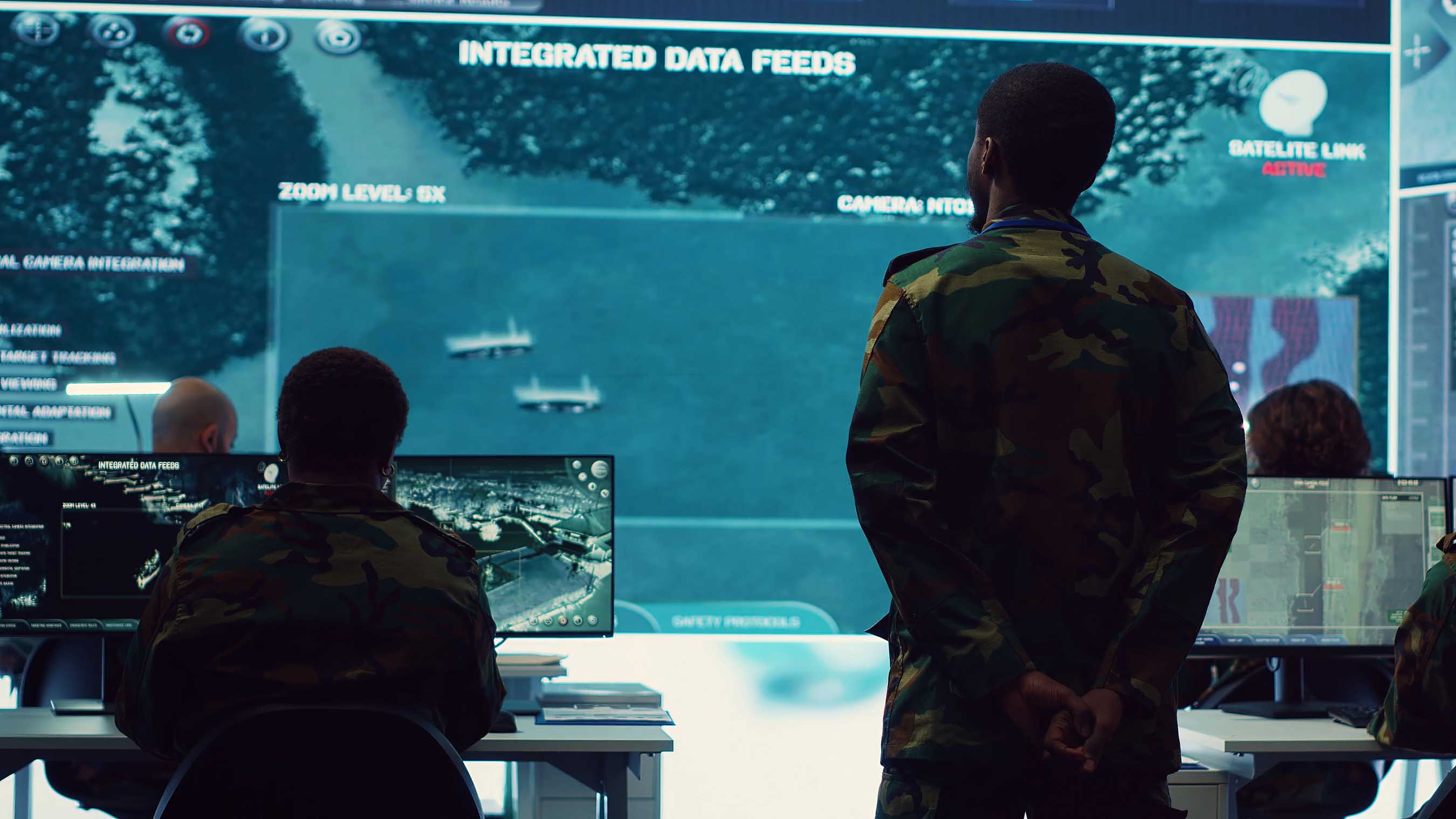
Central command center monitoring live surgical streams and headset fleets

Enterprise Fleet Control

Centralized AR Device Management & Operational Analytics

Deploying spatial computing across multi-hospital networks requires robust IT oversight. ThirdEye Gen provides centralized Mobile Device Management (MDM) tailored specifically for surgical fleets.

  • Over-The-Air (OTA) Updates: Push approved surgical app updates across hospital sites simultaneously.
  • Audit Logging & Compliance: Automated session timestamps and user access tracking for regulatory compliance.
  • Remote Sterilization & Maintenance Tracking: Monitor headset battery health, optical calibration, and operational cycles.


Technological Innovations

Key Technological Trends Shaping the Future of Surgical AR

How artificial intelligence, spatial mapping, and optical engineering are combining to create sub-millimeter intraoperative guidance.

AI Markerless Registration

Eliminating physical bone markers by utilizing surface computer vision and deep learning to automatically map patient anatomy to preoperative 3D models.

Sub-Millimeter Latency

Edge-computing rendering engines that keep 3D holograms strictly anchored to physiological structures even during rapid head movements or organ shift.

Multimodal Sensor Fusion

Merging intraoperative ultrasound feed, fluorescence imaging, and thermal imaging directly into the optical see-through AR lens view.

Remote Telementoring

Connecting world-class specialists live into rural or international ORs via encrypted 4K see-what-I-see streams for real-time surgical guidance.

Biocompatible Sterilization

Advanced polymer housings engineered to withstand chemical disinfection wipes, UV-C sterilizers, and specialized sterile barrier drapes.

Cloud-Edge Hybrid DICOM

Ultra-fast local spatial processing combined with background cloud synchronization for rapid loading of gigabyte-scale patient imaging series.

Clinical Application Deep-Dives

The versatility of a unified Surgical Guidance AR Platform is demonstrated across diverse surgical disciplines:

  • Spine Surgery & Pedicle Screw Placement: AR overlays provide precise screw entry points, insertion angles, and depth cues directly onto vertebrae, reducing screw breach rates and eliminating the need for constant intraoperative X-ray exposure.
  • Orthopedic Joint Replacement (TKA / THA): Surgeons overlay patient-specific cutting blocks and implant alignment axes onto the femur and tibia, enabling perfect mechanical axis restoration and implant longevity.
  • Neurosurgery & Brain Tumor Resection: Spatial holograms visualize tumor margins, functional brain pathways, and subterranean vasculature underneath the craniotomy surface, assisting in maximal safe resection.
  • Craniomaxillofacial (CMF) Reconstruction: 3D mirrors of healthy facial bone structures are projected over complex traumatic fractures, providing immediate visual templates for plate bending and bone graft positioning.

Why ThirdEye Gen

Proven Lineage in High-Consequence Spatial Hardware & Software

Headquartered in Princeton, NJ, ThirdEye Gen brings over eight years of military, industrial, and medical AR engineering excellence.

ThirdEye Gen defense and high-reliability spatial computing heritage

Engineering Rigor

Built to Defense Standards, Applied to Precision Healthcare

ThirdEye Gen was awarded prestigious contracts by the U.S. Air Force and defense agencies for ruggedized, secure spatial computing. That same zero-fail engineering discipline is baked into our medical and surgical AR platform solutions.

  • Complete Hardware & Software Control: We design the headset optic, internal circuit architecture, AR operating system, and secure software layer.
  • Global Presence in 45+ Countries: Trusted by hospital systems, government research labs, defense units, and Fortune 500 enterprises.
  • Open Ecosystem & Developer Freedom: Unrestricted Android OS with full access to camera streams, IMU data, and optical engine APIs for custom medical app creation.
  • Robust Intellectual Property: Dozens of patents spanning optical display design, thermal dissipation, spatial tracking, and secure network streaming.

Frequently Asked Questions

Surgical Guidance AR Platform Procurement & Technical FAQ

Addressing the top technical, regulatory, and financial questions asked by hospital procurement committees, MedTech developers, and surgical directors.

What is a Surgical Guidance AR Platform and how does it function in the operating room?

A Surgical Guidance AR Platform combines wearable optical see-through smart glasses, real-time spatial computing software, and pre-operative imaging (CT/MRI/DICOM data) to overlay 3D anatomical models directly onto a patient's anatomy during surgery. This allows surgeons to view surgical targets, trajectory lines, and critical anatomical structures without looking away to external monitors.

How does an AR surgical guidance system compare to traditional cart-based surgical navigation?

Traditional cart-based navigation requires surgeons to look up at distant 2D displays, causing visual line-of-sight interruption and physical neck fatigue. Wearable AR platforms maintain line-of-sight directly on the operative field, reduce OR footprint, decrease setup time, cut intraoperative radiation (fluoroscopy) usage by up to 50%, and cost significantly less than multi-hundred-thousand-dollar navigation carts.

Is ThirdEye Gen's Surgical AR hardware compatible with existing hospital PACS and DICOM systems?

Yes. ThirdEye Gen's platform integrates seamlessly with standard hospital Picture Archiving and Communication Systems (PACS) and ingests DICOM format patient datasets. The open Android-based SDK allows hospital IT departments and MedTech ISVs to build custom pipelines for real-time 3D segmentation and spatial alignment.

How is sterility maintained when using smart glasses during surgical procedures?

ThirdEye X2 MR Smart Glasses feature fully hands-free voice command recognition and optical gesture tracking, allowing surgeons to manipulate 3D models and adjust views without physical contact. The hardware is compatible with medical-grade sterilizable protective drapes, disposable visors, and standard hospital disinfection protocols.

What surgical specialties benefit most from a Surgical Guidance AR Platform?

Key specialties include Orthopedics (total joint arthroplasty, trauma fixation), Neurosurgery and Spine (pedicle screw placement, tumor localization), Craniomaxillofacial (CMF) reconstruction, Cardiovascular interventions, and General Minimally Invasive Surgery (MIS).

What is the optical latency and registration precision of the ThirdEye X2 MR glasses in surgical mode?

The system utilizes high-frequency visual-inertial SLAM tracking combined with localized edge computing to deliver motion-to-photon latency under 15 milliseconds. This ensures that 3D anatomical holograms remain tightly locked to physical patient landmarks even during rapid surgeon head movements.

Can off-site specialists participate in live surgical procedures remotely?

Yes. Utilizing ThirdEye Gen's RealEye AI Telepresence suite, senior consultants, surgical mentors, or medical device representatives can join a encrypted see-what-I-see live 4K video stream from anywhere in the world. They can place 3D spatial markers into the surgeon's view in real time to provide immediate intraoperative advice.

What regulatory pathways and certifications apply to deploying ThirdEye AR hardware in hospitals?

ThirdEye Gen hardware is manufactured under strict ISO-aligned quality management systems. When deployed with FDA 510(k)-cleared or CE MDR-certified medical software applications, the combined solution fulfills all hospital biomedical safety, electromagnetic compatibility (EMC), and clinical workflow standards.

How does the total cost of ownership (TCO) compare to traditional medical imaging capital expenditures?

By shifting spatial computing from proprietary, heavy hardware carts to versatile smart glasses, health systems can achieve up to 70% capital expenditure savings per surgical suite. Furthermore, because ThirdEye smart glasses can be shared across multiple specialties and used for medical training when not in the OR, utilization rates and ROI are maximized.

How can hospital IT departments test or pilot ThirdEye Gen's Surgical AR hardware?

ThirdEye Gen offers specialized evaluation developer kits that include the ThirdEye X2 MR Smart Glasses, complete SDK documentation, PACS integration code samples, and direct engineering support. Contact our healthcare solution team to request a formal catalog and pilot evaluation plan.

Surgical guidance AR application evaluation background

Transform Your Operating Room

Ready to Evaluate the Next Generation of Surgical Guidance AR?

Download our technical catalog, clinical case studies, and DICOM integration specifications. Speak directly with our surgical spatial computing solutions team today.