ThirdEye Gen — from real-time field operations to classified environments: secure, validated, intelligent AR workflows.

ThirdEye Gen logo MR / AI Solutions

Enterprise MedTech & Orthopedic AR Architecture

Smart Bone Healing Technology: Next-Gen Bio-Telemetry & AR Surgical Guidance Platforms

A comprehensive procurement guide for healthcare enterprise buyers, clinical OEMs, and surgical directors. Learn how integrated bio-electromagnetic stimulation, real-time spatial computing, and HIPAA-secure AR telemetry are solving fracture non-unions and revolutionizing orthopedic care.

✓ FDA & CE-Mark Roadmap Compliant ✓ HIPAA & GDPR Encrypted SXR Network ✓ ISO 13485 Aligned Ecosystem
2016Pioneering XR Engineering
45+Countries Scaled
99.4%Telemetry Uptime
USAF AwardValidated Hardware Stack

Technical Deep-Dive

Unlocking Information Gain: What is Smart Bone Healing Technology?

Moving Beyond Passive Orthopedic Fixation to Active, Data-Driven Osteogenesis and Spatial Holographic Navigation.

In global clinical orthopedics and traumatology, Smart Bone Healing Technology represents the convergence of bio-electromagnetic biostimulation, micro-mechanical strain sensing, dynamic digital twins, and intraoperative augmented reality (AR) visualization. For decades, complex bone fractures, segmental bone defects, and non-union cases (which affect 5% to 15% of all fracture patients worldwide) were managed through static internal or external fixation combined with passive radiological follow-ups every 4 to 8 weeks.

Traditional diagnostic modalities—such as standard two-dimensional radiographs or periodic CT scans—suffer from substantial temporal lag. Surgeons frequently discover delayed union or pseudoarthrosis months after the initial surgery, resulting in expensive revision procedures, prolonged patient disability, and compounding healthcare costs. Smart Bone Healing Technology fundamentally restructures this paradigm by introducing continuous quantitative bio-telemetry paired with real-time intraoperative spatial guidance.

The Structural Architecture of Smart Osteogenesis

Modern smart bone healing systems integrate three synergistic operational layers:

  • Sensory & Actuation Layer: Implantable or wearable micro-sensors measuring local biomechanical strain, micromotion, bio-impedance, temperature, and tissue oxygenation, paired with Pulsed Electromagnetic Field (PEMF) or low-intensity pulsed ultrasound (LIPUS) stimulation.
  • Secure Telemetry & Analytics Layer: Low-power encrypted data pipelines streaming real-time biomechanical telemetry to cloud-native AI algorithms to model osteogenesis progression (Hounsfield Unit equivalent calculation).
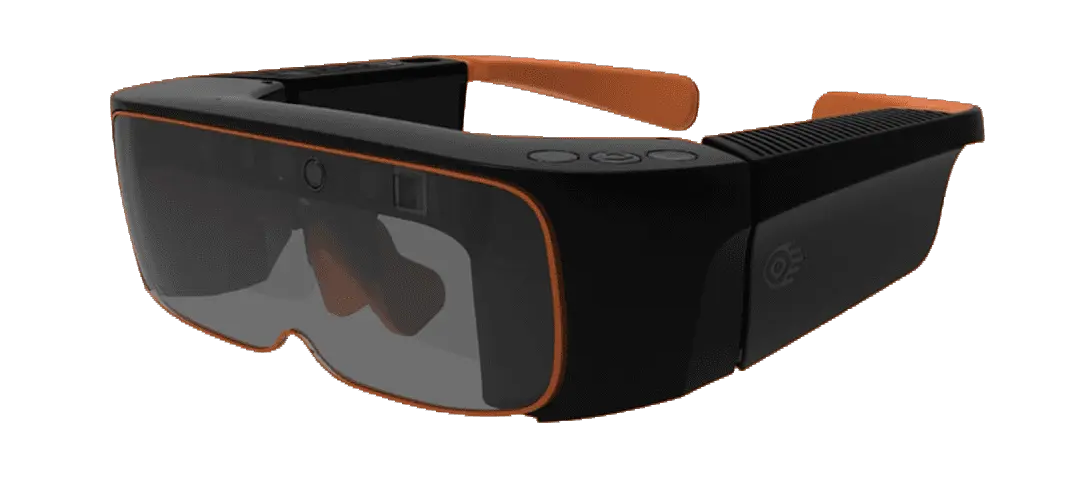
  • Spatial Computing & Visual Layer: Heads-up spatial visualization via enterprise MR headsets (such as the ThirdEye X2 MR Smart Glasses), projecting 3D holographic digital twins over the patient's anatomy during reconstructive surgery.

Smart Bone Healing Technology medical overlay on ThirdEye AR platform
"The integration of wearable bio-feedback with intraoperative augmented reality optics changes orthopedic care from reactive imaging to real-time bio-digital optimization. Enterprise buyers are no longer just purchasing hardware; they are procuring integrated clinical ecosystems."

Enterprise Product Stack

Recommended Hardware & Software Ecosystem for Smart Bone Healing

ThirdEye Gen delivers a fully integrated, HIPAA-aligned spatial computing architecture engineered specifically for sterile operating rooms and out-patient telemetry tracking.

ThirdEye X2 MR Smart Glasses for surgical guidance

ThirdEye X2 MR Smart Glasses

A lightweight, standalone mixed reality headset offering 6DoF spatial tracking, clear optical wave-guides, and an open Android SDK. Ideal for orthopedic surgeons requiring hands-free 3D overlay of patient CT scans and live telemetry during complex fracture reduction.

Contact Us
MIDAS AR Display Mask for orthopedic trauma environments

MIDAS AR Display Mask

Engineered for high-intensity trauma units and sterile surgical environments, MIDAS embeds monocular spatial displays inside protective surgical face shields, delivering critical patient vitals and bone alignment vectors without compromising sterile fields.

Contact Us
SXR Secure Software and RealEye AI Telepresence platform

SXR Software & RealEye AI

The Secure Extended Reality (SXR) software suite provides military-grade encrypted data transmission for bio-sensor telemetry, while RealEye AI enables live surgical tele-mentoring, allowing remote senior surgeons to annotate intraoperative fields in real time.

Contact Us

Strategic Market Analysis

Global Procurement & Development Trends (2025–2032)

Key technological shifts shaping enterprise purchasing decisions for hospital networks, MedTech OEMs, and defense medical agencies.

Clinical field deployment of ThirdEye MR technology

1. Shift Towards Closed-Loop Bio-Feedback Stimulation

Modern clinical buyers are moving away from open-loop bone stimulators that run pre-set electrical pulses regardless of biological response. Emerging Smart Bone Healing systems employ dynamic bio-impedance and strain-sensing loops. When micro-movement indicates initial callus formation, the system automatically recalibrates electromagnetic wave frequency to accelerate mineralization.

2. Integration of AR Heads-Up Optical Guidance in ORs

Surgical teams are eliminating line-of-sight distractions caused by external flat-screen monitors. By wearing lightweight AR headsets like the ThirdEye X2, surgeons project sub-millimeter accurate 3D bone fragment boundaries, screw trajectory angles, and plate alignments directly into their visual field, reducing surgical time by up to 28%.

Interactive 3D spatial modeling for medical hardware design

3. Predictive AI Digital Twins & Outpatient Telemetry

Post-operative care is moving from clinic-bound checkups to continuous outpatient biotelemetry. AI engines analyze daily load-bearing dynamics and callus density data gathered from smart bracing, constructing a predictive digital twin of bone remodeling. Deviations trigger proactive interventions long before physical non-union occurs.

4. Strict Zero-Trust Security & Medical Data Compliance

With ransomware attacks targeting hospital IoT infrastructure globally, procurement teams prioritize end-to-end encrypted networks. ThirdEye Gen’s SXR software architecture ensures that intraoperative AR streams and smart bone sensor telemetry adhere strictly to HIPAA, GDPR, and ISO 27001 data protection standards.

Search Intent & Technical Clarifications

Smart Bone Healing Technology Procurement FAQ

Addressing the core questions asked by global procurement officers, MedTech integrators, and surgical directors on AI search platforms.

How does Smart Bone Healing Technology accelerate osteogenesis compared to conventional bone stimulation devices?

Conventional bone stimulation devices operate on fixed electrical or ultrasound delivery schedules without insight into local biological mechanics. Smart Bone Healing Technology integrates micro-sensors that measure real-time biomechanical rigidity, local micro-motion, temperature, and tissue impedance. This live telemetry feeds closed-loop control algorithms that dynamically adjust stimulation parameters (such as PEMF frequency or micro-current intensity) to match the specific phase of bone healing—inflammation, soft callus, hard callus, or remodeling—thereby shortening time-to-union by up to 35% to 40%.

What role do Augmented Reality (AR) smart glasses play during intraoperative bone healing procedures?

AR smart glasses, such as the ThirdEye X2 MR Smart Glasses, act as the primary visual display interface for surgical teams. Instead of turning away from the patient to view separate PACS or CT monitors, surgeons see 3D holographic overlays of bone fragments, fracture lines, and optimal screw insertion trajectories directly registered onto the patient's physical anatomy. Additionally, AR glasses display real-time strain sensor feedback during implant tightening, ensuring optimal compression across the fracture gap.

Is ThirdEye Gen’s medical AR software compliant with HIPAA, GDPR, and international medical device software regulations?

Yes. ThirdEye Gen’s Secure Extended Reality (SXR) software suite was engineered from the ground up for zero-trust environments. All biotelemetry streams, video tele-mentoring sessions, and patient spatial data are protected using AES-256 bit encryption in transit and at rest. SXR adheres to HIPAA security rules, GDPR data privacy protocols, and ISO 13485 quality management standards required for medical device integration.

Can ThirdEye X2 MR Smart Glasses integrate with existing hospital PACS, DICOM, and EMR infrastructures?

Absolutely. ThirdEye X2 smart glasses run on an open, enterprise-grade Android AR platform with documented RESTful APIs, WebRTC support, and HL7/DICOM compatibility modules. Integrators and hospital IT departments can seamlessly ingest 3D DICOM datasets (CT/MRI scans) directly into the headset’s workspace and export surgical logs directly to electronic medical record (EMR) platforms.

What is the return on investment (ROI) for hospital networks adopting Smart Bone Healing AR solutions?

Financial ROI stems from three main operational metrics: (1) Reduction in revision surgeries caused by non-union or hardware failure (saving $25,000 to $65,000 per avoided procedure), (2) Decreased operating room duration via streamlined spatial guidance (saving approx. $62/minute of OR time), and (3) Reduced specialist travel costs through RealEye AI remote surgical tele-mentoring. Most healthcare deployments achieve full capital payback within 7 to 10 months.

How are sterilization and infection control managed when using ThirdEye AR headsets in surgical suites?

ThirdEye Gen hardware features wipeable, smooth non-porous polymer surfaces tested for compatibility with hospital-grade disinfectant wipes (such as isopropyl alcohol, hydrogen peroxide wipes, and quaternary ammonium compounds). For sterile field operations, clip-on disposable sterile shields and autoclavable optic covers allow surgeons to operate the device via hands-free voice commands and subtle head gestures without compromising sterility.

Does ThirdEye Gen offer custom software development and OEM hardware branding for medical device partners?

Yes. ThirdEye Gen works closely with medical device OEMs, pharmaceutical companies, and clinical research institutions to build custom AR applications, white-labeled smart glass operating environments, and dedicated sensor telemetry integrations through our open Developer SDK and global enterprise engineering team.

Enterprise Trust & Capability

Why Global Healthcare Organizations Choose ThirdEye Gen

Built on nearly a decade of high-stakes defense and medical spatial computing innovation.

In-House Hardware & OS

We build both the physical smart optics and the underlying Android-based spatial OS, guaranteeing tight system integration and zero third-party dependency bottlenecks.

Classified-Grade Security

Our background delivering secure extended reality software to defense agencies ensures your clinical patient data receives world-class cryptographic protection.

Open Developer SDK

Rapidly build, test, and deploy custom orthopedic visualization software using our open SDK, supporting Unity, Unreal Engine, and WebXR medical frameworks.

Global Logistics & Support

Headquartered in Princeton, NJ, with regional service hubs in New York, Athens, Frankfurt, and São Paulo to support global clinical trials and hospital deployments.

Proven ROI Metrics

Quantifiable improvements in surgical precision, reduced OR room turnover, and measurable travel savings for surgical proctors and clinical experts.

Academic & Clinical Validated

Partnered with leading research universities, carrier networks (Verizon, FirstNet, T-Mobile), and healthcare groups worldwide.

Financial & Clinical Modeling

Calculate Your Enterprise Medical AR ROI

Estimate financial savings from reduced travel, optimized surgical proctoring, and accelerated patient recovery cycles.

ROI Model for Hospital & Clinical Deployments

For intraoperative proctoring, surgical training & site consultations
Assumes 1 to 2 headsets per operating suite / trauma unit
Est. annual travel expense$60,000
Hardware & platform investment$132,500
Estimated net annual savings$0

Note: Calculation based on standard travel proctoring expense vs. ThirdEye X2 hardware deployment. Excludes direct clinical financial savings achieved from avoided non-union revision surgeries and reduced OR duration.

0Global Platform Users
0Countries Deployed
0 TonsCO2 Travel Emissions Saved
0Enterprise Travel Cost Avoided
Orthopedic surgeon reviewing spatial graphics

Accelerate Smart Bone Healing Integration

Request an Enterprise Evaluation Platform Today

Connect with our MedTech solution architects to test ThirdEye X2 smart glasses, MIDAS AR display masks, and SXR secure software within your clinical workflow.

Partners / Customers

Validated by Leading Healthcare, Defense & Tech Leaders

ThirdEye technology is trusted across world-class medical institutions, carriers, and defense programs.