
Enterprise Hardware & Smart Optics for Indonesia Export
Explore our specialized inventory of smart glasses, impact-resistant carbon fiber helmets, anti-glare visors, and extended reality (XR) hardware engineered for heavy industrial, military, and field operations.
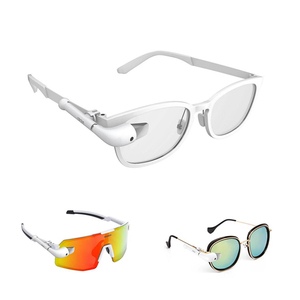
Ultralight Smart AR Glasses W/ 0.32inch Micro OLED Display 624x405 Resolution 1200 Nits 20° FOV Real Time Translation Navigation
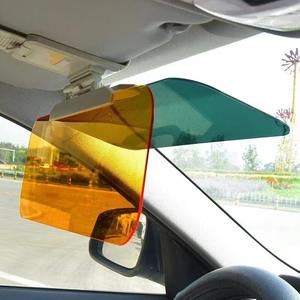
Day & Night Anti-Glare Car Sunshade UV Ray Driver Safety Night Vision Goggles for Safe Driving Car Sun Visor Extender Anti Glare

Factory Direct, Impact-Resistant Carbon Fiber Full Face Helmet - Visor, 3C&DOT
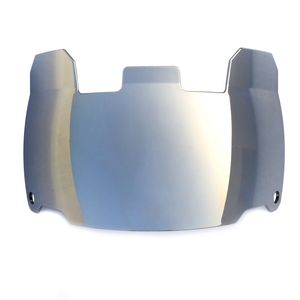
New Patent Universal Anti-fog Football Helmet Visor clear Eye Shield Visor
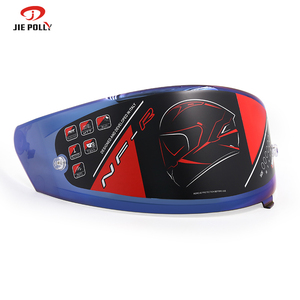
Brand Outdoor Sport Mx Helmet Goggles Motorcycle Sunglasses Visor Magnetic Lens Anti-Fog Motocross Riding Retro Helmet Visor
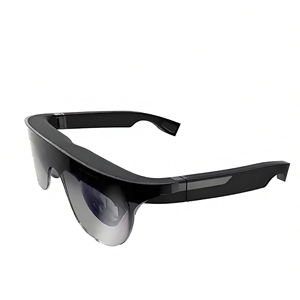
Specialised material for transparent nylon temple arms in AR glasses
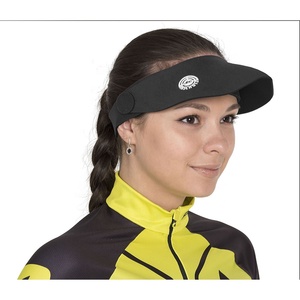
Two-part Visor Consisting of a Head-band and Detachable Visor Neoprene Sun Cap Shooting Visor
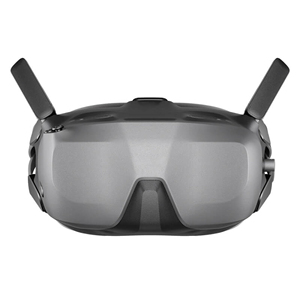
Premium Goggles N3 Wide Vision FPV Glasses 1080p Screen O4 Air Unit Pro Compatible AR Cursor Interaction Immersive Flight Gear
Smart Helmet Market Dynamics & Import Ecosystem in Indonesia
An operational, regulatory, and technological analysis for Indonesian safety officers, mining consortiums, defense contractors, and industrial importers.
The archipelago of Indonesia represents one of South East Asia’s most rapidly expanding industrial landscapes. Driven by major state initiatives—such as the construction of the new capital city Nusantara (IKN) in East Kalimantan, extensive nickel processing and coal mining operations across Sulawesi and Sumatra, and massive transport modernization—the demand for advanced Personal Protective Equipment (PPE) has evolved. Today, standard head protection is no longer sufficient for enterprise compliance and risk mitigation. Industry leaders are pivoting toward Smart Helmets integrated with Augmented Reality (AR) Heads-Up Displays (HUD), thermal imaging micro-sensors, IoT telemetry, and real-time remote telepresence capabilities.
As a global OEM exporter and premier developer of extended reality hardware and protective smart gear, our organization bridges the critical gap between certified mechanical head protection and tactical digital intelligence. This document details the technical standards, local environmental adaptations, operational workflows, and supply chain logistics involved in exporting industrial-grade smart helmets and AR optical visors directly to Indonesian business entities and government procurement networks.
1. Localization Trends & Regulatory Directives in Indonesia
Deploying smart wearable equipment in Indonesia requires a deep understanding of local environmental stressors, regulatory frameworks, and operational customs. Indonesian enterprises operating in primary industries must align their safety hardware procurement with rigorous standards:
SNI & International Certification Alignment
Industrial PPE entering Indonesia must conform to National Standards (SNI 1811-2007 for helmets, alongside International ISO 9001 and CE/DOT guidelines). Our carbon fiber shells and optical visors undergo rigorous ballistic, impact-energy absorption, and penetration resistance tests to comply fully with Ministry of Industry standards.
Tropical Optical & Heat Resilience
Indonesia's humid tropical climate (average relative humidity exceeding 85% with ambient temperatures hitting 35°C+) causes rapid fogging and thermal throttling in standard electronic visors. Our units incorporate nano-vacuum anti-fog optical coatings and active convection thermal dispersion channels.
TKDN & Import Compliance Strategy
For Indonesian state-owned enterprises (BUMN) and major public infrastructure works, meeting Domestic Component Level (TKDN) parameters is critical. We provide flexible OEM assembly kits, localized software SDK integration, and regional maintenance partnerships in Jakarta and Surabaya.
2. Key Application Scenarios Across Indonesian Industries
Smart helmets and AR heads-up display systems deliver quantifiable return on investment (ROI) by replacing traditional pen-and-paper safety checks and eliminating unnecessary specialist travel across the Indonesian archipelago. Below are the core deployment scenarios currently transforming field operations:
A. Open-Pit & Underground Mining (Kalimantan & Sulawesi)
In the vast nickel mines of Morowali and the coal basins of Kutai Kartanegara, site engineers and heavy equipment operators face high-risk environments involving explosive gas leaks, structural cave-in risks, and equipment breakdowns. Smart helmets integrated with Micro OLED 1200 Nits HUD visors display live spatial telemetry directly in the technician's field of view. Methane (CH4) and carbon monoxide (CO) sensor readings are relayed continuously to the helmet display. If gas thresholds exceed safe limits, optical visual warnings alert the worker instantly, shaving critical seconds off emergency evacuation times.
B. Megaproject Infrastructure & Smart City BIM Navigation (Nusantara IKN)
Building Indonesia's new capital from the ground up requires absolute precision. Site managers equipped with standalone AR helmets overlay 3D Building Information Modeling (BIM) CAD data directly onto real-world construction sites. Civil engineers inspect structural steel placement, underground utility piping, and concrete casting alignment without holding tablets or physical blueprints. Hands remain entirely free to inspect materials, handle climbing rigs, or signal crane operators.
C. Maritime Port Logistics & Offshore Drilling (Tanjung Priok & Java Sea)
Port container inspectors and offshore platform technicians work under severe glare from equatorial sunlight reflecting off maritime water. Standard visors compromise visibility. Utilizing our Day & Night Anti-Glare Visors alongside high-brightness AR displays (up to 1200 Nits), port workers scan container barcodes, inspect seals, and verify customs manifest data in real time under direct sunlight, accelerating container turnaround times by up to 34%.
D. Defense, Security & Tactical Response (TNI & POLRI Units)
Tactical personnel operating in zero-visibility or dense jungle environments utilize modular mask-mounted AR display systems (such as the MIDAS platform architecture). The HUD feeds real-time drone reconnaissance, GPS waypoint overlays, and thermal signature streams into a sealed helmet visor. Communication is maintained through air-gapped, encrypted SXR (Secure Extended Reality) software protocols, keeping military data completely isolated from public radio frequencies.
3. Technical Comparison: Legacy PPE vs. Smart AR Helmet Systems
To assist procurement directors, technical auditors, and safety officers in building business cases for equipment upgrades, the following matrix contrasts traditional safety gear against our Smart Helmet technology:
| Performance Metric | Standard Industrial Helmet | Smart AR Carbon Fiber Helmet System | Operational Impact for Indonesian Buyers |
|---|---|---|---|
| Head Protection Shell | ABS / Standard Polycarbonate | Multi-Layered Impact-Resistant Carbon Fiber (3C & DOT) | 40% lighter weight, 3x higher impact energy dissipation in tropical heat. |
| Optical Display Capability | Static clear visual shield | 0.32" Micro OLED Display (624x405, 1200 Nits, 20° FOV) | Hands-free visual SOPs, real-time gas/temperature data readout. |
| Environmental Optics | Prone to fogging in high humidity | Vacuum Anti-Fog Magnetic Lenses & UV Anti-Glare Extenders | Uninterrupted optical clarity in 85%+ Indonesian atmospheric humidity. |
| Connectivity & Remote SOP | None (Requires walkie-talkie) | RealEye AI Telepresence, Wi-Fi 6, Bluetooth, 4G/5G Module | Instant see-what-I-see connection between field techs and off-site experts. |
| Data Security Architecture | N/A | SXR (Secure Extended Reality) Encrypted OS Layer | ITAR-aware, enterprise-grade encrypted channels for defense and BUMN tasks. |
4. Strategic Enterprise Strengths & International Manufacturing Rigor
Choosing a foreign supplier for industrial smart helmets involves evaluating long-term engineering viability, software support, component availability, and international trade compliance. Our organization stands as a globally recognized leader in spatial computing and protective hardware:
Validated Engineering Heritage (Since 2016)
We do not rebrand generic off-the-shelf components. Our internal R&D teams hold multiple patents across monocular optical waveguides, specialized transparent nylon temple arm compositions, and thermal management suspensions. Our hardware has been honored with major procurement contracts, including official U.S. Air Force AR Headset Contract Awards.
End-to-End Integrated Ecosystem
We engineer the complete spatial computing stack. From the physical carbon fiber shell and anti-fog magnetic visors to the underlying Android-based AR OS, Mobile Device Management (MDM) fleet portal, and Command Center Platform, buyers receive a unified, fully accountable solution without multi-vendor integration friction.
Air-Gapped & Disconnected Network Ready
Mining operations in remote Papua or deep-sea energy rigs in the Natuna Sea frequently lack stable internet connectivity. Our SXR software suite supports fully local, on-device AI processing and spatial mapping without relying on public cloud connectivity, keeping operational logs securely stored on site.
Robust Export & Logistics Chain for Indonesia
We maintain streamlined export logistics pathways directly servicing Indonesian entry ports, including Tanjung Priok (Jakarta), Tanjung Perak (Surabaya), and Sultan Aji Muhammad Sulaiman (Balikpapan). All shipments carry full customs documentation, harmonized tariff codes (HS Codes), and material safety datasheets (MSDS) for lithium-ion battery transport.
5. Frequently Asked Questions (FAQ) for Indonesian Importers & Buyers
Equip Your Indonesian Field Workforce Today
Contact our enterprise smart helmet export team to request technical datasheets, request OEM volume pricing, or schedule a live video demonstration of our AR software platforms.