
Advanced Hardware & Optical Wearables for Modern Aerospace MRO
Engineered for high-rigor hangar inspections, avionics troubleshooting, and defense tactical aviation in tropical environments.

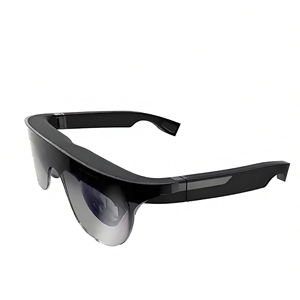
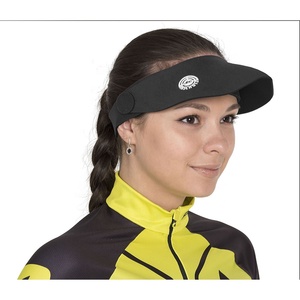
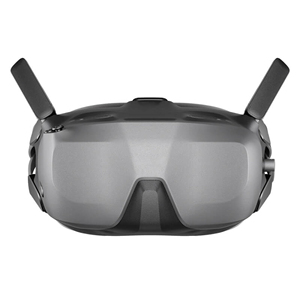
Transforming Sri Lanka's Aviation MRO Ecosystem via Spatial Computing & Augmented Reality
As the Indian Ocean emerges as one of the world's most vital maritime and aerial transit corridors, Sri Lanka occupies an exceptionally strategic position. Bandaranaike International Airport (CMB) at Katunayake, Mattala Rajapaksa International Airport (HRI), and Ratmalana Airport (RML) are rapidly evolving into primary hubs for commercial aircraft Maintenance, Repair, and Overhaul (MRO), regional military aviation support, and VIP fleet servicing. However, maintaining modern commercial airliners (such as Airbus A320/A330 and Boeing 737/787 fleets) alongside tactical military airframes under Sri Lanka's unique high-humidity, high-salinity tropical climate introduces severe operational friction.
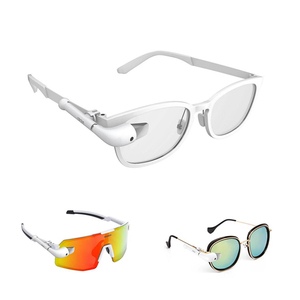
To capture growing regional market share from South Asia and Southeast Asia, Sri Lankan aviation maintenance organizations and government facilities must bypass incremental modernizations and directly adopt hands-free spatial computing, augmented reality (AR) visual overlays, and secure telemetry platforms. By equipping licensed aircraft maintenance engineers (LAMEs) and technical specialists with lightweight AR smart glasses, high-luminescence Micro-OLED displays (up to 1200 nits), and air-gapped encryption software, factory operators can achieve zero-error compliance, dramatically reduce aircraft-on-ground (AOG) turnaround times, and mitigate local talent shortages through real-time remote expert collaboration.
Localized Aerospace Maintenance Scenarios across Sri Lanka
Tailored deployment profiles designed to address environmental challenges, regulatory frameworks, and infrastructure demands across key Sri Lankan facilities.
CMB Katunayake Commercial Line Maintenance
At Sri Lanka's primary international hub, tight transit turnaround windows demand rapid turn-checks. Technicians wearing micro-OLED smart visors receive live visual overlays of engine component wear, torque specifications, and flight deck fault codes directly in their field of view. Hands remain completely free to perform physical inspections, eliminating pencil-whip errors and reducing turn time by up to 35%.
Sri Lanka Air Force (SLAF) Depot Overhauls
Depot-level maintenance at SLAF bases (Katunayake and Ratmalana) requires zero-trust, ITAR-compliant operational security. Utilizing ThirdEye's Secure Extended Reality (SXR) platform, defense technicians execute step-by-step structural inspection manuals for transport and helicopter fleets on completely air-gapped local networks, preserving absolute data sovereignty while preventing classified protocol leaks.
High-Humidity & Saline Environment NDT
Sri Lanka's coastal airfields expose airframes to high relative humidity (>80%) and aggressive atmospheric salt content, causing accelerated galvanic corrosion and composite delamination. AR smart visors integrated with non-destructive testing (NDT) thermal sensors project subsurface moisture pockets and micro-fractures in real-time onto the aircraft skin, allowing instant defect tagging.
Remote OEM Telepresence & Expert Sign-off
When complex turbine or avionics anomalies occur, flying OEM certified inspectors from Europe or the Americas to Colombo creates multi-day delays and exorbitant travel costs. Using RealEye AI Telepresence, local Sri Lankan engineers stream interactive 1080p 'see-what-I-see' video feeds directly to overseas OEM specialists, who draw 3D spatial annotations over the live engine component to guide repairs instantly.
Apprentice Training & Rapid Skill Upscaling
As qualified Sri Lankan aviation engineers are frequently recruited by Middle Eastern carriers, local training academies face continuous onboarding demands. AR-guided digital SOPs (Standard Operating Procedures) allow junior trainees to practice assembly, wiring harness routing, and hydraulic line purging in 3D physical spatial simulations without placing operational aircraft at risk.
Strategic Aerospace Trends Shaping Sri Lanka’s Industry (2025–2030)
Sri Lanka's national strategic vision emphasizes transforming the island into a key Indian Ocean maritime and aviation logistics node. Several macro-trends are accelerating the adoption of spatial computing and augmented reality manufacturing technology within the domestic sector:
- Regional MRO Capacity Expansion: With major carriers in South Asia expanding their order books by hundreds of narrowbody and widebody aircraft, regional MRO facilities in Singapore and Dubai face severe capacity bottlenecks. Sri Lanka is positioning itself as a cost-effective, high-quality alternative for heavy maintenance (C and D checks), demanding state-of-the-art digital quality control systems.
- CAASL Modernization Directives: The Civil Aviation Authority of Sri Lanka (CAASL) is progressively aligning digital maintenance recordkeeping and inspector verification protocols with EASA (European Union Aviation Safety Agency) and FAA standards. AR wearable capture automatically logs audio, video, and biometric sign-offs for every fast-turn procedure, generating immutable digital audit trails.
- Leapfrogging Legacy Infrastructure: Rather than spending millions of dollars installing heavy fixed displays, physical paper manual archives, and tethered inspection stations inside aging hangars, Sri Lankan factory operators are opting for standalone, wearable AR computing nodes that operate over Wi-Fi 6E and 5G private networks.
- Integration of AI-Driven Predictive Diagnostics: Modern turbine engines generate gigabytes of telemetry per flight hour. Combining AR smart glasses with on-device AI allows Sri Lankan technicians to view predictive failure probability metrics right on the hangar line before physical failure occurs.
Technical Deep-Dive: Overcoming Environmental & Optical Challenges
Operating optical equipment inside Sri Lankan aviation facilities presents unique physics challenges. Standard consumer-grade AR visors suffer from visual wash-out due to intense equatorial sunlight pouring through open hangar doors, as well as rapid internal fogging caused by extreme thermal jumps between air-conditioned avionics bays and humid outdoor tarmac.
Our industrial-grade smart optics address these specific physics barriers through:
- 1200 Nits Micro-OLED Luminance: Delivers high-contrast visual clarity even under direct 100,000-lux sunlight at Katunayake runway tarmacs, eliminating eye strain and text wash-out.
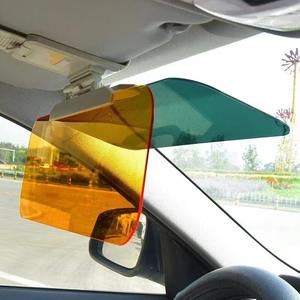
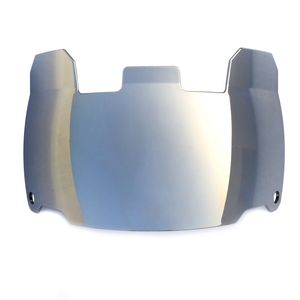
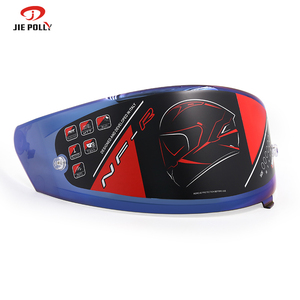
- Hydrophobic Anti-Fog Optical Coatings: Special polymer temple arms and custom optical visors feature dual-pane anti-fog treatments that maintain crystal-clear transparency during high-humidity operations.
- Impact-Resistant Carbon Fiber Frames: Rated to international safety standards (including DOT & 3C requirements), protecting technicians against dropped tools, debris impact, and hazardous material splashes during hydraulic fluid flushings.
Why Enterprise Buyers Trust ThirdEye Gen Engineering
From contracts with the United States Air Force to Tier-1 defense and commercial aerospace facilities worldwide, we design complete end-to-end hardware, software, and optics ecosystems.
US Air Force Contract Validation
Our spatial hardware and MIDAS AR display mask technology have been awarded contracts by the US Air Force and AFWERX, proving operational reliability under extreme combat and zero-visibility conditions.
SXR Air-Gapped Encryption
Secure Extended Reality (SXR) software provides military-grade encryption, secure boot protocols, and local server deployment capabilities, enabling defense facilities to maintain 100% data privacy.
Open SDK & Enterprise Integration
Built on an open Android architecture, our hardware integrates seamlessly with existing ERP, EAM, and MRO software suites (such as SAP, IBM Maximo, and AMOS), ensuring rapid enterprise rollout.
Frequently Asked Questions for Sri Lankan Aerospace Procurement
Essential answers regarding compliance, regional logistics, custom integration, and technical specifications for Sri Lankan procurement officers.
How do Sri Lankan aviation MRO providers import ThirdEye hardware and AR accessories?
We work directly with authorized regional distributors, defense logistics procurement agencies, and commercial air freight channels servicing Colombo Bandaranaike International Airport (CMB). Products are dispatched with complete HS code documentation, certificates of conformity, and customs documentation tailored for Sri Lanka customs compliance within the Katunayake Export Processing Zone (KEPZ) or bonded airport facilities.
Are these AR smart visors compliant with Civil Aviation Authority of Sri Lanka (CAASL) regulations?
Yes. Our hardware operates as an auxiliary visual aid and digital documentation tool that aligns with international EASA Part-145 and FAA AC 120-78A standards for electronic flight bags and digital maintenance documentation. The hands-free recording and real-time remote verification features actively support CAASL compliance during heavy maintenance checks.
Can ThirdEye smart optics withstand Sri Lanka’s tropical climate and ambient hangar temperatures?
Absolute endurance in tropical climates is a primary design benchmark. Our hardware is engineered with industrial thermal management, operating reliably in temperatures ranging from 0°C to 45°C with up to 95% non-condensing relative humidity. Sealed optical displays prevent moisture ingress and internal corrosion caused by saline coastal air near Colombo and Mattala.
How does the RealEye AI Telepresence platform handle bandwidth fluctuations in remote airfields?
RealEye AI utilizes adaptive bitrate streaming tailored for low-latency bandwidth environments. It dynamically scales video streams between 720p and 1080p based on network stability, allowing smooth see-what-I-see collaboration even when connected via 4G cellular links or standard airport Wi-Fi networks in regional Sri Lankan airfields like Palaly (Jaffna) or Trincomalee.
Is technical support, developer documentation, and warranty available locally in South Asia?
Yes. We provide comprehensive online developer portals, open SDK access, 24/7 technical helpdesk response, and dedicated regional RMA/support logistics. Local engineering teams in Sri Lanka receive full onboarding assistance, custom app development guidance, and access to replacement components through fast-track shipping channels.
Can we integrate custom MRO workflows and digital checklists into the AR smart glasses?
Yes. ThirdEye smart glasses run an Android-based AR operating system with documented APIs and software development kits (SDKs). Software teams or system integrators in Sri Lanka can easily port custom Android applications, connect existing EAM databases (SAP, IBM Maximo), or deploy step-by-step interactive 3D work instructions directly onto the headset.
Equip Your Sri Lankan Maintenance Fleet with Next-Gen AR
Download our full aerospace equipment catalog, request technical specifications, or schedule a live spatial computing demonstration with our enterprise solution engineers.