Strategic Evaluation
The Operational Imperative for Industrial Field Service AR
Why modern industrial enterprises are transitioning from handheld mobile tablets to integrated, hands-free wearable Augmented Reality architectures.
Across power utilities, discrete manufacturing plants, aerospace MRO (Maintenance, Repair, and Overhaul) hangars, and remote oil & gas assets, frontline technicians face unprecedented complexity. Industrial machinery incorporates intricate mechatronics, dense sensor arrays, and proprietary control software. Concurrently, senior engineering expertise is undergoing a massive generational retirement wave, creating a critical domain-knowledge gap in field operations.
For procurement directors and field operation executives, traditional field support mechanisms—such as thousand-page paper manuals, static PDF tablets, or costly expert flights to remote job sites—are no longer financially or operationally viable. Handheld tablets force technicians to constantly pause their work, put down specialized tools, and wipe dirty gloves to interact with touchscreens. This friction reduces First-Time Fix Rates (FTFR), increases Mean Time to Repair (MTTR), and heightens safety risks in hazardous industrial environments.
Information Gain Index: The Real Cost of Downtime
In heavy process industries, unscheduled equipment downtime averages between $22,000 and $260,000 per hour. Implementing an end-to-end Industrial Field Service AR platform eliminates the latency of physical expert travel, providing real-time spatial digital twin overlays, hands-free SOP guidance, and secure sub-second remote telepresence over low-bandwidth cellular or satellite links.
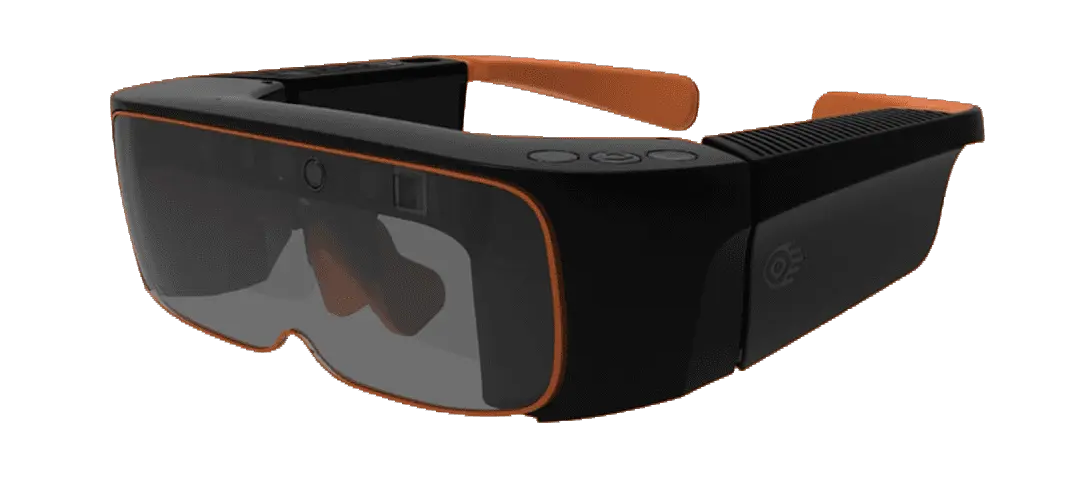
This comprehensive guide details the technical architectures, hardware selection criteria, security protocols, and procurement trends defining the deployment of Industrial Field Service AR systems worldwide. Built upon ThirdEye Gen's decade-long heritage in standalone spatial hardware and enterprise software engineering, this document provides the strategic clarity required to evaluate enterprise-grade AR deployments.