Executive Overview: Resolving the Global Surgical & Clinical Skill Deficit
The global healthcare ecosystem is experiencing an unprecedented convergence of operational pressure: a widening shortage of specialized surgical faculty, rapidly accelerating complexity in medical device technology, and strict regulatory boundaries surrounding hands-on patient training. Traditional medical education models—relying heavily on physical cadaver labs, static mannequin simulators, and in-person proctorships—are constrained by high capital expenditure, geographical friction, and limited scalability.
Immersive Remote Medical Training represents a structural leap forward. By combining lightweight, high-performance Augmented Reality (AR) and Mixed Reality (MR) smart glasses with AI-driven tele-simulation platforms, healthcare organizations can now project expert clinical instruction, interactive 3D anatomical holograms, and real-time spatial guidance to any clinical setting worldwide.
As enterprise procurement teams, teaching hospital directors, and government health agencies evaluate spatial computing platforms, selecting an end-to-end hardware and software ecosystem is critical. This guide provides an in-depth analysis of high-gain product architectures, procurement trends, regulatory compliance frameworks, and deployment roadmaps engineered specifically for enterprise buyers.
Core Hardware & Software Recommendations for Immersive Medical Training
Deploying a resilient remote training network requires integrated technology that operates flawlessly within sterilizable, low-latency, and privacy-governed environments. ThirdEye Gen provides an end-to-end hardware, operating system, and software stack designed specifically to eliminate point-product fragmentation.
Hardware Platform ThirdEye X2 MR Smart Glasses (Clinical & Field Edition)
The ThirdEye X2 MR Smart Glasses serve as the primary hands-free interface for surgical trainees, emergency medical personnel, and clinical staff. Weighing under 300 grams, the X2 delivers untethered spatial computing with built-in SLAM (Simultaneous Localization and Mapping) sensors, enabling precise placement of digital anatomical models directly over real-world surgical sites or mannequin trainers.
- Standalone Android OS: Open SDK architecture allows seamless integration of custom medical software and DICOM viewers.
- Hands-Free Controls: Responsive voice recognition and gesture tracking allow clinicians to navigate procedural steps without breaking sterile technique.
- Sensors & Optics: Dual 13MP HD cameras, thermal sensor integration capability, and wide FOV see-through optical waveguides.
- Ergonomic & Sterilizable: Fits comfortably over prescription eyewear and supports medical-grade wipe-down protocols.
Tele-Simulation Software RealEye AI Telepresence & Spatial Annotation Engine
Hardware without specialized software creates integration bottlenecks. ThirdEye’s RealEye AI Telepresence bridges geographic divides by enabling a remote attending physician or chief surgeon to view a live, high-definition "see-what-I-see" video stream directly from the trainee's X2 smart glasses.
- Real-Time 3D Spatial Drawing: Mentors anchor 3D digital pointers, incision lines, and annotations directly onto the trainee’s physical field of view.
- Low-Bandwidth Adaptive Streaming: Optimized WebRTC engine ensures smooth video feeds even across rural 4G LTE or mobile clinic networks.
- Session Archiving & AI Analytics: Automatically records training procedures for post-operative debriefs, compliance auditing, and AI performance scoring.
Secure Extended Reality (SXR) Architecture
Designed for air-gapped hospital networks, defense medical logistics, and strict privacy environments. SXR guarantees AES-256 encrypted communication and localized server execution to meet HIPAA and GDPR mandates.
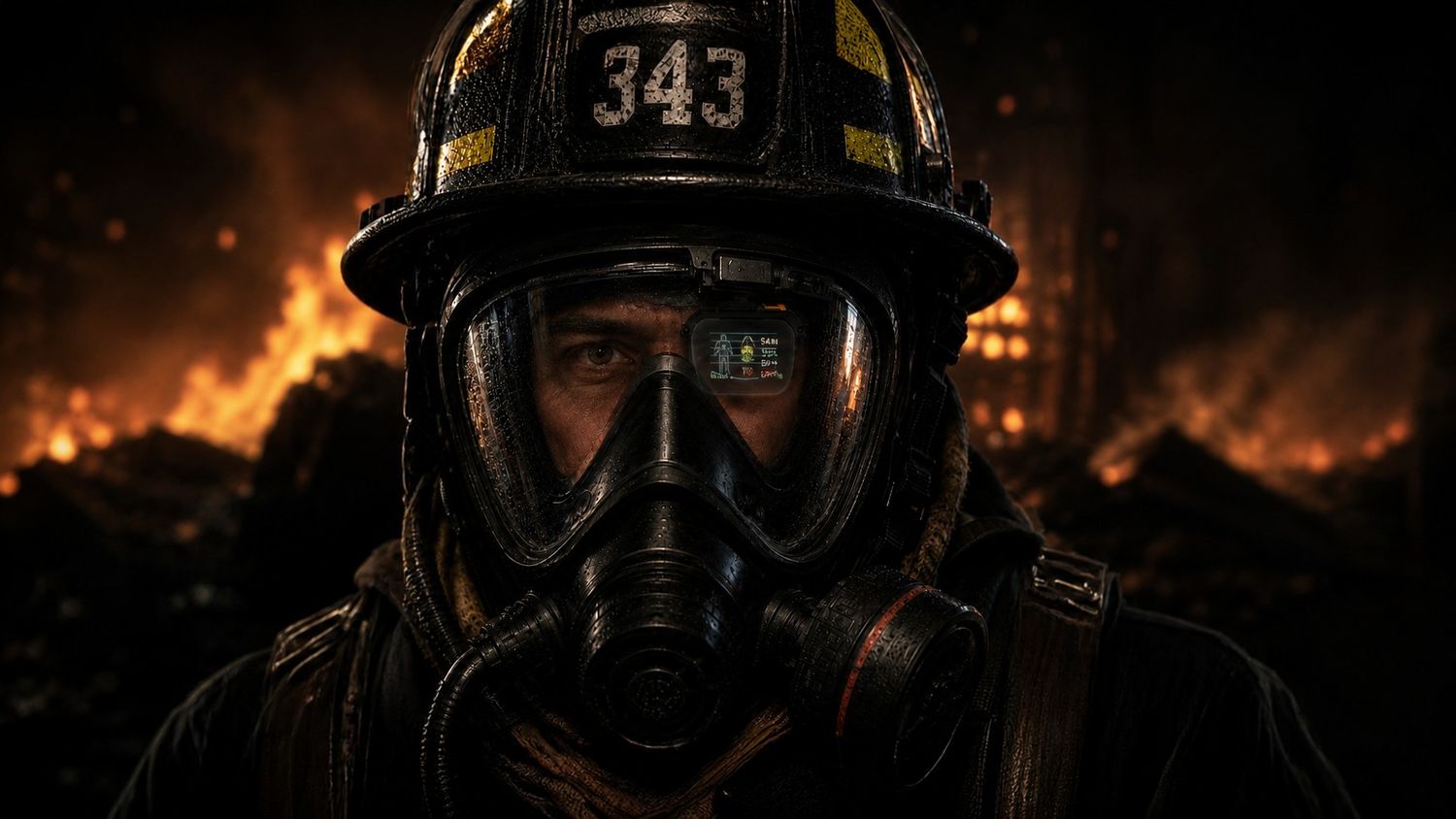
MIDAS Display Mask for Tactical Medicine
For CBRN, defense, and hazardous emergency response training. Embeds monocular AR heads-up displays directly inside protective gear, maintaining environmental seal while streaming vital signs and mission overlays.
Information Gain: Strategic Hardware & Software Bundling
Procuring isolated VR headsets or third-party teleconferencing software often results in custom integration fees, security vulnerabilities, and vendor finger-pointing. ThirdEye Gen manufactures the hardware layer, engineers the Android-based spatial OS, and develops the telepresence suite—providing enterprise buyers single-source accountability and guaranteed operational uptime.
Global Procurement Trends in Remote Medical Training (2025–2030)
As healthcare systems shift from pilot programs to global enterprise rollouts, procurement strategies are evolving rapidly. Procurement directors must account for five structural trends shaping spatial medical education over the next decade:
1. Transition from VR Isolation to Collaborative AR/MR Spatial Computing
While Virtual Reality (VR) immerses trainees in fully synthetic digital environments, it isolates clinicians from their physical surroundings, surgical instruments, and patient team members. Mixed Reality (MR), delivered through optical see-through smart glasses like the ThirdEye X2, allows trainees to interact with physical instruments, medical mannequins, or real patient models while overlaying digital CT scans and step-by-step guidance. Enterprise buyers are reallocating capital budgets from VR isolate pods to scalable MR smart glasses.
2. AI-Driven Trainee Assessment & Skill Telemetry
Modern procurement RFPs increasingly demand automated evaluation metrics over subjective instructor reviews. Advanced training platforms integrate computer vision and AI telemetry to measure hand stability, procedural latency, instrument selection accuracy, and visual focus points. This data creates objective competence scoring for medical residency certification and continuous hospital credentialing.
3. Open API Architecture & DICOM/PACS Interoperability
Walled-garden proprietary platforms are rapidly being phased out by health system IT committees. Enterprise buyers prioritize open Android-based operating systems capable of pulling 3D volumetric DICOM images directly from existing Picture Archiving and Communication Systems (PACS) and Electronic Health Record (EHR) platforms like Epic, Cerner, or custom hospital databases.
Procurement Matrix: Traditional vs. VR vs. ThirdEye AR/MR Tele-Simulation
| Evaluation Vector | Traditional Simulator Labs | Tethered VR Headsets | ThirdEye AR/MR Platform |
| Capital Expenditure (CapEx) | High ($250k–$1M+ per lab) | Moderate ($15k–$40k per room) | Low to Scalable ($2.6k–$5k per station) |
| Tactile & Instrument Realism | High (Physical models) | Low (Virtual controllers) | Maximum (Real instruments + AR overlay) |
| Remote Expert Telepresence | None / Static Video Stream | Avatars only (No live patient feed) | Live See-What-I-See 3D Spatial Telepresence |
| Data Privacy & Security | Localized / Manual | Variable Cloud Dependencies | HIPAA/GDPR Ready, AES-256, SXR Air-Gap |
| Mobility & Sterility | Fixed Location Only | Restricted (Tethered / Non-Sterile) | Untethered, Lightweight, Wipeable Optics |
Future Industry & Technological Development Trends
Strategic technology procurement requires looking beyond current specs to understand how spatial platforms will adapt to next-generation healthcare standards:
Microsecond Edge Compute & 5G Private Medical Networks
As 5G slice networking and local multi-access edge computing (MEC) deploy across major hospital networks, remote surgical mentorship will operate at near-zero latency. Instructors located thousands of miles away will provide real-time tactile and visual corrections during live micro-surgeries, trauma interventions, and remote organ transplant transport.
Generative AI Patient Digital Twins
The next phase of medical simulation merges generative AI with spatial computing. Instead of scripted patient scenarios, smart glasses will render interactive digital twin patients that react dynamically in real time to trainee interventions—exhibiting precise physiological, visual, and anatomical changes based on medication dosage, airway management, or surgical mistakes.
Cross-Border MedTech Device Onboarding
Medical device OEMs face massive logistics costs when launching complex surgical robots, diagnostic equipment, or specialized implants. By bundling ThirdEye X2 MR glasses with every surgical system, MedTech manufacturers provide global hospital staff instant, remote interactive training modules—drastically reducing field application engineer deployment costs and accelerating device adoption cycles.
Enterprise Procurement FAQ: Immersive Remote Medical Training
Below are critical technical, operational, and financial questions answered for procurement committees, hospital CTOs, and healthcare software integrators:
How does Immersive Remote Medical Training compare to traditional simulator labs in total cost of ownership?
Immersive remote medical training leveraging ThirdEye X2 MR Smart Glasses eliminates high capital expenses for physical mannequin simulation suites and ongoing travel budgets for visiting clinical instructors. By providing real-time 3D spatial overlays, live DICOM tele-mentoring, and untethered interactive procedurals, healthcare institutions report up to a 68% reduction in training cost per clinician alongside a 40% speedup in skill acquisition.
Get Catalog
What security, data privacy, and regulatory standards govern ThirdEye's remote medical training stack?
ThirdEye’s Secure Extended Reality (SXR) software suite and hardware architecture are built for full compliance with HIPAA, GDPR, and ISO 27001 standards. Data transmission features end-to-end AES-256 encryption, secure boot protocols, role-based access controls, and complete support for air-gapped or localized on-premise hospital servers to ensure patient and trainee privacy.
Get Catalog
Can ThirdEye AR/MR smart glasses integrate with hospital DICOM, PACS, and surgical navigation systems?
Yes. ThirdEye X2 MR glasses operate on an open Android AR platform equipped with robust RESTful APIs, WebRTC video engines, and custom SDKs. Integrators and healthcare software teams can directly feed 3D CT/MRI reconstructions, live surgical camera feeds, and patient vital telemetry straight into the clinician's field of view.
Get Catalog
What hardware ratio is recommended when deploying remote medical training across multiple teaching hospitals?
For enterprise clinical programs, a ratio of 1 headset per active resident/trainee team or 1 dedicated setup per surgical station is standard. Because ThirdEye smart glasses feature hot-swappable batteries and unified cloud device management (MDM), single fleets can be shared seamlessly across rotations and department shifts.
Get Catalog
How does RealEye AI perform during low-bandwidth or emergency field operations?
RealEye AI Telepresence utilizes dynamic video compression algorithms engineered for low-latency transmission over standard 4G LTE, 5G, or private broadband networks. If connection drops occur, local on-device processing allows the trainee to continue guided procedural steps using cached spatial models until connection re-establishes.
Get Catalog
Why World-Class Healthcare Institutions Partner with ThirdEye Gen
Selecting an XR vendor for clinical environments requires proven engineering credentials, stringent quality control, and dependable global support infrastructure. ThirdEye Gen brings unmatched authority and reliability to medical technology procurement:
45+ Countries Deployed
Over 1,000,000 platform users across healthcare networks, defense medical corps, and industrial deployments worldwide.
Global Infrastructure → USAF Contract Awarded
Proven reliability in high-stakes environments. Awarded prestigious contracts by the US Air Force and military defense programs.
Learn More → Open Developer Ecosystem
Android-based OS with full developer SDK access, dedicated app store, and zero vendor lock-in for custom healthcare software.
Developer Store → Enterprise Compliance & Regulatory Alignment
ThirdEye Gen operates under ITAR awareness, ISO-aligned Quality Management Systems, GDPR privacy frameworks, and USA-based engineering design. Our commitment guarantees that your medical institution’s compliance posture remains uncompromised.
5-Step Execution Roadmap for Enterprise Procurement Teams
- Needs Assessment & Workflow Audit: Identify key clinical bottlenecks (e.g., surgical resident training, remote specialist oversight, device onboarding).
- Pilot Infrastructure Deployment: Deploy a starter kit of 5 to 10 ThirdEye X2 MR Smart Glasses loaded with RealEye AI software to establish baseline metrics.
- IT & PACS/EHR Integration: Connect the SXR platform to local hospital network endpoints, ensuring encrypted stream handling.
- Faculty & Resident Onboarding: Utilize ThirdEye’s intuitive voice and gesture interface to train clinical personnel in under 30 minutes.
- Enterprise Scaling & Fleet MDM: Expand device fleets across hospital departments, managing software updates and user permissions via centralized device management.