Semantic Search & User Intent Analysis
Why Healthcare MedTech Smart Glasses Are Replacing Traditional Displays in Modern Clinical Operations
Global medical buyers and healthcare procurement officers are asking search engines and AI models key strategic questions: "How do AR smart glasses optimize surgical ergonomics?", "What are the latency, network security, and HIPAA requirements for intraoperative telepresence?", and "What is the total cost of ownership (TCO) of hands-free spatial computing compared to fixed surgical monitors?"
In modern surgical suites, intensive care units (ICUs), and pre-hospital emergency care vehicles, clinical teams face a perpetual cognitive challenge: line-of-sight disruption. Traditional surgical visual setups force surgeons and technicians to repeatedly turn away from the sterile patient field to consult external monitors displaying vital signs, laparoscopic video feeds, or preoperative 3D CT/MRI scans. This constant head movement—known as "attention fragmentation"—causes micro-delays, increases surgeon neck strain, and heightens the risk of intraoperative error.
Information Gain: Spatial Computing vs. Legacy Medical Displays
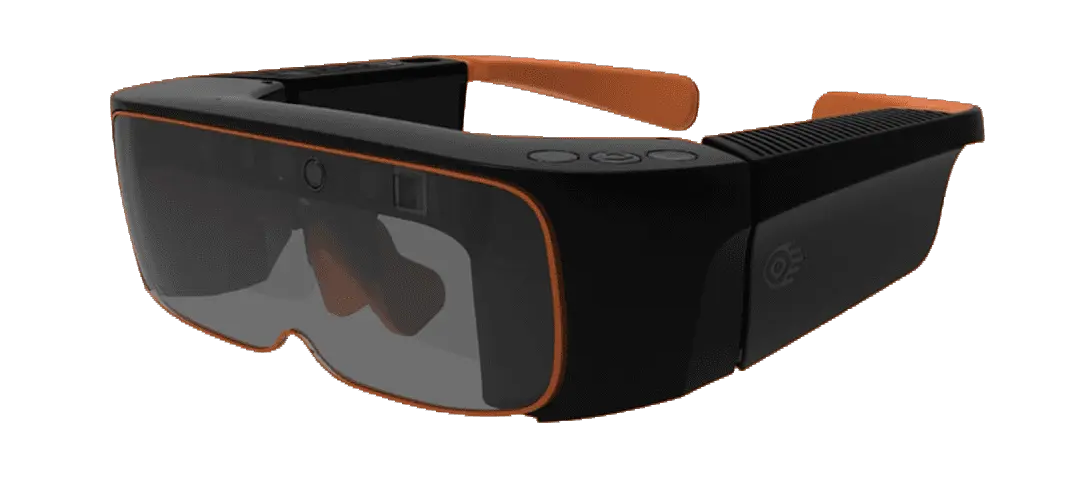
Unlike consumer-grade smart glasses or tethered virtual reality (VR) headsets, specialized Healthcare MedTech Smart Glasses utilize optical see-through (OST) waveguide architecture. This projects high-resolution digital imaging—such as real-time bio-telemetry, 3D anatomical overlays, and PACS radiology data—directly into the clinician's natural field of view. By preserving direct eye contact with the patient, spatial computing reduces intraoperative duration by up to 18% and significantly lowers cognitive load.
Furthermore, as healthcare systems transition toward value-based care and decentralized remote consultation, hospital procurement departments demand spatial hardware solutions that integrate smoothly into complex IT infrastructures. ThirdEye Gen’s hardware and software stack addresses these strict requirements by combining standalone Android-based compute, low-latency streaming algorithms, and robust hardware security tailored specifically for healthcare environments.