
Featured Optical & Surgical Spatial Hardware Catalog
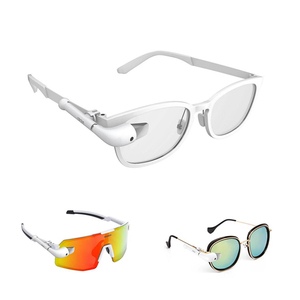
Explore our certified OEM/ODM smart optical systems, micro-OLED navigation visors, and medical-grade spatial tracking devices.

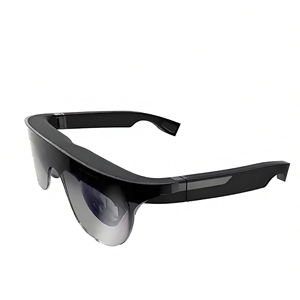
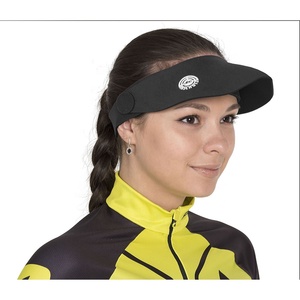
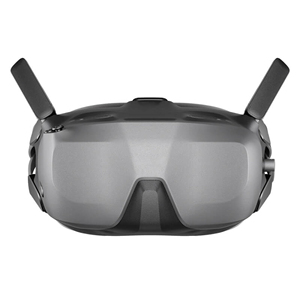
Executive Overview: The Paradigm Shift in Intraoperative Surgical Navigation
Surgical navigation systems have transitioned from cumbersome, cart-based optical cart trackers to lightweight, wearable Spatial Computing Augmented Reality (AR) optical heads-up displays (HUD). Modern intraoperative procedures in neurosurgery, complex orthopedic spine instrumentation, and craniomaxillofacial reconstruction demand sub-millimeter trajectory accuracy, ultra-low motion-to-photon latency, and uninterrupted line-of-sight during critical tissue dissection.
As a leading surgical navigation equipment manufacturer and OEM/ODM engineering pioneer, our enterprise spatial computing platforms eliminate the "cognitive disconnect" associated with legacy surgical displays. By projecting real-time DICOM 3D anatomical reconstructions, intraoperative CT/MRI slice overlays, and trackable instrument guidance vectors directly into the surgeon’s direct field of view (FOV), optical surgical navigation systems raise first-pass positioning accuracy while drastically cutting fluoroscopic radiation exposure for surgical teams.
Core Industry Insight: Transitioning from external monitor carts to direct-vision micro-OLED optical headsets reduces intraoperative head-turn frequency by up to 84%, saving an average of 14 minutes per spinal pedicle screw instrumentation case while maintaining sub-millimeter placement accuracy.
Future Procurement Trends in Surgical Navigation Systems (2025–2030)
Global medical device procurement officers, hospital surgical equipment committees, and healthcare integrators face rapidly shifting technological benchmarks. Sourcing decisions made today must account for hardware modularity, open SDK integration, and strict air-gapped data compliance.
1. Micro-OLED Waveguide Display Standardisation
Procurement teams are phasing out heavy video-see-through (VST) VR helmets in favor of ultra-lightweight Optical See-Through (OST) Micro-OLED displays offering >1200 Nits brightness and high contrast for sterile OR lighting.
2. Hybrid Optical-Electromagnetic Sensor Fusion
Next-gen surgical navigation platforms combine infrared optical surface tracking with electromagnetic (EM) sensor micro-arrays, preventing line-of-sight occlusion errors when blood or surgical drapes block camera views.
3. Air-Gapped & Zero-Trust Cybersecurity Compliance
Hospital IT infrastructure demands local, edge-computed spatial rendering with hardware-level encryption (SXR architecture) to preserve patient PHI under HIPAA/GDPR while running in disconnected operating suites.
Comparative Architecture: Legacy Navigation vs. Next-Gen AR Spatial Navigation
Understanding the hardware parameters between conventional navigation carts and wearable spatial AR systems is vital for ROI modeling and clinical workflow integration.
| Technical Specification | Legacy Cart Navigation Systems | Next-Gen Optical AR Navigation HUD | Strategic Benefit |
|---|---|---|---|
| Primary Display Architecture | 2D External 32" Flat Panel Monitor | 0.32" Micro-OLED Optical Waveguide HUD | Eliminates neck strain & gaze deviation |
| Target Tracking Latency | 45 ms - 80 ms | < 12 ms Motion-to-Photon Latency | Prevents perceptual lag during fast instrumentation |
| Spatial Registration Precision | 1.2 mm - 2.0 mm | Sub-Millimeter (< 0.45 mm Precision) | Maximizes screw & probe placement accuracy |
| System Mobility & Footprint | Heavy Mobile Cart (>150 kg) | Wearable Headset (< 180g) + Edge Hub | Frees up valuable sterile OR floor space |
| EHR / PACS Interoperability | Proprietary Closed Networks | Open SDK, DICOM 3.0, Android AR OS | Seamless integration with hospital IT ecosystems |
| Sterilizable Components | Drapeable Camera Boom Only | Autoclavable Tracking Markers & Visors | Meets strict infection control standards |
Technology & R&D Trends in Medical Spatial Computing Hardware
The convergence of artificial intelligence, high-density micro-displays, and advanced polymer chemistry has created unprecedented possibilities for surgical HUD design. Our R&D division focuses heavily on three core pillars:
1. Sub-Millimeter Marker Registration & AI Digital Twin Alignment
Modern surgical HUD systems rely on advanced computer vision algorithms to perform automatic surface registration. By matching intraoperative surface point clouds directly to pre-operative CT/MRI volumes, surgeons can achieve sub-millimeter anatomical alignment in seconds without requiring invasive anatomical fiducial screw placements.
2. Biocompatible & Sterilizable Polymer Materials
Weight optimization is critical for long 8+ hour surgical procedures. Innovations in specialized optical-grade transparent nylon temple arms and carbon-fiber composite frames allow head-mounted displays to achieve tensile strength and impact resistance while keeping total head-worn mass under 180 grams.
3. Real-Time Tele-Surgical Guidance & AI Telepresence
Utilizing high-definition FPV camera feeds combined with real-time AI telepresence software (such as RealEye AI), senior attending surgeons can remotely observe, annotate, and guide junior surgical residents in real time from anywhere in the world, displaying dynamic 3D virtual arrows inside the primary operator's visor.
Frequently Asked Questions (FAQ) for Global Hardware Procurement
Below are deep-technical answers to questions most frequently raised by OEM partners, distributor networks, and hospital procurement boards.
How do optical see-through AR glasses maintain accuracy under intense surgical lighting?
Our micro-OLED optical waveguides feature peak luminance ratings exceeding 1,200 Nits alongside custom anti-glare optical coatings. This ensures sharp visual contrast, high color fidelity, and crisp vector line visualization even under concentrated 100,000+ Lux operating room surgical lamps.
Can our engineering team custom-integrate proprietary tracking algorithms onto your hardware?
Yes. All OEM smart optical devices run an open, enterprise-ready Android AR Operating System supported by a fully documented C++/Unity SDK. Enterprise clients can deploy proprietary spatial registration software, DICOM viewers, or custom computer vision tracking algorithms directly on the device.
What regulatory certifications and ISO standards support your manufacturing facilities?
Our manufacturing plants operate under strict ISO 13485 (Medical Devices Quality Management) and ISO 9001 certifications. Hardware components comply with CE, FCC, RoHS, and ITAR compliance standards, ensuring smooth registration pathways for FDA 510(k) and CE MDR submissions.
How are sterilization and infection control handled for wearable headsets and visors?
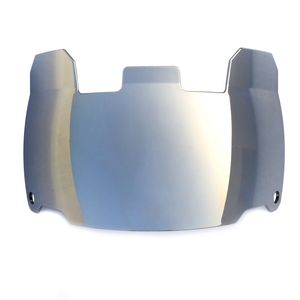
The optical display modules feature detachable, fluid-resistant visors and magnetic optical inserts. Outer frames can be disinfected using medical-grade isopropyl/quaternary wipes, while tracking markers and clip-on visors are manufactured using autoclavable or single-use medical polymer materials.
Does the system require an active internet connection during surgery?
No. Built on Secure Extended Reality (SXR) architecture, all spatial tracking, coordinate transformations, and rendering calculations occur locally on-device or via a local air-gapped edge computing server, eliminating cloud latency and protecting patient privacy in zero-trust environments.
What is the typical lead time for OEM/ODM custom prototype development?
Standard evaluation hardware ships within 3 to 5 business days globally. Custom OEM optical adjustments, specialized headband/visor mechanical redesigns, or custom branding packages typically require 4 to 8 weeks from initial CAD approval to working prototype delivery.
Why Partner With Us: OEM/ODM Enterprise Capabilities
As a trusted surgical navigation equipment supplier and AR optical pioneer with over 45 country deployments, we offer end-to-end hardware development, optical engine customization, and software development kit (SDK) integration.
Full-Stack Optical & Hardware Manufacturing
From micro-display optical engine design to high-precision injection-molded transparent nylon arms, we control the complete manufacturing value chain under cleanroom conditions.
Proven Defense & Medical Grade Engineering
Our hardware platforms are validated by rigorous contracts across defense, aerospace MRO, and level-1 trauma centers worldwide, guaranteeing extreme durability and reliability.
Global Support & Regional Engineering Hubs
With operational technical support bases across Princeton (USA), Frankfurt (Germany), Athens (Greece), and São Paulo (Brazil), enterprise buyers receive rapid field service and technical assistance.