
Flagship Mixed Reality & Optical Systems
Factory-direct extended reality hardware, tactical display modules, and optical accessories engineered for defense, automotive, and industrial field service applications.
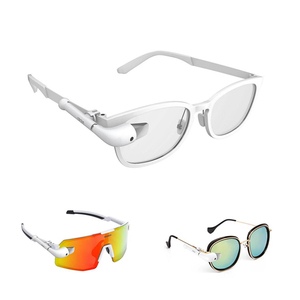
Ultralight Smart AR Glasses W/ 0.32inch Micro OLED Display 624x405 Resolution 1200 Nits 20° FOV Real Time Translation Navigation
Get a Quote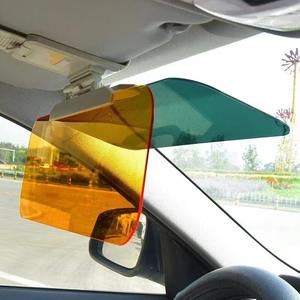
Day & Night Anti-Glare Car Sunshade UV Ray Driver Safety Night Vision Goggles for Safe Driving Car Sun Visor Extender Anti Glare
Get a Quote
Factory Direct, Impact-Resistant Carbon Fiber Full Face Helmet - Visor, 3C&DOT Certified Optical Grade Shield
Get a Quote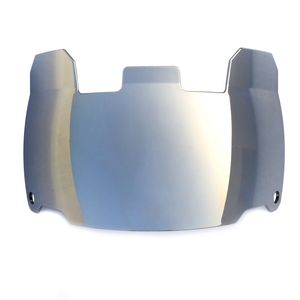
New Patent Universal Anti-fog Football Helmet Visor Clear High-Impact Optical Eye Shield Visor System
Get a Quote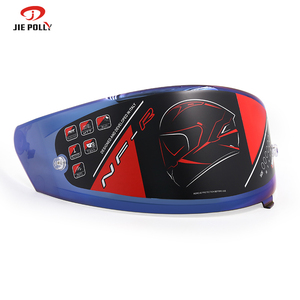
Brand Outdoor Sport Mx Helmet Goggles Motorcycle Sunglasses Visor Magnetic Quick-Change Lens Anti-Fog Motocross Visor
Get a Quote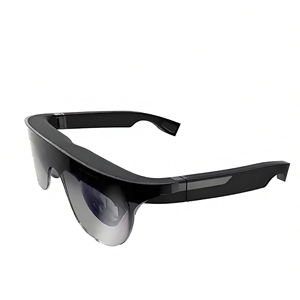
Specialised Optical Material for Transparent Nylon Temple Arms & Ergonomic Components in Smart AR/MR Glasses
Get a Quote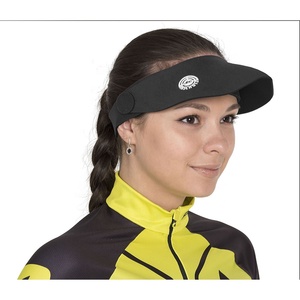
Two-Part Tactical Visor Consisting of Head-band and Detachable Visor Neoprene Sun Cap Tactical Shooting Visor
Get a Quote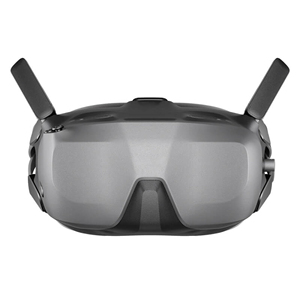
Premium Goggles N3 Wide Vision FPV Glasses 1080p Screen O4 Air Unit Pro Compatible AR Cursor Interaction Immersive Flight Gear
Get a Quote1. Spatial Computing Engineering & Next-Gen MR Architecture
The enterprise augmented reality (AR) and mixed reality (MR) ecosystem is transitioning from experimental pilot programs to operational scaling across high-consequence industries including tactical defense, aerospace MRO (Maintenance, Repair, and Overhaul), complex manufacturing, and surgical healthcare. As a premier global manufacturer and direct exporter of industrial-grade MR smart glasses, our engineering framework integrates custom optoelectronic assemblies, micro-display modules, high-transmittance optical waveguides, and secure OS-level spatial computing stacks.
In modern industrial procurement, buyers must differentiate between consumer-tier smart eyewear and true enterprise-grade Mixed Reality hardware. Consumer smart glasses often rely on basic heads-up display (HUD) micro-monitors that project static 2D imagery. In contrast, advanced enterprise MR hardware incorporates 6-DOF (Degrees of Freedom) SLAM (Simultaneous Localization and Mapping) tracking, real-time spatial depth mapping, localized AI object recognition, and high-luminance optical engines capable of operating in direct sunlight conditions exceed 1,200 nits.
Technical Information Gain Insight: The optical transparency ratio and thermal dissipation profile are the primary failure points in enterprise MR deployments. Utilizing custom-engineered transparent nylon temple arms and aviation-grade heat-pipes allows continuous 8-hour shift operations without optical drift or user fatigue.
Our flagship platforms—including the standalone X2 MR Smart Glasses and the MIDAS (Modular Integrated Display Augmentation System)—are built upon an open, Android-based spatial operating engine. This allows global systems integrators, defense contractors, and enterprise IT leaders to natively compile custom Unity and Unreal Engine spatial applications while benefiting from hardware-level end-to-end encryption and air-gapped network capability.
Micro-OLED & Waveguide Optics
0.32-inch Silicon-based Micro-OLED micro-displays delivering sub-millimeter pixel density, 1200+ nits luminance, and optical waveguides engineered for zero distortion.
Tactical Security & Air-Gap Support
Compliant with ITAR frameworks and defense security baselines. Embedded hardware root-of-trust, encrypted storage, and offline spatial anchoring without cloud reliance.
Modular Mask & Visor Integration
Patented quick-detach mechanical interfaces allowing monocular and binocular display engines to snap directly onto tactical helmets, CBRN masks, and industrial visors.
2. Comparative Technical Evaluation: Optical Engines & Spatial Compute
Evaluating enterprise MR hardware requires rigorous analysis of display architecture, weight distribution, spatial tracking latency, and environmental ruggedization. Below is an architectural overview comparing consumer-grade AR visors against our industrial and defense-spec MR smart glasses:
| Performance Parameter | Consumer/Basic AR Visors | Industrial Enterprise MR (X2 Series) | Tactical Defense MR (MIDAS Platform) |
|---|---|---|---|
| Display Technology | Standard TFT LCD / Birdbath | 0.32" Micro-OLED Waveguide | Dual Micro-OLED High-Contrast Waveguide |
| Luminance Output | 300 – 500 Nits | 1,200 Nits (Sunlight Readable) | 2,500+ Nits (Extreme Field Use) |
| Tracking Engine | 3-DOF Gyro / Tethered Mobile | On-board 6-DOF SLAM + Spatial AI | 6-DOF Thermal + NVG Spatial Fusion |
| Compute Platform | Requires Smartphone Connection | Standalone High-Performance SOC | Dual-Node Edge Computing Module |
| Network & Security | Public Cloud Dependent | Enterprise SSO, AES-256, Local Storage | Air-Gapped, ITAR Compliant, Secure XR |
| Environmental Rating | Non-rated / Indoor only | IP66 Water/Dust Resistant | MIL-STD-810H & IP67 Certified |
Optimizing Ergonomics: Materials Science in Smart Arm Design
Hardware durability and long-term wearing comfort depend fundamentally on structural polymer selection. Standard polycarbonate temple arms tend to degrade under chemical exposure or fracture under stress. As a specialized manufacturer, we utilize transparent high-tensile nylon compounds in our temple arms and structural frames. This material engineering provides superior elasticity, resistance to industrial solvents, and exceptional thermal tolerance while allowing internal routing of radio-frequency antenna arrays and power copper traces without visual bulk.
3. Future Procurement & Sourcing Trends in the Global MR Market (2025–2030)
As global procurement directors, defense logistics teams, and enterprise original equipment manufacturers (OEMs) structure multi-year contracts for extended reality devices, several macro purchasing trends have emerged within the global supply chain:
A. Transition from Component Sourcing to Full-Stack OEM Solutions
Modern B2B enterprise clients no longer seek isolated display components or standalone software licenses. The market overwhelmingly favors integrated suppliers capable of providing a complete hardware-software continuum: certified optics, custom housing, embedded device management (MDM), and domain-specific applications like remote telepresence (RealEye AI) and drone telemetry overlay (DroneEye AR). Direct OEM manufacturing guarantees supply chain traceability, long-term spare part availability, and unified technical support.
B. Rigorous Demand for Disconnected and Air-Gapped Operation
Data privacy and cyber warfare risks have elevated security parameters in smart glasses procurement. Federal defense agencies, energy utilities, and advanced manufacturing plants strictly prohibit hardware that mandates persistent cloud connections. Future-ready MR headsets must execute spatial SLAM mapping, speech processing, and step-by-step assembly validation locally on the edge chipset without transmitting data outside the private intranet.
C. Modular Hardware Interfaces for Multi-Role Compatibility
Procurement agencies are moving away from single-purpose wearable devices. The strategic trend highlights modular display engines—such as our MIDAS platform—that can be dismounted from standard prescription spectacle frames and snapped directly into protective full-face helmets, ballistic visors, or hazardous environment breathing masks. This multi-role versatility dramatically lowers total cost of ownership (TCO) across enterprise fleets.
Total Cost of Ownership (TCO) Matrix: Replacing traditional field-expert travel with hands-free MR remote assistance yields an average payback period of less than 4.2 months per site, preventing costly factory line shutdowns through real-time see-what-I-see diagnostic overlays.
4. Primary Enterprise Deployments & Industrial Use-Cases
Our exported MR smart glasses and optical display visors actively power critical workflows across more than 45 countries:
Defense & First Responders
Real-time tactical navigation, thermal imaging overlays, and zero-visibility guidance inside smoke-filled environments using helmet-integrated MIDAS display units.
Industrial Field Service & MRO
Hands-free digital step-by-step checklists, live CAD model anchoring, and remote video collaboration enabling junior technicians to resolve complex machinery faults.
Healthcare & Surgical Guidance
Interactive 3D anatomical visualization, real-time vital sign telemetry projection, and contactless image navigation within sterile operating environments.
5. Enterprise Superiority & Factory OEM/ODM Infrastructure
As a vertically integrated manufacturer based in Princeton, NJ with global logistics nodes across Europe, South America, and Asia-Pacific, our production ecosystem adheres to strict ISO-aligned Quality Management Systems (QMS). From pristine cleanroom optical alignment to automated automated SMT surface mounting, every component undergoes intensive environmental testing (thermal shock, vibration tolerance, dust ingress, and impact resilience).
Our ODM factory services allow global enterprise clients to customize hardware configurations according to specific operational parameters: custom optical engine tuning, branded frame molding, integration of specific sensor packages (FLIR thermal, LiDAR, HD RGB), and firmware lock-down. By maintaining direct ownership over optical R&D and assembly lines, we guarantee short prototype cycles and predictable mass-production delivery schedules for defense programs and multinational enterprise rollouts.
6. Frequently Asked Procurement Questions (FAQ)
Key technical and commercial inquiries regarding our MR smart glasses manufacturing, OEM partnerships, and export compliance:
What are your core OEM/ODM capabilities as an MR smart glasses manufacturer?
We deliver full-stack ODM/OEM services including custom optical engine integration (Micro-OLED, Micro-LED, Waveguide optics), custom structural molding using transparent high-durability nylon, firmware customization, OS-level secure lockdown, cleanroom display assembly, and MIL-STD testing. We support both high-volume standardized production and custom defense contracts.
How do your smart AR/MR glasses perform in direct sunlight and outdoor environments?
Our Micro-OLED display modules generate luminance levels up to 1,200 nits (with defense variants exceeding 2,500 nits). Combined with our high-transmittance optical waveguides and optional electrochromic tinted visors, projected digital imagery remains crisp, readable, and contrast-rich even in bright outdoor sunlight conditions.
Can your MR headsets operate completely offline in disconnected or classified networks?
Yes. Our Secure Extended Reality (SXR) software suite and Android-based operating platform are engineered to run completely offline without cloud dependencies. Spatial anchoring, 6-DOF SLAM tracking, localized voice control, and digital procedure playback process locally on-device, satisfying ITAR and defense security baselines.
What software development kits (SDKs) and integration options do you support?
Our smart glasses run an open Android-based spatial OS. We provide fully documented native Android SDKs, Unity plug-ins, and WebXR APIs. Integrators can connect existing Enterprise Resource Planning (ERP), Enterprise Asset Management (EAM), and PACS healthcare software stacks effortlessly.
What is your typical lead time and international export procedure?
Standard sample units ship within 3–5 business days. Custom ODM prototypes typically require 4 to 8 weeks depending on mold tooling and optical specs. Mass production lead times range from 3 to 6 weeks. We ship internationally under standard Incoterms (EXW, FOB, CIF, DDP) supported by our hubs in the US, Europe, and South America.
Accelerate Your Enterprise Spatial Computing Strategy
Partner directly with a trusted global MR smart glasses manufacturer. Contact our optical engineering and export team today to request hardware samples, custom OEM project quotes, or defense trial evaluation units.
Get a Quote