
Standard-Setting First Responder Equipment
Engineered for extreme durability, operational telepresence, and tactical advantage in zero-visibility environments.

China First Responder Manufacturing Infrastructure Analysis
A comprehensive technical report on supply chain dynamics, precision optical engineering, and OEM/ODM sourcing strategies for public safety organizations.
1. The Evolution of China’s First Responder Sourcing Landscape
The global emergency response and public safety sector is undergoing a profound structural shift. Modern first responders—ranging from tactical fire crews and emergency medical services (EMS) to search-and-rescue (SAR) teams and law enforcement units—no longer rely solely on passive structural gear. Sourcing requirements have pivoted toward high-tech, integrated hardware systems that combine physical impact protection with situational intelligence visual displays.
China has consolidated its position as the premier global hub for first responder equipment manufacturing by unifying high-volume precision injection molding, advanced optics development, carbon fiber composite weaving, and Micro-OLED micro-display packaging within localized industrial clusters. Regions such as Guangdong (Shenzhen, Dongguan) excel in micro-electronics and AR optical engines, while Jiangsu and Zhejiang lead in high-modulus carbon fiber shell production and optical polycarbonates. Sourcing directly from top-tier OEM/ODM manufacturers in China provides enterprise buyers with unprecedented supply agility, rapid prototyping turnarounds, and robust cost efficiencies without compromising international safety standards like 3C, DOT, CE, and MIL-STD compliance.
2. Deep Dive: Optical Waveguides & Micro-OLED Heads-Up Displays (HUD)
In high-stress, zero-visibility operational environments—such as smoke-filled structures, heavy night-time highway rescues, or tactical riot control—first responders require hands-free visual telemetry. The incorporation of 0.32-inch Micro-OLED optical engines delivering up to 1200 Nits brightness represents a quantum leap over legacy LCD displays. At 1200 Nits, spatial navigation overlays and biometrics remain fully legible under direct ambient sunlight and piercing strobe lights.
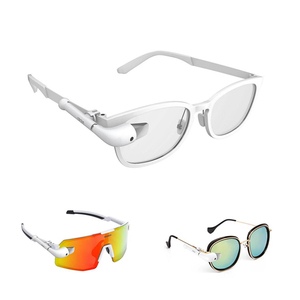
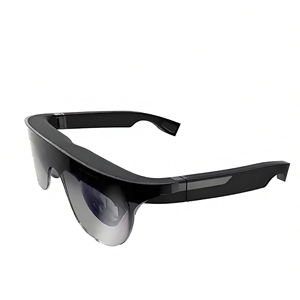
Leading Chinese optical manufacturers utilize geometric and diffractive waveguides paired with specialized transparent TR90 and polyamide temple arms. This material selection is critical: transparent nylon temple arms offer high mechanical flexibility, heat resilience, and chemical resistance while housing embedded flex circuits for real-time data transmission without visual occlusion. By coupling high-resolution (624x405 to 1080p full HD) micro-displays with 20° to 45° Field of View (FOV) optics, first responders receive low-latency navigation mapping, real-time language translation, and thermal imaging telemetry directly in their line of sight.
Why Tier-1 Global Procurement Teams Partner With Us
Our vertically integrated manufacturing pipeline bridges advanced optical engineering with ruggedized physical protective hardware.
Vertical Integration & Rapid Prototyping
From initial optical CAD modeling and mold fabrication to surface-mount technology (SMT) cleanroom assembly, our facility controls the entire lifecycle. Rapid tooling programs enable custom helmet visors and AR frame prototypes within 14 business days.
Stringent Quality Assurance & Testing
Every product batch undergoes rigorous testing protocol including drop impact tests (DOT/3C standards), environmental thermal shock chamber testing (-40°C to +85°C), fog-resistance cycle evaluations, and IP67 waterproof validation.
Modular SDK & Software Integration
Hardware is only as smart as its software stack. Our smart AR smart glasses and FPV units feature open Android-based operating systems with documented API endpoints, allowing seamless integration into enterprise command centers, GIS mapping platforms, and AI telepresence servers.
Proprietary Anti-Fog & Coating Labs
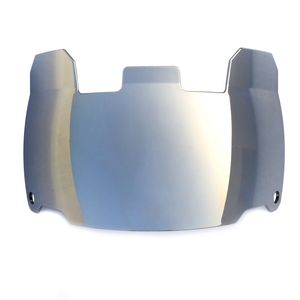
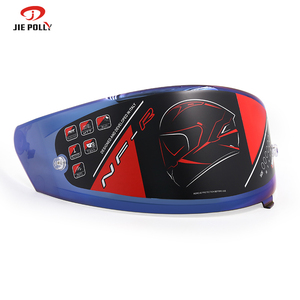
Equipped with vacuum magnetron sputtering and chemical vapor deposition (CVD) chambers, we apply multi-layer hydrophobic anti-fog coatings and anti-glare UV-blocking optical treatments capable of withstanding extreme tactical wiping and chemical exposure.
Global Compliance & ITAR-Aware Protocols
We maintain full compliance with international environmental standards (RoHS, REACH) and support global enterprise export requirements, providing full traceability of raw materials and ethical manufacturing certification across 45+ countries.
Future Procurement Trends in First Responder Equipment (2025–2030)
Key technological shifts that government procurement officers, OEM brand managers, and safety equipment distributors must integrate into their multi-year RFPs.
1. Convergence of Smart AR HUDs with Certified Protective Masks (SCBA)
Historically, protective headgear and electronic communication tools operated as separate procurement items. The market is rapidly moving toward unified, modular solutions. Future RFPs will heavily prioritize self-contained breathing apparatus (SCBA) masks and full-face carbon fiber helmets with pre-integrated monocular or binocular waveguide displays. Eliminating external clip-ons reduces snag hazards and ensures structural integrity during extreme thermal exposure.
2. Shift Toward Carbon Fiber Composites & Advanced Polymer Ergonomics
Weight reduction directly correlates with operator endurance and reduced cervical spine fatigue. Legacy ABS plastic helmets are being systematically replaced by 3K and 12K high-impact carbon fiber shells certified under combined 3C and DOT specs. Concurrently, optical frames are transitioning to specialized transparent nylon and TR90 alloys, offering lightweight, hypoallergenic, and high-impact frame geometry capable of housing high-capacity lithium-polymer batteries.
3. AI Telepresence, Thermal Overlays, and FPV Drone Synchronization
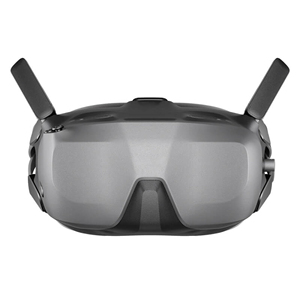
First responders increasingly operate alongside autonomous unmanned aerial systems (UAS). Modern procurement strategies require wearable FPV goggles and smart glasses to accept low-latency wireless streams (O4/5G private mesh) directly from reconnaissance drones. With integrated AR cursor interaction, ground teams can pin waypoint targets, visualize heat anomalies through thermal camera streams, and broadcast real-time "see-what-I-see" video back to incident command posts.
4. Universal Anti-Fog Physics & Day/Night Dual Optics
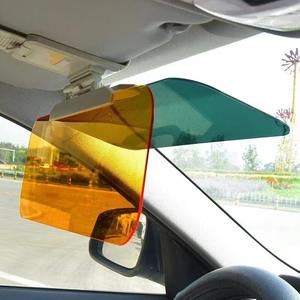
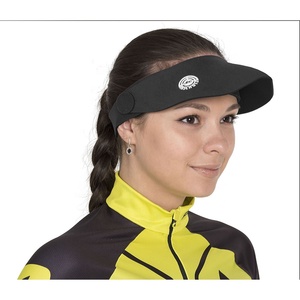
Optical failure due to lens fogging or sudden blinding glare remains a leading cause of operational delay during vehicle response and structural entry. Advanced visors now incorporate dual-pane thermal barriers, permanent chemical anti-fog clear shields, and photochromic or magnetic quick-swap lenses. Vehicle operators benefit from dual-spectrum anti-glare extenders that filter high-intensity LED headlights at night while blocking 99.9% of harmful UV radiation during daylight transit.
Frequently Asked Sourcing & Engineering Questions
Clear, definitive answers designed to assist RFP committee chairs, OEM engineers, and procurement directors.
Why is China the preferred manufacturing hub for first responder optical and protective equipment?
What are the key technical parameters when specifying Micro-OLED AR smart glasses?
How do carbon fiber full-face helmets satisfy both 3C and DOT certification standards?
Can your factory accommodate custom OEM/ODM branding, private labeling, and custom tooling?
How is anti-fog performance tested and maintained on helmet eye shields and tactical visors?
Are these AR smart glasses compatible with third-party Command Center software and private LTE/5G networks?
What is the typical Minimum Order Quantity (MOQ) and sample lead time for enterprise orders?
How do anti-glare sunshades and driver safety goggles protect first responder drivers?
What software security protocols are implemented to prevent data leaks during tactical operations?
How do I initiate a formal request for quotation (RFQ) or factory audit?
Accelerate Your Emergency Gear Procurement Today
Connect with our technical engineering team to request factory direct pricing, request OEM product samples, or schedule an optical custom design consultation.