
Featured Medical & Optical Spatial Hardware Solutions
Explore our certified OEM/ODM product portfolio engineered for sterile surgical environments, low-latency spatial guidance, high-durability optical shields, and tactical head-mounted displays.
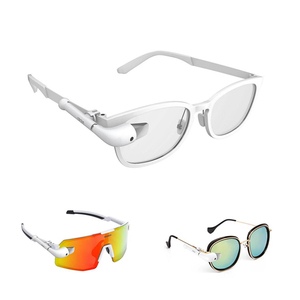
Ultralight Smart AR Glasses W/ 0.32inch Micro OLED Display 624x405 Resolution 1200 Nits 20° FOV Real Time Translation Navigation

Day & Night Anti-Glare Car Sunshade UV Ray Driver Safety Night Vision Goggles for Safe Driving Car Sun Visor Extender Anti Glare

Factory Direct, Impact-Resistant Carbon Fiber Full Face Helmet - Visor, 3C&DOT Certified Optical Grade Shield
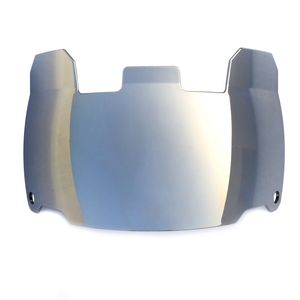
New Patent Universal Anti-fog Football Helmet Visor clear Eye Shield Visor High Impact Optical Polymer
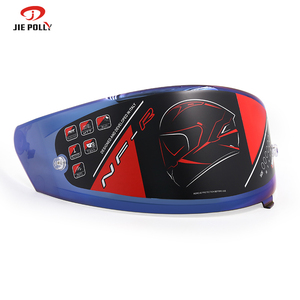
Brand Outdoor Sport Mx Helmet Goggles Motorcycle Sunglasses Visor Magnetic Lens Anti-Fog Motocross Riding Visor
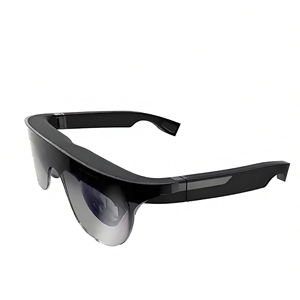
Specialised Material for Transparent Nylon Temple Arms in Medical AR Smart Glasses & Optical Frames
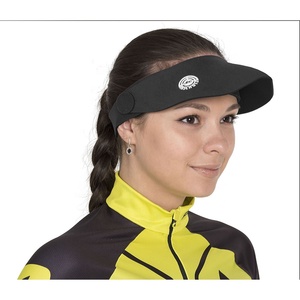
Two-part Visor Consisting of a Head-band and Detachable Visor Neoprene Sun Cap Tactical & Surgical Visor Assembly
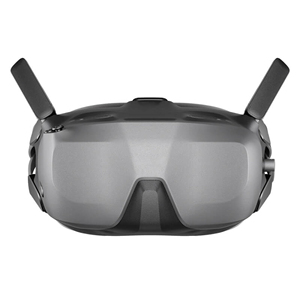
Premium Goggles N3 Wide Vision FPV Glasses 1080p Screen O4 Air Unit Pro Compatible AR Cursor Interaction Immersive Flight Gear
Global Manufacturing & Quality Engineering Benchmarks
Core Engineering Advantages of Our OEM/ODM Export Infrastructure
Why leading healthcare brands, medical device integrators, and defense procurement agencies trust our overseas production facilities for mission-critical visual hardware.
Class 10,000 Cleanroom Optical Assembly
Our automated factory cleanrooms ensure dust-free optical bonding between Micro-OLED panels, optical waveguides, and anti-reflective protective lenses—achieving 99.4% yield standards required for intraoperative displays.
Full Regulatory & Compliance Assurance
All exported medical and tactical displays strictly adhere to ISO 13485, CE Medical Devices Regulation (MDR), FDA 510(k) tooling specs, ITAR-aware supply chain protocols, and RoHS/REACH environmental safety standards.
Custom Engine & PCB Hardware Customization
From custom 0.32-inch micro-OLED optical engines to high-density flexible PCBs, embedded wireless streaming chips (Wi-Fi 6E/5G), and tactile ergonomic frames, we customize hardware layouts for your brand's proprietary stack.
OEM/ODM OEM/ODM Surgical Display Manufacturing & Global Export Whitepaper
In modern intraoperative environments, surgical visualization is undergoing a paradigm shift. Traditional wall-mounted 2D liquid-crystal monitors are increasingly being supplemented—and in many specialized procedures, replaced—by head-mounted spatial displays, micro-OLED augmented reality (AR) visors, and lightweight ergonomic surgical monitors. As an established OEM/ODM factory and global exporter, our engineering facilities bridge the gap between complex optical physics, medical-grade biocompatible polymers, and high-volume, cost-optimized mass production.
1. Technical Evolution of Surgical Display Architecture: Micro-OLED vs. Legacy LCD
Surgical displays demand uncompromised image fidelity, absolute color accuracy (DICOM Part 14 compliance), near-zero latency, and intense luminance to overcome bright operating room (OR) overhead lighting. Legacy liquid-crystal display (LCD) monitors suffer from limited contrast ratios, bulky backlight assemblies, and motion blur during high-framerate laparoscopic or endoscopic surgical maneuvering.
Our OEM/ODM manufacturing lines specialize in integrating Silicon-based Micro-OLED (OLED-on-Silicon) micro-displays. Micro-OLED technology offers several definitive physical advantages for surgical visualization:
- Pixel Density & Compact Optics: Integrating resolutions up to 4K into tiny 0.32-inch to 0.7-inch diagonals enables ultra-compact optical engines that mount seamlessly into surgical visors or lightweight headsets without causing surgeon neck fatigue during multi-hour operations.
- Extreme Dynamic Contrast: Micro-OLED technology provides an active contrast ratio exceeding 100,000:1. Surgeons can differentiate sub-millimeter tissue structures, vascular networks, and nerve pathways under high optical magnification.
- Sub-Millisecond Response Times: Pixel switching times under 0.01ms eliminate motion ghosting during high-speed endoscopic navigation, reducing visual disorientation for surgical operators.
- Ultra-High Luminance Yield: Incorporating custom optical waveguides allows display systems to output over 1,200 to 3,000 Nits of brightness directly to the eye, ensuring crisp visual overlays even under intense 100,000-lux OR surgical lamps.
2. Strategic Outlook: Procurement Trends for Surgical & Medical Displays (2025–2030)
Global procurement directors, medical device brand owners, and OEM distributors are navigating rapid supply chain shifts and technological transitions. Understanding upcoming procurement benchmarks ensures contract buyers maximize product lifecycle ROI while avoiding premature hardware obsolescence.
Trend A: Transition to Hands-Free Spatial Guidance & Heads-Up Displays (HUD)
Traditional surgical workflows force surgeons to alternate their visual focus between the patient's physical anatomy and wall-mounted monitors—a phenomenon known as "head-turn strain" that compromises spatial awareness. Global healthcare procurement is aggressively shifting toward head-mounted spatial display visors. By projecting live laparoscopic video, vital signs, and patient MRI digital twins directly into the surgeon's line of sight, procedure times are reduced by an average of 14% to 22%.
Trend B: Modular, Sterilizable & Detachable Visor Construction
Infection control in the sterile operating field represents a strict operational constraint. Contemporary OEM/ODM contracts now demand two-part modular display designs featuring permanent, autoclavable or chemically resistant optoelectronic cores coupled with cost-effective, detachable, single-use protective visors. Our factory specializes in high-precision molding of transparent optical nylon, polycarbonate, and medical-grade silicone seals engineered to withstand harsh enzymatic glutaraldehyde and hydrogen peroxide gas plasma sterilization cycles.
Trend C: Decoupled Processing & High-Bandwidth Low-Latency Wireless Streaming
To keep head-mounted display weight under 120 grams, modern surgical display designs decouple compute engines from the optical visor. Processing is offloaded to a belt-pack unit or centralized OR server stack. Procurement specifications now mandate embedded Wi-Fi 6E, Ultra-Wideband (UWB), or uncompressed zero-latency 60GHz wireless receivers capable of streaming intraoperative video feeds at 60 FPS without introducing visual lag or electromagnetic interference (EMI) with adjacent life-support devices.
Trend D: Direct-Factory Supply Chain Consolidation & Risk Mitigation
B2B enterprise buyers are transitioning away from multi-tiered sub-tier sourcing models in favor of direct OEM/ODM factory partnerships. Working directly with a single certified exporter capable of handling precision optical molding, surface-mount technology (SMT) assembly, micro-display alignment, cleanroom bonding, and international medical export documentation substantially reduces supply chain vulnerability, shortens production lead times, and lowers unit landed costs.
3. Emerging Technical Developments in Medical Optical Engineering
Continuous innovation in optical physics and material science drives our OEM/ODM manufacturing capability. We continuously integrate breakthrough technologies into our custom factory builds:
A. Advanced Optical Coatings & Anti-Fog Hydrophobic Polymers
Intraoperative moisture, body heat, and sterile surgical masks frequently induce condensation fogging on traditional optical visors. Our OEM manufacturing process applies permanent, vacuum-deposited nano-scale hydrophobic and anti-reflective (AR) multi-layer coatings. These coatings maintain optical clarity at 99.2% light transmittance across extended surgical procedures, while actively resisting fluid splatter and scratch damage.
B. AI-Assisted Intraoperative Overlay Integration
Next-generation OEM display units feature hardware-level integration with spatial tracking sensors (such as dual-camera SLAM tracking and infrared depth sensors). This allows real-time overlay of pre-operative CT/MRI scans directly onto the patient's anatomy during orthopedic, neurological, or vascular surgery. Our software and hardware engineers supply open SDKs (Android/Linux platform compatible) that allow medical software developers to render low-latency 3D anatomical overlays smoothly.
C. High-Durability Lightweight Materials
By replacing traditional aluminum housing components with carbon-fiber reinforced polymers and specialized optical-grade transparent nylon temple structures, our ODM designs reduce head-mounted display mass while preserving structural rigidity. This combination resists accidental high-impact drops, mechanical stress, and chemical degradation in demanding clinical or emergency field environments.
Frequently Asked Questions for OEM/ODM Buyers & Importers
Answers to essential technical, regulatory, manufacturing, and export questions regarding our surgical display systems and specialized optical hardware manufacturing.