
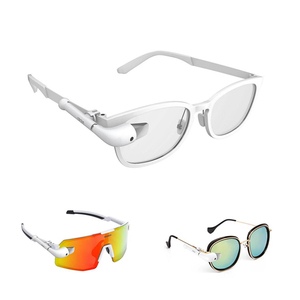
Ultralight Smart AR Headset W/ 0.32" Micro OLED Engine
624x405 Resolution | 1200 Nits Brightness | 20° FOV | Real-Time Navigation & Translation Module for Surgical & Field Telemetry
ThirdEye Gen — from real-time field operations to classified environments: secure, validated, intelligent AR workflows.
Factory-direct medical smart visors, ultra-bright Micro-OLED optical engines, anti-glare surgical shields, and custom nylon chassis engineered for B2B exporters and surgical device OEMs.
624x405 Resolution | 1200 Nits Brightness | 20° FOV | Real-Time Navigation & Translation Module for Surgical & Field Telemetry
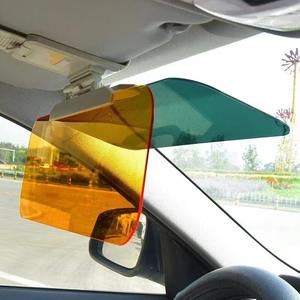
UV Ray Protection | Optical Grade Anti-Reflective Coating | High-Contrast Night & Day Vision Extender for Sterile Surgical Suites

3C & DOT Certified Architecture | Structural Carbon Fiber | Integrated Modular Visor Mount for Defense & Field Medical Units
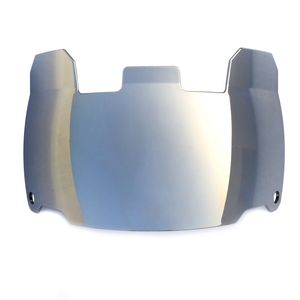
High-Optical Clarity Polycarbonate | Permanent Anti-Fog Coating | Multi-Headgear Quick-Snap Locking System
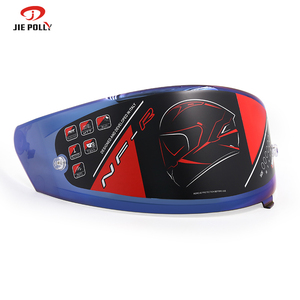
Magnetic Quick-Release Lens Mechanism | Scratch-Resistant Hard Coat | Ergonomic Frame for Tactical & Medical Operations
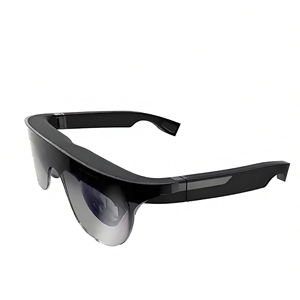
Biocompatible Specialty Nylon | Ultra-Light Weight & Flexural Strength | Custom OEM Injected Molding for Smart Glasses Chassis
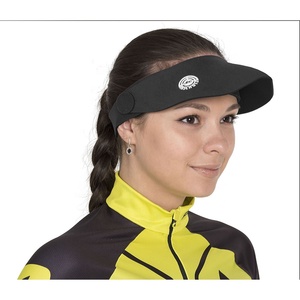
Sterilizable Neoprene & Polymer Harness | Quick-Release Visor Latches | Weight-Balanced Structural Design for Long Procedures
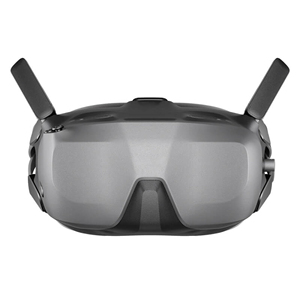
Full HD Micro Display | Low-Latency Wireless Feed Integration | Spatial Cursor Interaction for Surgical Guidance & Flight Ops
As a vertically integrated custom surgical AR supplier and global exporter, ThirdEye Gen provides complete spatial computing hardware and encrypted software ecosystems designed for zero-trust environments.
We design and manufacture everything in-house: optical engines, custom Micro-OLED wave-guides, biocompatible nylon chassis, and custom Android-based spatial operating systems tailored to your proprietary medical or industrial applications.
Purpose-built software architecture engineered for classified, HIPAA-compliant, and air-gapped clinical networks. Featuring secure boot protocols, AES-256 on-device encryption, and fully offline, GPS-denied tracking capabilities.
Our production lines adhere strictly to medical device quality management systems and defense export protocols. Every surgical display visor undergoes 100% optical alignment testing and thermal seal integrity checks prior to global export.
Augmented reality (AR) technology has crossed the threshold from experimental prototype to indispensable intraoperative equipment. Modern minimally invasive surgeries (MIS), neurosurgical trajectory planning, orthopedic bone reconstruction, and complex cardiovascular interventions demand real-time visualization of sub-surface patient anatomy without requiring the surgeon to break visual contact with the sterile operating field. As a premier Custom OEM Surgical AR Supplier & Exporters, ThirdEye Gen engineers spatial computing platforms that solve the fundamental human-factors challenges of medical augmented reality.
Surgical operating suites present extreme ambient lighting conditions. High-intensity surgical overhead lamps routinely generate illumination levels between 40,000 and 160,000 Lux directly over the surgical field. Standard consumer-grade AR smart glasses utilizing transmissive LCDs or low-luminance displays suffer from image wash-out, rendering digital tumor boundaries or vascular overlays invisible under high-lux illumination.
To overcome this limitation, our custom OEM surgical display assemblies incorporate custom high-luminance Micro-OLED engines emitting upwards of 1200 to 3000 Nits of display brightness. Combined with high-efficiency optical wave-guides and proprietary anti-glare multilayer coatings, our displays deliver high contrast ratios (>10,000:1), preserving crisp 3D volumetric overlays even under intense direct surgical lighting.
A primary bottleneck in hospital-wide adoption of head-worn surgical equipment is weight distribution and thermal build-up. Surgeons frequently endure complex procedures lasting anywhere from four to twelve hours. Headsets exceeding 250 grams or emitting localized heat across the forehead induce severe physical fatigue and perspiration, compromising the sterile barrier.
Global medical procurement directors, OEM contract manufacturers, and healthcare system integrators are shifting their purchasing criteria when sourcing surgical AR and smart headgear. When evaluating international suppliers and exporters, enterprise buyers focus heavily on total cost of ownership (TCO), interoperability, and supply chain resilience.
Hospitals and medical software vendors no longer tolerate closed, proprietary hardware ecosystems that lock them into single-vendor software stacks. Modern procurement mandates demand standalone smart glasses running an open Android AR operating system with documented REST APIs, Unity/Unreal Engine SDKs, and native support for DICOM/PACS medical imaging standards. Custom OEM suppliers providing open developer access allow hospital IT teams and MedTech startups to deploy proprietary surgical algorithms effortlessly without undergoing expensive hardware re-engineering.
Rather than purchasing monolithic AR glasses, medical and defense procurement units increasingly favor modular display architectures like the ThirdEye MIDAS platform. In this paradigm, the optical engine, power system, and sensor modules attach directly to existing certified medical visors, protective surgical masks, or tactical helmets. This modular approach significantly lowers capital expenditure, simplifies compliance recertification, and permits rapid replacement of individual broken components directly in the field.
With patient health information (PHI) protected under strict regulatory frameworks worldwide, enterprise healthcare buyers reject cloud-dependent AR systems that transmit unencrypted video feeds over public servers. Procurement guidelines now specify on-device spatial tracking (SLAM) processing, local edge-AI inference, and air-gapped secure local streaming capabilities. OEM suppliers capable of supplying ITAR-compliant, HIPAA-ready, and end-to-end encrypted hardware are capturing the majority of high-value government and private hospital procurement contracts.
The roadmap for spatial computing across the next decade is governed by breakthroughs in optical physics, micro-semiconductors, and artificial intelligence telepresence.
While Micro-OLED represents the current gold standard for color saturation and contrast, next-generation surgical AR displays are transitioning toward Micro-LED technology paired with holographic diffraction wave-guides. Micro-LED arrays offer light output exceeding 100,000 Nits at microscopic pixel pitches, enabling true ultra-compact prescription-compatible surgical spectacles that mirror standard optical glasses in weight and form factor.
Current AR surgical registration relies on optical fiducial markers placed near the surgical site. Future AR hardware development integrates dedicated Neural Processing Units (NPUs) directly into the headset System-on-Chip (SoC). These NPUs run real-time surface-mesh registration algorithms, continuously aligning 3D radiological scans with moving anatomical structures (such as breathing lung tissue or beating cardiac walls) in under 2 milliseconds of latency.
As 5G private enterprise networks expand across global hospital networks, AR smart glasses serve as the communication endpoint for real-time surgical mentoring. Senior specialists in metropolitan research centers can overlay interactive 3D virtual annotations into the live optical view of a field surgeon operating in a remote regional clinic, eliminating geographic barriers to specialized surgical expertise.
Detailed technical and commercial answers for hospital procurement boards, medical device integrators, and international distributors.
We provide comprehensive end-to-end OEM and ODM customization services. This includes custom optical wave-guide tuning (FOV, luminance, focal distance), custom housing injection molding using biocompatible transparent nylon or carbon fiber, bespoke cable harness configurations, custom hardware branding/logo placement, and deep firmware/OS customization (such as locked-down single-app kiosk modes, custom boot animations, and pre-installed enterprise software suites).
Our manufacturing and software architectures align with ISO 13485 quality management systems, FDA guidelines for medical device software, and HIPAA/GDPR privacy rules. Our Secure Extended Reality (SXR) software platform supports entirely air-gapped, on-premise deployments that keep sensitive patient video feeds within the hospital's local network without transmitting data over public third-party servers.
Standard evaluation samples and pre-production developer kits ship within 3 to 5 business days. Commercial OEM orders typically have an MOQ starting at 50 to 100 units depending on the level of chassis and optical engine customization required. Mass production delivery schedules average 4 to 8 weeks from final engineering sample sign-off.
Yes. ThirdEye smart glasses run an Android-based AR operating system with open SDKs and standard networking protocols. Integrators can connect our hardware to existing hospital PACS (Picture Archiving and Communication System), DICOM image servers, Electronic Health Records (EHR), or industrial EAM/MES software platforms seamlessly.
We maintain regional service hubs and authorized engineering support centers across North America, Europe, Latin America, and Asia-Pacific. All OEM hardware exports include a comprehensive 12-month manufacturer warranty (extendable to 36 months) with advance hardware replacement options for critical surgical and defense contracts.
Micro-OLED technology provides self-emissive pixels, resulting in absolute black levels, exceptional contrast ratios (>10000:1), and zero visual frame latency. This eliminates the grey background rectangle typical of LCD displays, providing surgical teams with transparent, crisp digital overlays that do not obstruct peripheral vision of real-world patient anatomy.
Accelerate your medical device roadmap or defense program with our proven Micro-OLED optical assemblies, biocompatible AR chassis, and secure spatial computing operating platforms.