
OEM Optical Waveguides & AR Visual Assemblies
Direct factory custom engineering, precision optical coatings, micro-display integrations, and protective smart visors engineered for enterprise, defense, automotive, and consumer electronics applications.
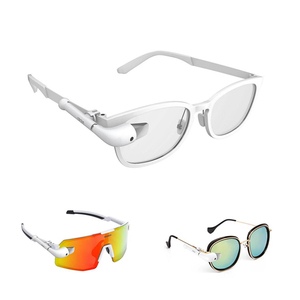
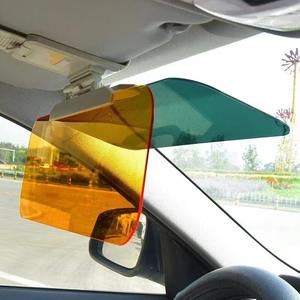

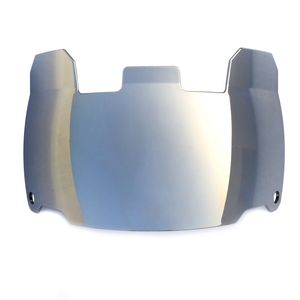
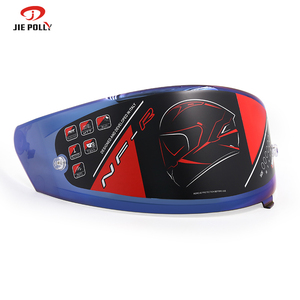
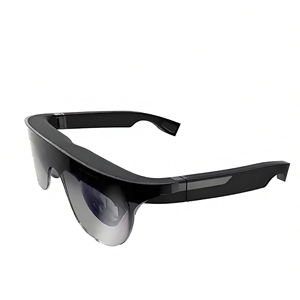
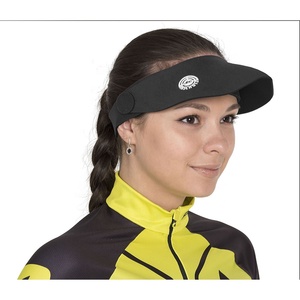
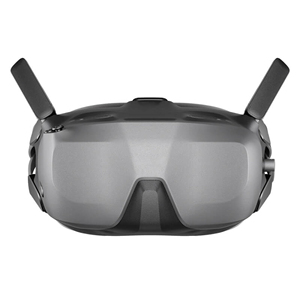
OEM Optical Waveguide Engineering & Manufacturing Standards
A comprehensive technical overview for procurement directors, optical system architects, and hardware engineers evaluating OEM/ODM optical display manufacturing capabilities.
1. Fundamentals of Optical Waveguide Manufacturing Architectures
Optical waveguides serve as the foundational optic engine in modern Augmented Reality (AR) headsets, Heads-Up Displays (HUDs), and tactical helmet-mounted displays (HMDs). By routing light rays from a micro-display (such as Micro-OLED, Micro-LED, or LCoS) through total internal reflection (TIR) within a thin glass or polymer substrate, waveguides deliver digital overlays directly into the user’s eye field without obstructing ambient physical vision.
As a leading custom OEM manufacturer, our cleanroom fabrication lines produce the three core waveguide architectures deployed across aerospace, industrial, and defense sectors:
- Surface Relief Grating (SRG) Diffractive Waveguides: Fabricated using Nanoimprint Lithography (NIL), SRG waveguides utilize micro-scale grating structures engraved on the substrate surface to diffract light. They offer ultra-thin form factors (<1.0 mm), high transparency (>85%), and scalable mass-production yields.
- Volume Holographic Grating (VHG) Waveguides: Utilizing photopolymer films exposed to laser interference patterns, VHG designs deliver exceptionally low rainbow flare, high color fidelity, and superior optical clarity, ideal for medical visual guidance and premium smart eyewear.
- Geometric / Reflective (Pancake & Beam Splitter Array) Waveguides: Employing a series of semi-reflective embedded mirrors, geometric waveguides deliver zero chromatic aberration and high light throughput, making them favored for defense display masks (e.g., MIDAS platforms) where high brightness efficiency is critical.
Key Manufacturing Takeaway: Choosing the right waveguide technology depends on balancing Field of View (FOV), light efficiency (Nits per Lumen), target unit cost, and total form-factor weight. OEM integration teams can request custom Zemax optical modeling from our engineering group.
2. Micro-Fabrication, Lithography, and Substrate Materials
Achieving defect-free optical waveguides requires sub-nanometer surface flatness and extreme environmental stability. Our automated fabrication facilities operate under certified ISO Class 10 and Class 100 cleanroom conditions to prevent particle contamination during master etching and replication phases.
Substrate Engineering & Refractive Index Selection
Light confinement within a waveguide substrate relies on the refractive index ($n$). To achieve wide Field-of-View (>40°) while avoiding light leakage, high-index glass substrates ($n \ge 1.80$ to $n = 2.0$) such as wafer-grade synthetic fused silica or specialized heavy flint optical glasses are processed. For rugged tactical helmets and athletic visor shields, high-optical-grade cyclic olefin polymers (COP) and optical nylon are processed with anti-scratch hard coatings.
| Waveguide Technology | Refractive Index (n) | Max FOV (Diagonal) | Transmittance (%) | Primary Application |
|---|---|---|---|---|
| Diffractive SRG (Wafer Glass) | 1.80 – 2.00 | 30° – 50° | > 82% | Enterprise AR Smart Glasses, Remote Field Service |
| Volume Holographic (VHG) | 1.52 – 1.65 | 25° – 38° | > 88% | Medical Surgical Guidance, Civilian Smart Eyewear |
| Geometric Reflective Array | 1.50 – 1.70 | 40° – 60° | > 90% | Military Tactical Masks, Aviation HUD Visors |
| Polymer Injection Waveguide | 1.53 – 1.58 | 20° – 30° | > 85% | Industrial Safety Goggles, Impact Helmets |
Industry Development & Strategic Sourcing Trends (2025–2030)
Key technological breakthroughs and supply-chain shifts transforming the global optical waveguide OEM manufacturing ecosystem.
Trend 1: MicroLED Coupling & Outdoor Sunlight Readability
Traditional AR displays struggled in bright outdoor sunlight due to low optical efficiency. Modern OEM sourcing is rapidly moving toward pairing diffractive waveguides with high-brightness MicroLED engines capable of producing >100,000 Nits at the source, yielding an eye-side brightness exceeding 1,500 to 3,000 Nits for uncompromised daylight readability in defense and field maintenance environments.
Trend 2: Electrochromic & Active Dimming Visor Integration
To operate seamlessly between indoor cleanrooms and outdoor sunlit field conditions, next-generation waveguide modules are directly laminated with electrochromic films. This enables digital tint adjustment from 10% to 88% light transmission in real time, enhancing digital contrast without requiring external clip-on sunshades.
Trend 3: Single-Layer Full-Color Waveguide Architectures
Historically, full-color AR displays required stacking 2 or 3 separate optical plates (Red, Green, Blue), increasing weight, eye-relief distance, and assembly cost. Manufacturing innovation in multi-pitch grating design now enables single-layer full-color diffractive waveguides, reducing module thickness to under 1.2 mm.
Trend 4: Turnkey Optical Engine Sourcing (Module Assembly)
Global procurement teams are shifting away from buying isolated optical components. Enterprise clients prefer sourcing complete optomechanical engines—where the waveguide plate, micro-display, spatial alignment housing, and flex PCB drivers are pre-calibrated, sealed, and certified at the OEM factory level.
Why Partner With Our OEM Optical Manufacturing Facilities
End-to-end industrial execution, from custom Zemax optical simulation to high-volume cleanroom automated assembly.
In-House Optical Zemax Modeling
Our optical engineering team provides full-path light simulations, stray light analysis, Modulation Transfer Function (MTF) optimization, and custom grating pattern generation prior to tooling commitments.
Rigorous Quality Inspection & Metrology
Every manufactured batch undergoes automated 100% optical quality verification: luminance uniformity checks, MTF curve validation, distortion mapping, and environmental thermal cycling (-40°C to +85°C).
Global Logistics & Defense Compliance
Supporting ITAR-aware handling, ISO 9001 certified operations, and seamless international delivery across North America, Europe, East Asia, and South America with dedicated technical support hubs.
Custom OEM Optical Waveguide Procurement FAQ
Addressing the technical, commercial, and logistical questions most frequently posed by enterprise procurement buyers and system integrators.
What are the primary optical waveguide technologies manufactured in your facilities?
What is your typical Minimum Order Quantity (MOQ) and lead time for custom OEM prototypes?
How do you manage color uniformity and rainbow flare in diffractive SRG waveguides?
Can your optical visors and smart glasses be customized for military or industrial safety standards?
Do you offer turnkey integration of micro-displays with the waveguide optical engine?
What IP protections and NDA protocols are in place for proprietary client designs?
Partner with a World-Class OEM Optical Waveguide Manufacturer
Consult directly with our optical engineering team to evaluate specs, request custom Zemax optical simulations, or discuss volume production schedules for your AR wearable initiative.