
Featured AR & Spatial Optics Hardware Line
Precision-engineered smart glasses, optical engines, tactical visors, and component materials backed by enterprise software SDK compatibility.
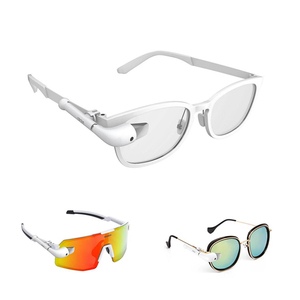


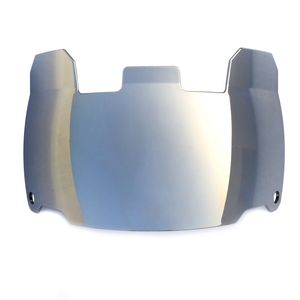
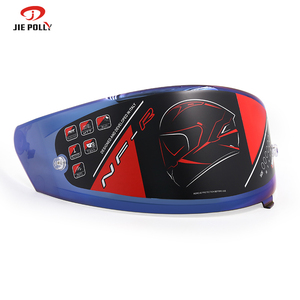
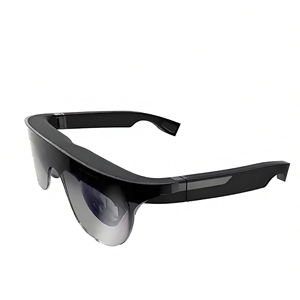

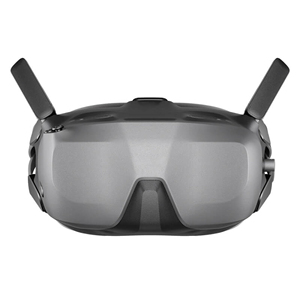
Leading China's AR Ecosystem & Spatial Software Architecture
Bridging tier-one optoelectronic manufacturing with defense-certified extended reality software engineering.
Secure Extended Reality (SXR)
Purpose-built software stack engineered for classified and high-security operations. Delivers air-gapped deployment capability, end-to-end AES-256 encryption, and on-device neural processing without telemetry leaks.
MIDAS Mask Augmentation
Modular Integrated Display Augmentation System (MIDAS) embeds monocular waveguide optics inside industrial and tactical protective masks, enabling zero-visibility navigation without compromising environmental seals.
RealEye AI Telepresence
Turn field workers into live spatial nodes. Real-time see-what-I-see remote assistance, 3D dynamic annotation, hands-free voice commands, and automated compliance logging shrink mean-time-to-repair (MTTR) by up to 60%.
Strategic Market Analysis: Sourcing AR Software & Hardware from Chinese OEM/ODM Supply Chains
The global enterprise Spatial Computing and Augmented Reality (AR) landscape is undergoing a systemic paradigm shift. Procurement directors, system integrators, and defense contractors no longer evaluate hardware and software in isolation. Acquiring standalone AR smart glasses without a customized, low-latency spatial software stack leads to operational silos, integration delays, and enterprise security vulnerabilities.
China's export ecosystem for Augmented Reality solutions has evolved beyond basic plastic injection molding and component assembly. Today, leading Chinese enterprise suppliers provide a vertically integrated stack: combining proprietary Micro-OLED and diffractive waveguide optics with robust Android-based AR operating systems, AI-driven computer vision middleware, and enterprise Mobile Device Management (MDM) platforms.
Vertical Hardware-Software Co-Design
By synchronizing custom optical design (e.g., 1200 Nits Micro-OLED assemblies and TR90 transparent nylon frames) with native SDK runtime optimizations, Chinese AR exporters achieve hardware-accelerated SLAM tracking at a fraction of Western tier-1 pricing.
Open Platform Architecture vs. Walled Gardens
Unlike proprietary consumer ecosystems, wholesale enterprise AR software suppliers from China prioritize open Android AR operating platforms. Integrators gain full root-level control, custom RESTful API hooks, and local network server hosting for proprietary telemetry.
Architectural Breakdown: Secure Extended Reality (SXR) & Command Center
For defense, aerospace maintenance, and industrial power plant inspection, cloud-reliant AR software introduces critical risk vectors. Our Secure Extended Reality (SXR) framework isolates core spatial processing locally on the device's neural processing unit (NPU). Spatial anchors, step-by-step SOP visual guides, and CAD digital twins render offline in real time.
When remote connectivity is required, the Command Center Platform enables multi-operator telemetry streaming across encrypted local Mesh networks or private 5G bands. Program supervisors can monitor live video feeds, inject real-time spatial markups onto an operator's FOV, and manage fleet-wide firmware updates through a unified web portal.
Key Trends Driving Next-Generation AR Software & Hardware Procurement
Global procurement teams must align their 3-to-5-year hardware acquisition strategies with emerging spatial computing standards. When evaluating wholesale AR exporters in China, consider these pivotal technological trajectories:
| Technology Vector | Legacy Industry Benchmark | Next-Gen Chinese AR Supplier Benchmark | Enterprise ROI Impact |
|---|---|---|---|
| Display Engines | LCoS / Curved Free-form Visors (<500 Nits) | 0.32" Micro-OLED + Waveguides (>1200 Nits) | Full outdoor readability, 40% reduction in display module weight. |
| Spatial Intelligence | Marker-based QR Code Tracking | AI SLAM, Hand Tracking & Spatial Anchor Mapping | Hands-free operation; seamless overlay of complex industrial digital twins. |
| Deployment Security | Public Cloud Streaming Platforms | Air-Gapped SXR Platform & On-Premises Servers | Compliance with defense, military, and HIPAA/GDPR data sovereignty rules. |
| Modular Integration | Standalone Monolithic Headsets | MIDAS Modular Mask & Detachable Visors | Integrates directly into existing PPE, fire masks, and ballistics helmets. |
Trend 1: Convergence of Spatial AI & Large Vision Models (LVM)
Modern enterprise AR software no longer relies solely on pre-programmed scripts. Embedded LVM models enable the headset to recognize uncatalogued machinery, diagnose operational anomalies automatically, and auto-generate dynamic visual assembly instructions for field technicians.
Trend 2: Lightweight Ergonomics & Specialized Polymer Materials
Extended usage in industrial facilities requires frame weights under 75 grams. The adoption of specialized TR90 transparent nylon temple arms and high-flex polymers ensures heat dissipation, chemical durability, and all-day wearer comfort.
AR Software & Hardware Procurement FAQ
Critical answers for OEM buyers, software integrators, and international trade partners.
Why partner with Chinese suppliers for enterprise AR software and hardware export?
How does the SXR software suite guarantee data security in classified environments?
Can the AR software platforms be integrated with third-party smart glasses or custom hardware?
What is the Minimum Order Quantity (MOQ) and customization scope for OEM/ODM projects?
How do AR smart glasses calculate measurable ROI for industrial field service teams?
Scale Your Spatial Enterprise Today
Whether you require a custom software SDK integration, defense-grade SXR procurement, or high-volume wholesale smart glasses export, our technical engineering team is ready to consult.
Contact Us