
Featured AR Headsets & Optical Components Catalog
Direct Factory OEM/ODM Solutions for Industrial, Tactical, Medical & Automotive Deployments
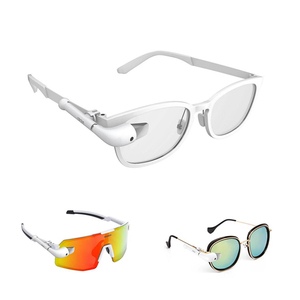


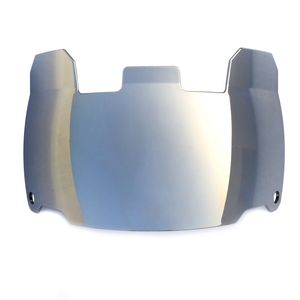
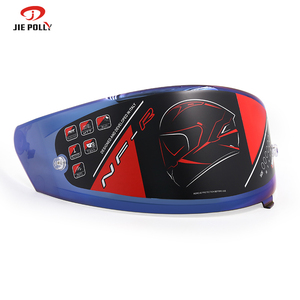
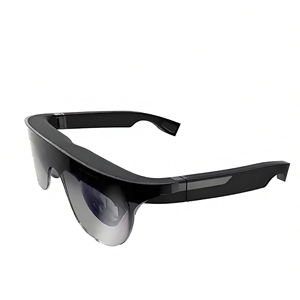

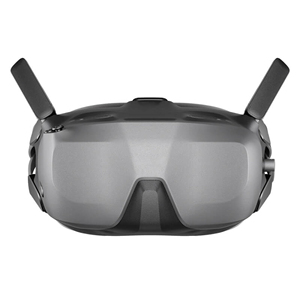
Strategic Engineering: China’s Role in Global Enterprise AR Manufacturing
The global Augmented Reality (AR) and Mixed Reality (MR) spatial computing ecosystem is undergoing a fundamental structural transition. As enterprise buyers shift away from bulky prototype headsets toward sleek, ergonomic, and optically precise wearable terminals, China has solidified its position as the world's primary manufacturing hub for optical engines, diffraction waveguides, micro-display integration, and high-tensile lightweight housing materials.
As a leading China Top AR Headset Manufacturer & Factory, our operations integrate end-to-end industrial capabilities: from precision optical molding in ISO Class 5 dust-free cleanrooms to SMT surface mounting for ultra-compact processing motherboards. We bridge the critical gap between conceptual spatial computing software and ruggedized, mass-producible physical hardware.
Core Manufacturing Capabilities & Enterprise Value Proposition
Unlike assembly-only contractors, our facilities specialize in deep-tier hardware customization (OEM/ODM). We supply defense contractors, telecommunications carriers, medical device leaders, and heavy manufacturing brands with fully integrated platforms—combining Micro-OLED optics, custom Android/Linux firmware, secure encryption protocols, and ergonomic carbon-fiber or nylon polymer housings.
Enterprise Advantage & OEM/ODM Manufacturing Capabilities
To sustain high field reliability across mission-critical sectors such as tactical defense, aviation MRO, surgical guidance, and utility field service, hardware design must meet demanding environmental and optical standards. Our manufacturing infrastructure is structured around four technical pillars:
Precision Optics Assembly
Sub-micron optical alignment for surface relief waveguides (SRG), reflective waveguides, and Micro-OLED engine modules ensuring minimal geometric distortion and maximum brightness up to 1200+ Nits.
Advanced Polymer & Carbon Fiber
In-house injection molding utilizing specialized high-flexibility transparent TR90 nylon and autoclave carbon fiber composite curing for helmet visors and frame arms built to 3C, DOT, and MIL-STD-810H standards.
Secure Embedded System Stack
Custom OS kernel optimization, air-gapped security bootloader implementation, open SDK integration, and native support for low-bandwidth AI remote assistance engines (e.g., RealEye AI & SXR suites).
By consolidating optics, structural composite manufacturing, and software stack adaptation under a single quality management system (QMS), we offer global enterprise clients significant cost savings, reduced time-to-market, and complete Intellectual Property (IP) safeguards.
Future Procurement Trends in the Global AR Headset Supply Chain
B2B procurement leaders, system integrators, and defense program directors must align their procurement strategies with several rapidly emerging technological shifts through 2025 and 2030:
1. Migration from Birdbath Optics to Micro-OLED Waveguides
Legacy enterprise smart glasses heavily relied on bulky Birdbath optical systems, which suffered from low optical efficiency and heavy front-end form factors. Global procurement bids now overwhelmingly specify Micro-OLED coupled with optical waveguides. Micro-OLED displays (0.32-inch to 0.71-inch) deliver extreme contrast ratios, sub-millisecond response times, and exceptional power efficiency—vital for battery-operated all-day enterprise wearability.
2. Modular & Ruggedized Ecosystem Integration
Modern procurement demands versatility. Buyers no longer want isolated smart glasses; they require multi-scenario modularity. This includes quick-release magnetic lenses, snap-on anti-glare thermal shields, and seamless mounting mechanisms for industrial safety helmets and military headgear. Dual-purpose helmets featuring high impact resistance (3C/DOT standards) alongside heads-up displays are dominating utility and defense RFQs.
3. Disconnected & Air-Gapped Security Requirements
With growing cybersecurity threats, enterprise buyers in critical infrastructure, healthcare, and tactical defense actively mandate "Secure Extended Reality" (SXR). Headsets must feature on-device edge compute capabilities capable of running SLAM (Simultaneous Localization and Mapping), spatial AI object recognition, and CAD rendering locally without sending sensitive visual streams over external cloud servers.
Technical Development Trends in Industrial & Tactical Spatial Hardware
The technical trajectory of smart AR hardware manufactured in China focuses on solving three historical friction points: optical clarity, weight distribution, and real-time interaction latency.
| Technical Parameter | Legacy Enterprise AR (2018-2021) | Next-Gen Industrial AR Standard (2025+) |
|---|---|---|
| Display Technology | LCoS / LCD Birdbath Optics | Micro-OLED + Surface Relief Waveguide |
| Luminance Output | 300 - 500 Nits (Poor outdoor visibility) | 1,200 - 3,000+ Nits (Sunlight readable) |
| Chassis Material | Standard ABS / Polycarbonate Plastics | TR90 Transparent Nylon + Carbon Fiber Composite |
| Interactive Input | Physical Buttons / Tethered Controller | Voice Control, Gesture Motion, FPV AR Cursor Tracking |
| Weight Distribution | Front-heavy (>150g on nose bridge) | Balanced Ergonomics (<75g glasses / Integrated Helmet distribution) |
Advanced Materials & Thermal Dissipation Engineering
A major breakthrough in enterprise smart glasses manufacturing lies in polymer science. As internal processors run spatial tracking AI models at 60 to 90 FPS, thermal dissipation becomes paramount. By utilizing specialized thermal-conductive nylon temple arms and structural carbon fiber shells, our factory achieves passive heat dissipation away from the wearer's face—eliminating noisy active cooling fans while ensuring IP65 to IP67 ingress protection against dust and moisture.
Frequently Asked Questions (FAQ) for Global B2B Procurement
Partner with China's Leading AR Manufacturing Hub
Ready to scale your enterprise spatial computing initiative? Speak directly with our optical engineers and OEM/ODM specialists to request product samples, technical documentation, or factory audit information.
Inquire Now