
Featured Remote Support & Vision Hardware
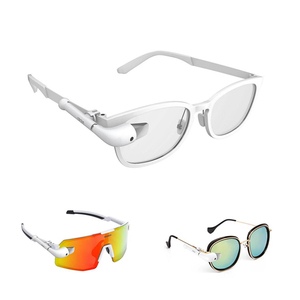
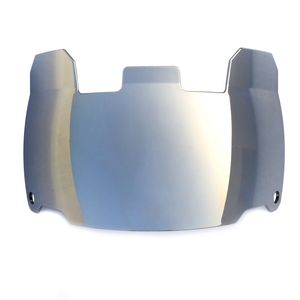
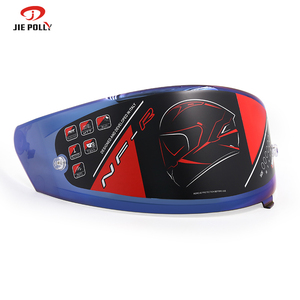
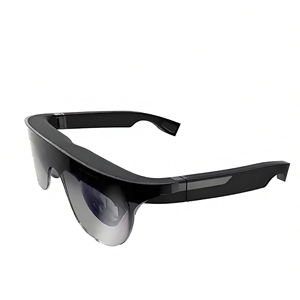
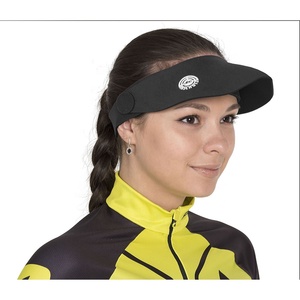
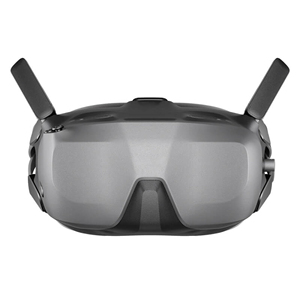
High-precision optical visors, micro OLED smart glasses, and specialized protective equipment engineered for industrial, tactical, and field service telepresence.


Executive Summary: Industrial Transformation Through Chinese Remote Support Ecosystems
As enterprise operations transition toward decentralized workflows, zero-trust cybersecurity architectures, and real-time digital twin synchronization, China’s industrial manufacturing sector has positioned itself at the nexus of spatial computing hardware production. Seeking to optimize first-time-fix rates (FTFR) and minimize operational downtime, enterprise procurement directors globally are pivoting toward China Remote Support Hardware Manufacturers for high-throughput, industrial-grade Augmented Reality (AR) and Mixed Reality (MR) spatial infrastructure.
This technical white paper establishes a strategic evaluation framework for sourcing remote support systems, micro OLED display optics, specialized optical visors, and secure software platforms. Grounded in deployment metrics across defense, aerospace MRO (Maintenance, Repair, and Overhaul), clinical telemetry, and energy production, this analysis addresses the architectural mandates required for mission-critical operations in over 45 international jurisdictions.
Global Procurement & Technical Evolution Trends (2025–2030)
Key technological convergences driving next-generation spatial computing hardware procurement across enterprise and government sectors.
Micro-OLED & Diffractive Waveguide Integration
Legacy bulky prism optics are rapidly obsolescing. Modern RFPs require ultra-compact display engines such as 0.32-inch Micro OLED panels paired with diffractive waveguides, delivering luminance exceeding 1,200 nits. This provides full optical see-through readability in high-ambient outdoor sunlight environments.
Air-Gapped & Secure Extended Reality (SXR)
Enterprise buyers now reject hardware tethered to public cloud telemetry. Global procurement standards prioritize SXR (Secure Extended Reality) software suites that execute on-device spatial indexing, secure boot protocols, and end-to-end encrypted WebRTC streams for classified or disconnected facilities.
Modular Protective Gear Integration
Remote support hardware is converging with Personal Protective Equipment (PPE). Standard smart glasses are giving way to MIDAS (Modular Integrated Display Augmentation System) configurations—integrating monocular HUDs directly into full-face respirators, tactical ballistic helmets, and anti-fog safety eye-shields.
Engineering Excellence in Remote Telepresence Hardware
The engineering requirements for enterprise remote support systems demand extreme durability, zero-latency rendering, and ergonomic weight distribution. When evaluating Chinese manufacturing partners, procurement teams must inspect critical hardware vectors:
1. Optical Ergonomics and Material Innovation
Long-duration industrial shifts require weight optimization to prevent operator neck fatigue. Leading exporters now utilize specialized transparent nylon polymers for AR frame temple arms and lightweight carbon-fiber composites for industrial full-face helmets. This material selection maintains structural rigidity under high impact while keeping head-borne gear under critical weight thresholds.
2. Thermal Management & Continuous Duty-Cycle Computing
On-board spatial computing platforms hosting SLAM (Simultaneous Localization and Mapping) tracking and AI vision algorithms generate significant thermal signatures. High-reliability remote support devices incorporate passive vapor-chamber cooling and customized Android kernel throttle management. This allows smart glasses to operate continuously at 60 FPS without exceeding surface touch temperature limits in ambient conditions up to 45°C.
3. Multi-Sensor Telemetry Fusion
Modern remote expertise workflows demand more than raw video streaming. Integrated hardware platforms blend 1080p high-frame-rate cameras, thermal imaging sensors, and low-power inertial measurement units (IMUs). This sensor suite feeds real-time spatial data directly to centralized command dashboards, enabling off-site subject matter experts to overlay precise 3D CAD annotations onto physical machinery.
Enterprise Advantages & Ecosystem Capabilities
China's leading remote support engineering facilities combine low-cost vertical supply chains with rigorous international quality standards. Original equipment software capabilities, backed by proprietary spatial computing stacks like ThirdEye Gen and Infinita AI technologies, establish unmatched operational advantages:
- Full-Stack Hardware-to-Software Sovereignty: Sourcing directly from premier Chinese manufacturers eliminates integration friction. Unified vendors deliver the display optics, on-board Android operating systems, Mobile Device Management (MDM) suites, and command center software concurrently.
- Proven Field Reliability & Contract Awards: Hardware architectures validated through rigorous field deployments, including US Air Force contract awards, tier-1 telecom carrier network certifications (FirstNet, Verizon, T-Mobile), and compliance with military-grade ruggedization standards.
- Compliance & Defense Certification Alignments: End-to-end manufacturing workflows operating under ISO-aligned Quality Management Systems, offering ITAR-aware operational boundaries, GDPR-compliant data processing, and custom hardware boot-locks for restricted enterprise environments.
- Open Developer Ecosystems: Unlike closed proprietary platforms, Chinese export hardware features open Android SDKs and RESTful API endpoints, allowing enterprise integrators to embed custom Enterprise Asset Management (EAM), ERP, and PACS medical workflows without recurring software licensing friction.
Remote Support Hardware Procurement FAQ
Technical, logistical, and architectural answers for enterprise buyers, system integrators, and procurement officers.
What core architectural components define an enterprise-grade remote support hardware stack?
An enterprise-grade stack comprises three primary layers: (1) Optical & Sensor Hardware, including micro OLED or waveguide displays with low-power sensor arrays; (2) Edge Processing & Security OS, featuring encrypted Android environments running SXR protocols for on-device processing; and (3) Command & Control Software, providing multi-operator telepresence, AI session logging, and EAM/ERP integration APIs.
How do Micro OLED AR displays perform in high-ambient sunlight conditions?
Micro OLED panels engineered with high-efficiency optical engines deliver up to 1,200 nits of target display luminance. Combined with tinted magnetic visor overlays or electrochromic glass elements, these devices maintain high contrast ratios and full legibility in direct sunlight environments up to 100,000 lux.
Can these remote support glasses operate in offline or air-gapped security environments?
Yes. Secure Extended Reality (SXR) architectures support complete air-gapped operation. Spatial tracking, procedural guidance execution, and manual document lookup occur natively on internal application processors without active cloud connectivity or telemetry reporting.
What is the typical Return on Investment (ROI) timeline for industrial AR deployment?
Field deployment audits demonstrate that deploying one remote support smart glass unit per operational site offsets an average of 3 to 5 expert travel trips annually. Based on avoided flight, lodging, and production downtime expenses, most enterprise clients achieve full capital expenditure payback within 60 to 90 days of rollout.
What OEM/ODM customization options are supported for export orders?
Chinese direct manufacturers support comprehensive custom engineering, including bespoke temple arm material selection, optical engine recalibration, custom protective helmet mount brackets, factory-flashed enterprise firmware images, and white-label branding across hardware chasses and MDM software portals.
Initiate Enterprise Hardware Evaluation
Connect directly with our senior optical engineers and spatial computing export specialists to request hardware benchmarks, customized white-label proposals, or sample unit testing.
Contact Us