
State-of-the-Art Surgical AR Headsets & Optical Systems
Precision-engineered, ISO 13485 certified augmented reality hardware designed for sub-millimeter surgical accuracy, real-time telementoring, and ergonomic operating theater integration.




1. Paradigm Shift in Surgical Assistance: The Rise of Medical Augmented Reality
Modern operating theaters are experiencing a structural transformation driven by spatial computing, Micro-OLED optics, and real-time intraoperative data fusion. Historically, surgeons were required to constantly shift their line of sight between the patient's surgical bed and external 2D monitors displaying DICOM image slices, fluoroscopy feeds, vital parameters, and endoscopic video channels. This phenomenon, known in surgical ergonomics as "attention split," increases cognitive fatigue and introduces operational friction during delicate procedures.
As premier China AR surgery manufacturers and global exporters, our optical engineering facilities produce heads-up wearable AR platforms that project digital anatomical structures—such as 3D vascular maps, tumor margins, bone cutting planes, and pedicle screw trajectories—directly onto the surgeon's real-world field of view. By overlapping stereoscopic, patient-specific holograms over physical patient anatomy with sub-millimeter precision, surgical smart glasses eliminate spatial misalignment, significantly shorten procedure duration, and minimize intraoperative complications.
Hands-Free Ergonomic Freedom
Gesture control and voice-driven command interface allow surgeons to toggle radiological overlays, adjust zoom levels, and inspect 3D holograms without breaking sterile field protocol.
Zero-Latency Spatial Alignment
Integrated electromagnetic and optical tracking sensors deliver real-time registration with under 12 milliseconds of latency, keeping 3D digital twins perfectly anchored to physical anatomy.
Autoclavable & Biocompatible Materials
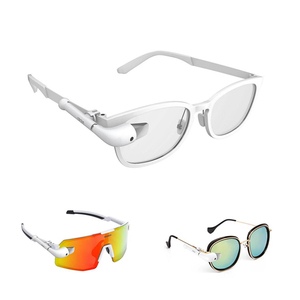
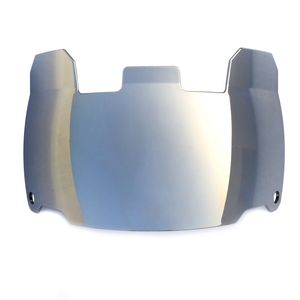
Manufactured using medical-grade transparent nylon, carbon fiber, and anti-reflective coated optical visors capable of withstanding strict hospital chemical wipe-down protocols.
2. Core Optical Engineering & Hardware Manufacturing Architecture
Designing augmented reality hardware for surgical applications demands optics and electronics far superior to commercial consumer smart glasses. A surgical optical engine must output peak luminance exceeding 1200 Nits to pierce high-intensity operating room lighting (which often ranges between 40,000 and 160,000 Lux), while maintaining contrast ratios that preserve fine anatomical tissue shades.
A. Micro-OLED & Diffraction Waveguide Optronics
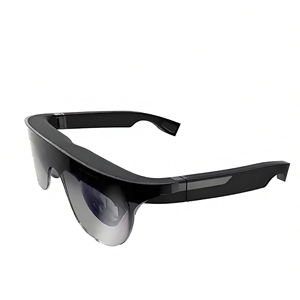
Our OEM manufacturing lines employ 0.32-inch Silicon-based Micro-OLED displays coupled with surface relief diffractive waveguides. This architecture provides high pixel density (exceeding 3000 PPI), true black levels, and wide color gamuts (100% sRGB). Unlike reflective freeform optics, diffractive waveguides allow a wafer-thin glass lens form factor (less than 1.8mm lens thickness), delivering a lightweight profile under 85 grams that prevents surgeon nasal bridge strain during 8-hour procedures.
B. Spatial Tracking & Sensor Fusion
Sub-millimeter spatial accuracy is achieved through a hybrid multi-sensor tracking pipeline. Hardware modules embed 6-DOF (Degrees of Freedom) Inertial Measurement Units (IMUs), infrared depth cameras, and dual monochrome tracking cameras. This system works in unison with patient marker arrays (active LED or passive retro-reflective optical spheres) to establish instant coordinate transformation between pre-operative CT/MRI volumetric data and intraoperative patient positioning.
| Optical Specification | Consumer AR Hardware Standard | Surgical AR Hardware (Our China Factory Standard) |
|---|---|---|
| Display Technology | TFT LCD / DLP Light Engine | Silicon Micro-OLED (0.32" / 0.71" High-Density Engine) |
| Luminance Output | 300 – 600 Nits | 1200 – 3000 Nits (Surgical Lighting Piercing) |
| Motion-To-Photon Latency | 30ms – 60ms | < 12ms (Prevents Sickness & Alignment Drift) |
| Sterilization Standard | Non-Sterile / Wipe Only | Detachable Autoclavable Visor / Biocompatible Nylon Frame |
| Spatial Registration Accuracy | ± 5.0 mm – 10.0 mm | Sub-Millimeter (≤ 0.8 mm Surgical Precision) |
| Battery & Thermal Management | Passive Cooling / Rapid Thermal Throttling | Active Heat-Pipe Copper Dissipation / Hot-Swappable Battery |
3. Global Procurement Trends in Surgical AR (2025–2030)
As international hospital networks, medical device distributors, and OEM integrators look toward upgrading surgical suites, the global market for surgical augmented reality is shifting from experimental research setups to standardized hospital procurement budgets. Key trends driving B2B sourcing decisions include:
1. AI-Powered Intraoperative Computer Vision Integration
Future surgical AR smart glasses are no longer passive monitors; they function as edge-computing AI nodes. On-board neural processing units (NPUs) process camera feeds in real time to perform real-time organ segmentation, automatically highlighting vulnerable structures like nerves, ureters, and deep vascular networks. Foreign buyers actively seek hardware manufacturers that offer open Linux/Android SDK access to deploy proprietary AI models directly on the glasses.
2. 5G Low-Latency Telementoring & Remote Surgical Collaboration
With integrated Wi-Fi 6E/7 and optional 5G modules, surgical AR devices enable senior specialists located anywhere in the world to view a live, encrypted 1080p camera feed from the operating surgeon's perspective. Remote experts can draw spatial annotations onto their touchscreen interfaces, which instantly render as 3D visual anchors inside the operating surgeon's AR visor.
3. Modular OEM Optical Components & White-Label Sourcing
Global medical device brands are increasingly partnering with specialized Chinese OEM/ODM exporters to source custom optical engines, lightweight carbon fiber frames, and sterile visor attachments. This modular procurement strategy drastically cuts clinical trial development cycles and lowers regulatory approval timelines for Western device companies.
4. Enterprise Advantages of Sourcing from China's Premier AR Medical Exporter
As a leading exporter of surgical AR hardware based in China, our manufacturing infrastructure bridges advanced optical innovation with rigorous global medical regulatory compliance. We provide foreign partners with end-to-end OEM/ODM capabilities tailored to the high-stakes requirements of modern healthcare systems.
ISO 13485 & Class 10,000 Cleanroom
Our optical engine assembly and lens coating operations take place inside certified Class 10,000 dust-free cleanrooms, eliminating particulate contamination on micro-display panels and optical waveguides.
Full Regulatory File Support (FDA & CE)
We supply international distributors with comprehensive technical documentation, biological safety evaluations (ISO 10993), EMC testing reports (IEC 60601-1-2), and software verification dossiers for FDA 510(k) and CE MDR submissions.
Complete Vertical Supply Chain Integration
From precise injection molding of transparent nylon temple arms to SMT board placement, optical jig alignment, and final sterile packaging, our vertically integrated manufacturing reduces unit costs by up to 40% compared to Western counterparts.
5. Surgical AR Procurement & Manufacturing FAQ
Below are detailed answers to the technical, regulatory, and commercial questions raised by hospital procurement boards, medical device integrators, and international importers.