

ThirdEye Gen — from real-time field operations to classified environments: secure, validated, intelligent AR workflows.

ThirdEye Gen logo MR / AI Solutions

Industry Knowledge Hub

Augmented Reality & Spatial Computing Insights

Expert articles, technical updates, and enterprise deployment insights from ThirdEye Gen.

AI + AR Software

Enterprise Workflows & AI Intelligence

Connecting experts, digital assets, and field technicians with smart telepresence.

ThirdEye X2 MR smart glasses used in maintenance

Hardware Innovation

Standalone Hands-Free Solutions

Discover how standalone Android smart glasses improve productivity across industrial environments.

ThirdEye Gen command center platform display

Command Center

Real-Time Field Intelligence

Live video feeds, telemetry, and central monitoring for multi-operator teams.

Military Grade

Tactical & Secure Extended Reality

Encrypted, air-gapped spatial computing hardware for mission-critical operations.

0%

China’s AR hardware supply chain is entering a demanding phase. The question is no longer simple production capacity. It is optical precision.

A MIDAS AR Display Mask transfers microscopic patterns onto glass, silicon, or waveguide-related substrates. Small defects can create visible haze, color shifts, or uneven brightness. These details matter inside a lightweight headset. They also matter during high-volume qualification.

SEMI’s World Fab Forecast highlights continued investment in advanced semiconductor and display manufacturing across China. Its photomask market analysis also emphasizes mask complexity, defect control, and regional supply resilience. Yole Group’s display research identifies augmented reality as a technically challenging growth area, especially for waveguides and microdisplays. Omdia reports similarly point toward stronger demand for compact, high-resolution display components. Forecasts vary. That is important.

As former ASML CEO Peter Wennink said, “Without masks, there is no chip.” The principle applies here, although AR display masks face different optical requirements. Mask suppliers must manage critical-dimension uniformity, overlay accuracy, substrate flatness, and inspection sensitivity. These are not marketing details.

This China Top 10 MIDAS AR Display Mask Suppliers guide compares manufacturers through practical criteria. It considers production scale, technology capability, customer qualification, quality systems, and disclosed delivery experience. Public information remains uneven. Some companies publish detailed specifications, while others reveal very little. Therefore, the ranking should be treated as a research starting point, not a final verdict.

The strongest supplier may not be the largest one. A smaller specialist could deliver cleaner edges, faster engineering feedback, or better support for custom AR designs. That possibility deserves attention.
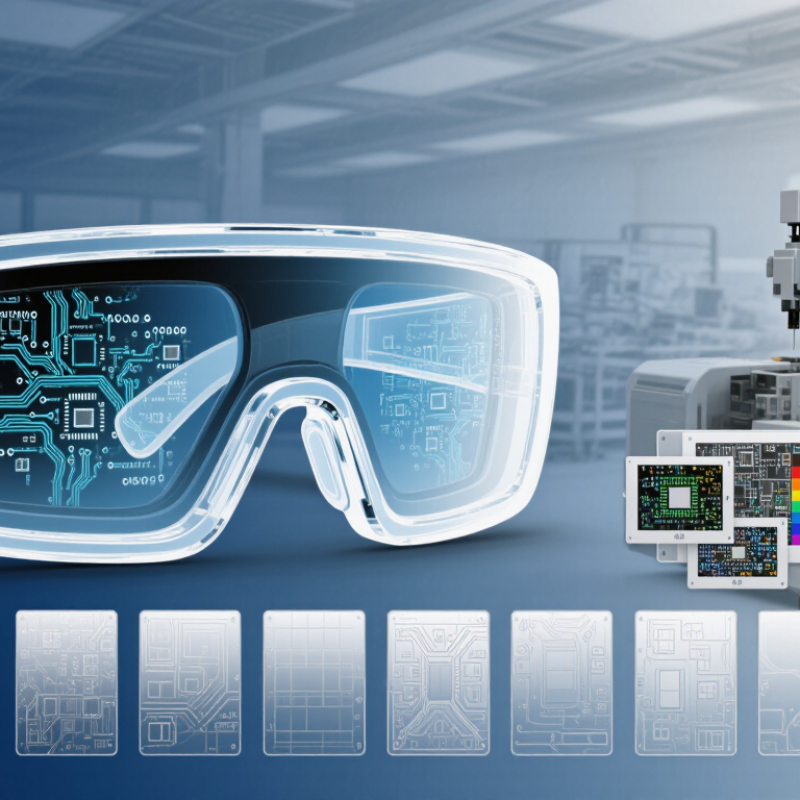
China Top 10 MIDAS AR Display Mask Suppliers?

What Are MIDAS AR Display Masks and Why Do They Matter?

MIDAS AR display masks are high-precision photomasks used to transfer tiny optical and electronic patterns onto AR display wafers. They help form pixels, electrodes, waveguide structures, and alignment marks. In practical production, a mask behaves like a microscopic stencil. A defect can create dark pixels, uneven brightness, or poor image alignment.

Their importance is growing with near-eye displays. Yole Group’s 2024 microdisplay analysis identifies silicon-based microdisplays, OLED, and emerging LED technologies as key AR development paths. The report also highlights resolution, brightness, and manufacturing yield as major challenges. SEMI’s World Fab Forecast 2024 tracks more than 1,500 semiconductor facilities and production lines worldwide, showing the scale of the manufacturing ecosystem supporting advanced displays. However, AR mask requirements remain less standardized than conventional semiconductor masks. That uncertainty can complicate supplier comparisons. A lower price may hide weaker inspection, slower revisions, or limited experience with curved and transparent optical designs.

Tips: Check critical-dimension accuracy, defect inspection limits, overlay performance, repair policy, and mask lifetime. Ask for measured data, not only marketing claims. A useful supplier should explain process control clearly. My practical view is simple: mask quality must be judged beside the display process, not alone. The best specification can still fail when alignment tolerances are poorly understood.

How to Evaluate China’s MIDAS AR Display Mask Suppliers

China Top 10 MIDAS AR Display Mask Suppliers

Evaluating China’s MIDAS AR display mask suppliers requires more than comparing prices. Check whether each supplier controls critical dimensions, overlay accuracy, defect density, and substrate flatness. Ask for recent inspection data, not only catalog specifications. A reliable supplier should explain its cleaning process, chrome coating, pellicle options, and inspection wavelength clearly.

Request sample masks for a controlled trial. Measure pattern fidelity under your actual exposure conditions. Confirm compatibility with your resist, equipment, and AR waveguide design. Production records should include lot numbers, operator checks, inspection images, and corrective actions. Factory visits can reveal important details, such as cleanroom discipline, storage humidity, and mask handling practices. Small handling errors matter.

Do not judge the top ten suppliers by equipment lists alone. Review engineering response time, prototype flexibility, replacement procedures, and export documentation. Ask how the supplier manages design changes without losing revision control. A low quotation may hide longer qualification cycles or weaker after-sales support. That risk is easy to underestimate.

A technical audit is useful. It is not perfect. Data may represent an unusually strong production lot, while daily consistency remains unclear. I would compare at least three trial batches and record yield, defect trends, and delivery variation. Independent verification adds confidence, especially when specifications are unfamiliar. Clear communication matters too, because a supplier that admits process limits may be more dependable than one promising flawless results.

Profiles of the Top 10 China MIDAS AR Display Mask Suppliers

China’s leading MIDAS AR display mask suppliers differ in scale, tooling depth, and quality control. The first profile is a precision photomask specialist serving compact AR waveguide patterns. The second focuses on large-area masks for display panels. A third supplier emphasizes semiconductor-grade inspection and tighter defect thresholds. The fourth produces quartz masks with stable thermal performance. The fifth supports rapid prototypes for optical design teams. Short lead times matter here.

The sixth profile represents a high-volume manufacturer with automated cleaning and inspection lines. The seventh specializes in fine chrome patterns for complex light-distribution structures. The eighth combines mask fabrication with data preparation and pattern verification. The ninth offers customized substrates for unusual panel sizes. The tenth provides engineering support, including mask repair assessment and process troubleshooting. Capabilities vary considerably.

Reliable buyers should examine measurement records, material traceability, repeat-order consistency, and communication quality. Factory visits can reveal details that brochures hide, such as dust control and operator discipline. In practice, even an advanced supplier may struggle with urgent design changes or incomplete drawings. That is worth admitting. A strong profile should therefore include sample evaluation, defect mapping, dimensional reports, and a clear revision process. These checks offer more dependable evidence than a simple supplier ranking.

Comparison of Supplier Capabilities, Quality, and Production Capacity

Comparing China’s top ten MIDAS AR display mask suppliers requires more than checking equipment lists. A capable supplier should demonstrate stable pattern accuracy, low defect density, and consistent critical-dimension control. These details directly affect AR image clarity and production yield.

Quality evidence matters. Ask for inspection records, process capability data, particle-control procedures, and traceability from substrate preparation to final packaging. Overlay accuracy should remain stable across repeated lots, not only during a successful sample run. Experienced teams can explain cleaning cycles, repair limits, and inspection methods in practical terms. Vague answers deserve caution.

Production capacity also needs careful comparison. Review cleanroom size, lithography equipment, inspection throughput, staffing, and average delivery time. A large installed capacity may not equal available capacity. Check whether the supplier can reserve lines for pilot orders and later volume increases. Small-batch flexibility is useful during design verification. Still, it may expose weaker cost control.

Ask difficult questions. How are urgent engineering changes handled? What happens when a lot fails inspection? Reliable suppliers provide corrective-action reports, controlled revisions, and measurable recovery plans. Their quality systems should support repeat orders, not just initial delivery. Some published rankings may simplify the picture. Real performance can vary by mask size, pattern density, and customer schedule. Supplier comparisons should therefore combine factory audits, sample evaluations, and verified production records.

How to Select the Right MIDAS AR Display Mask Supplier in China

How to Select the Right MIDAS AR Display Mask Supplier in China

Selecting a Chinese MIDAS AR display mask supplier requires more than comparing prices. Clarify the mask type, optical function, substrate, and coating process before requesting quotations. Grand View Research estimates the global augmented reality market could grow at a 39.8% CAGR from 2023 to 2030. This growth increases pressure on suppliers to deliver stable, repeatable components. Ask for measured transmittance, haze, dimensional tolerance, surface roughness, and distortion results. A polished sample may look excellent, yet production consistency can still fail.

Visit the factory, or arrange a documented remote audit. Check coating rooms, inspection equipment, calibration records, and batch traceability. Request samples from three separate production lots. Compare them under identical lighting and viewing angles. Suppliers should explain corrective actions, not only display certificates. ISO 9001 supports process discipline, but it does not guarantee optical performance. An independent laboratory can verify critical results. This step costs money, though reworking a full batch costs more.

Tips: Build a scorecard covering quality, tooling, lead time, communication, and after-sales support. Request a small pilot order before signing annual volumes. Confirm packaging protects edges and coated surfaces during transport. Include acceptance limits in the purchase agreement. Be careful with unusually low quotes. They may hide weaker inspection or unstable materials. I have seen supplier evaluations focus too heavily on price; that judgment often needs reconsideration.

How to Select the Right MIDAS AR Display Mask Supplier in China

Recommended screening weights for evaluating suppliers of AR display masks and related optical manufacturing services.

Optical performance and manufacturing consistency should receive the highest priority because they directly affect image clarity, brightness uniformity, and production yield. Quality-system capability, customization support, delivery reliability, and total cost should then be assessed through samples, inspection records, pilot orders, and documented commercial terms.

FAQS

What are MIDAS AR display masks?

They are precision photomasks used to transfer optical and electronic patterns onto AR display wafers. Think of them as microscopic stencils.

Which structures can these masks create?

They can form pixels, electrodes, waveguide structures, and alignment marks. Each pattern must match the display design closely.

Why does mask quality matter?

A small defect may create dark pixels, uneven brightness, or poor image alignment. Tiny errors can become visible problems.

What challenges affect AR display mask production?

Resolution, brightness, and manufacturing yield remain major challenges. AR mask requirements are also less standardized than traditional semiconductor masks.

Which measurements should buyers request?

Ask for critical-dimension accuracy, defect inspection limits, overlay performance, repair policy, and mask lifetime. Request measured data, not broad claims.

What materials and features may matter?

Quartz substrates can offer stable thermal performance. Fine chrome patterns may support complex light-distribution structures.

How should buyers compare suppliers?

Review measurement records, material traceability, repeat-order consistency, and communication quality. Price alone is a weak comparison.

What should a sample evaluation include?

Check defect mapping, dimensional reports, pattern verification, and revision handling. A factory visit may reveal dust-control weaknesses.

Why are prototypes and design revisions important?

Optical teams often need rapid prototypes and urgent design changes. Some suppliers may struggle with incomplete drawings.

Can a strong mask specification guarantee display performance?

No. Alignment tolerances can still be misunderstood during production. This is an easy point to overlook.

Conclusion

This article provides a practical guide to China’s top 10 MIDAS AR Display Mask suppliers, focusing on the role these precision components play in augmented reality display performance. It explains how a MIDAS AR Display Mask can influence optical clarity, dimensional accuracy, uniformity, durability, and overall device reliability. Readers will also learn how to evaluate suppliers based on technical expertise, manufacturing equipment, quality management, customization capabilities, delivery consistency, and after-sales support.

The article compares supplier capabilities, product quality, production capacity, inspection procedures, and experience with demanding optical and microfabrication applications. It also offers a structured approach to selecting the right supplier by considering project requirements, prototype support, scalability, communication, cost efficiency, and long-term cooperation potential. By using these criteria, buyers can better identify a dependable manufacturing partner and reduce risks during development and mass production.

Amelia

Amelia

Amelia is a professional marketing specialist with a deep understanding of the company’s products, services, and customer needs. Through years of experience in market research, content strategy, and product communication, she translates complex information into clear, practical, and engaging......