

ThirdEye Gen — from real-time field operations to classified environments: secure, validated, intelligent AR workflows.

ThirdEye Gen logo MR / AI Solutions

Industry Knowledge Hub

Augmented Reality & Spatial Computing Insights

Expert articles, technical updates, and enterprise deployment insights from ThirdEye Gen.

AI + AR Software

Enterprise Workflows & AI Intelligence

Connecting experts, digital assets, and field technicians with smart telepresence.

ThirdEye X2 MR smart glasses used in maintenance

Hardware Innovation

Standalone Hands-Free Solutions

Discover how standalone Android smart glasses improve productivity across industrial environments.

ThirdEye Gen command center platform display

Command Center

Real-Time Field Intelligence

Live video feeds, telemetry, and central monitoring for multi-operator teams.

Military Grade

Tactical & Secure Extended Reality

Encrypted, air-gapped spatial computing hardware for mission-critical operations.

0%

Choosing Smart Bone Healing Technology is not simply a matter of selecting the newest device. It requires clinical judgment, verified evidence, and a clear understanding of the patient’s healing environment. Bone quality, fracture location, blood supply, infection risk, movement, and underlying conditions can all influence recovery. A sensor may show loading patterns, while imaging may reveal alignment changes. Neither replaces careful examination by a qualified orthopedic professional.

Professor Peter Augat, an orthopedic trauma researcher known for studying bone biomechanics and fracture healing, emphasizes a practical principle: “Technology should support biological healing, not replace clinical judgment.” This idea should guide every purchasing decision. Look for systems with transparent validation, reliable measurements, clear safety documentation, and meaningful clinical outcomes. Artificial intelligence can identify patterns, but it may still miss pain, swelling, poor nutrition, or patient anxiety. That limitation matters.

The best Smart Bone Healing Technology should fit real clinical workflows. It should produce understandable data, not attractive graphs without useful action. Ask who tested the system, how many patients were studied, and whether independent researchers confirmed the results. Check training requirements, maintenance costs, data protection, and compatibility with existing imaging equipment. Small details matter, such as whether a wearable sensor remains comfortable under a brace.

There is no perfect solution. Some technologies may improve monitoring but add cost or confusion. Others may work well in research settings yet perform poorly in busy clinics. A careful choice balances innovation with evidence, practicality, patient safety, and professional oversight. Progress is valuable, but thoughtful skepticism protects patients.
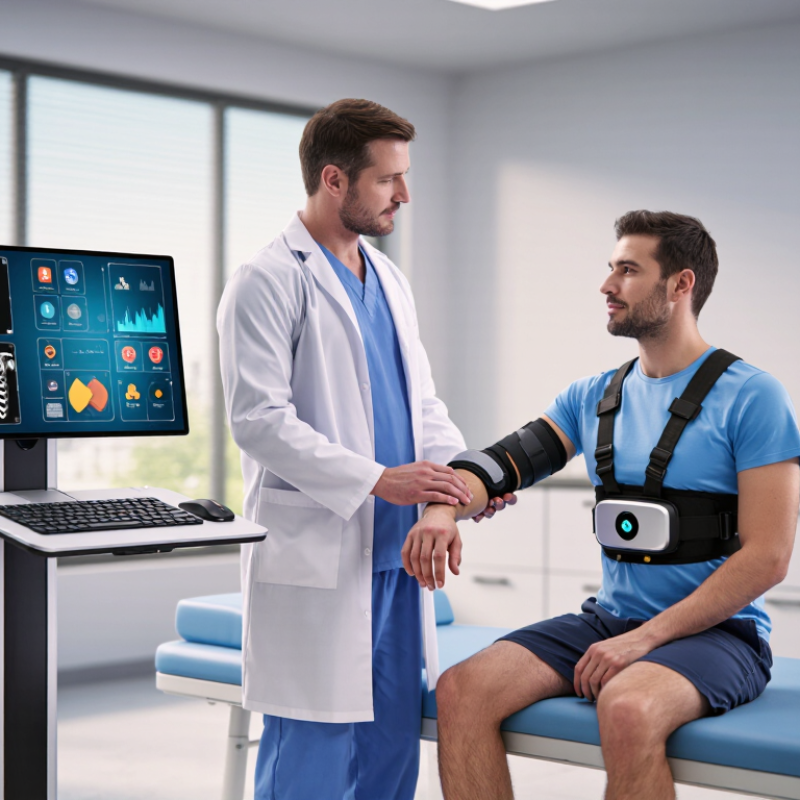
How to Choose Smart Bone Healing Technology?

Define the Technology: LIPUS, PEMF, Sensors, and AI-Guided Care

Choosing smart bone-healing technology starts with understanding what each tool actually measures. LIPUS uses low-intensity sound waves near the injured area. PEMF delivers pulsed electromagnetic fields through a wearable device. Neither method replaces fracture alignment, stable fixation, nutrition, or scheduled imaging. Evidence can vary by fracture type and patient condition. Ask an orthopedic clinician which indication fits your case.

Sensors add practical detail. A small wearable may record movement, limb loading, skin temperature, or swelling changes. These signals can reveal skipped exercises or excessive activity before pain becomes severe. However, sensor readings are not the same as bone healing. A loose strap can distort results. So can sweat, poor placement, or a damaged adhesive.

AI-guided care can organize these data and flag unusual patterns. It might suggest contacting a care team after repeated low activity or rising temperature. It should not independently change treatment. Human review remains essential, especially when pain, numbness, fever, or wound drainage appears. Check how the system protects health information and explains its recommendations. In practice, the most useful technology is often the one patients can wear consistently. That sounds simple. It is not. A technically advanced device becomes ineffective when charging, fitting, or daily instructions feel confusing. Record questions after each use, and bring the device data to follow-up visits.

Start with Biology: Most Fractures Heal Within 6–8 Weeks (AAOS)

How to Choose Smart Bone Healing Technology?

Start with biology, not gadgets. The American Academy of Orthopaedic Surgeons states that most fractures heal within 6–8 weeks. That timeline is a guide, not a promise.

Age, fracture location, blood supply, smoking, diabetes, and treatment stability can change it. A visible callus on an X-ray may look encouraging, while pain and poor function remain.

Choose technology that supports clinical judgment. Imaging tools should show alignment, callus formation, and possible delayed union. Wearable sensors may track movement, loading, or temperature around the injury.

These measurements can help, but they cannot replace physical examination. The U.S. Food and Drug Administration also distinguishes device clearance from proof of superior healing outcomes. That difference matters.

Evidence remains uneven. Reviews indexed by the National Institutes of Health report mixed results for electrical and mechanical stimulation in routine fracture care. Some patients may benefit, especially when healing is delayed. Others may gain little.

Ask how the device was studied, which fractures were included, and whether outcomes improved beyond standard care. Ask about false alarms, data privacy, and clinician response time. Small details matter.

Technology should fit the biology, not pressure it. My own assumption would be simple: more data does not always mean better healing.

Compare Clinical Evidence: FDA-Cleared LIPUS Reports 86% Nonunion Healing

Choosing smart bone-healing technology requires more than reading a success percentage. FDA-cleared low-intensity pulsed ultrasound, or LIPUS, has been evaluated in clinical settings for difficult fractures. Some clinical reports describe an 86% healing rate for nonunion cases. That figure is encouraging, but it should not be treated as a guarantee. Patient selection, fracture location, treatment duration, and follow-up methods can change the result.

Look closely at the evidence. Was healing confirmed through X-rays, clinical examination, or both? Were patients treated alongside surgery, bone grafting, or other care? Reliable reports should explain these details clearly. They should also identify the study population, monitoring period, and reasons for treatment failure. A strong technology supports medical care. It does not replace fracture stabilization or professional diagnosis.

Daily use matters, too. A clinician may check whether the device fits the injury site and whether the patient can maintain consistent sessions. Small practical issues, such as poor contact or missed treatments, may reduce real-world value. The number is useful, not magical. I would also question reports that present 86% without discussing the remaining 14%. Comparing transparent clinical evidence, regulatory clearance, usability, and independent follow-up gives patients and clinicians a more dependable basis for choosing smart bone healing technology.

Check Safety and Regulation: FDA 510(k) Clearance and Contraindications

When choosing smart bone-healing technology, treat FDA status as a screening checkpoint, not a quality trophy. A 510(k) clearance means substantial equivalence to a legally marketed predicate device. It does not prove zero risk or clinical superiority.

The FDA’s MDUFA V goals set a 90% target for 510(k) decisions within 90 FDA days (FDA, MDUFA V Performance Goals and Procedures, 2023).

Check the clearance number, intended anatomy, energy output, software version, and approved indications. Small details matter.

Read contraindications before comparing convenience. A device may be unsuitable with an implanted electronic system, active infection, damaged skin, poor fracture fixation, pregnancy, or open growth plates. The exact list varies by technology.

Use the current instructions for use, not promotional summaries. Ask the surgeon to match the device with fracture type, healing stage, imaging results, and health conditions.

The American Academy of Orthopaedic Surgeons estimates that about 5–10% of fractures may develop nonunion (AAOS, Nonunions). That is population data, not your prognosis.

Review FDA MAUDE reports for safety signals, but remember that reports do not prove causation or incidence. I would still hesitate to rely on one database. No checklist replaces clinical judgment.

Choose by Outcomes: Adherence, Monitoring Accuracy, Cost, and Patient Needs

How to Choose Smart Bone Healing Technology?

Choose by Outcomes: Adherence, Monitoring Accuracy, Cost, and Patient Needs

A smart bone healing system should fit daily life, not merely look advanced. Adherence often determines whether treatment provides meaningful support. Ask how easily patients can wear, charge, clean, and position the device. A clear indicator helps. Simple reminders may also reduce missed sessions. Short instructions matter, especially after surgery, when pain and fatigue affect attention. Yet convenience alone is not enough.

Monitoring accuracy requires careful review. Clinicians should examine how the system detects treatment use and records relevant measurements. Look for transparent validation data, clear placement guidance, and reliable performance across different body types. A reading can appear precise while reflecting poor contact or incorrect positioning. That weakness deserves attention. Regular clinical review remains important because digital measurements cannot replace wound checks, imaging, or professional judgment.

Cost should include more than the purchase price. Consider training time, replacement parts, technical support, follow-up visits, and possible reimbursement limits. A lower initial cost may create higher expenses later. Patient needs should guide the final choice. An older adult may struggle with small controls, while an active worker may need flexible treatment times. Limited internet access can also affect connected monitoring. The best option may not be the most sophisticated one. It is the one patients can use correctly, consistently, and safely. Even well-designed technology can fail when instructions are unclear or expectations are unrealistic.

FAQS

What do LIPUS and PEMF devices do?

LIPUS uses low-intensity sound waves near an injured area. PEMF delivers pulsed electromagnetic fields through wearable equipment. Neither replaces alignment, fixation, nutrition, or imaging. Evidence differs by fracture type and patient condition.

Can smart devices prove that a bone has healed?

No. Sensors may track movement, limb loading, temperature, or swelling. These signals suggest patterns, but they do not confirm bone healing. Imaging and clinical examination remain necessary. Not always.

What can make sensor readings inaccurate?

Loose straps, sweat, poor placement, or damaged adhesive can distort measurements. A device may report low activity when contact is poor. Check its position before interpreting unusual results.

How should artificial intelligence support bone-healing care?

It can organize data and flag repeated low activity or rising temperature. It should not change treatment independently. Human review remains essential when pain, numbness, fever, or drainage appears.

What should patients check before using a healing device?

Review the current instructions and contraindications. Some devices may be unsuitable with implanted electronic systems, infection, damaged skin, or unstable fixation. Pregnancy and open growth plates may also require special advice. Ask a clinician to match the device with your condition.

Does regulatory clearance prove that a device is superior?

No. A clearance usually indicates substantial equivalence to an existing legal device. It does not prove zero risk or better clinical results. Check the intended anatomy, energy output, software version, and approved indications.

What costs should be included when comparing devices?

Consider the purchase price, training, replacement parts, technical support, follow-up visits, and reimbursement limits. A cheaper device may create higher later expenses. The receipt is not the whole story.

How can patients improve daily adherence?

Choose equipment that is easy to wear, charge, clean, and position. Clear indicators and short reminders may reduce missed sessions. Bring device data and written questions to follow-up visits. That sounds easy. It is not.

Conclusion

Smart Bone Healing Technology combines biological understanding with tools such as low-intensity pulsed ultrasound (LIPUS), pulsed electromagnetic field (PEMF) therapy, wearable sensors, and AI-guided care. Before selecting any option, remember that many fractures heal naturally within approximately six to eight weeks when properly aligned and supported. Technology should therefore complement, not replace, professional diagnosis, treatment, and follow-up.

When comparing solutions, evaluate the quality of clinical evidence, reported healing outcomes, safety information, and regulatory status. Some FDA-cleared LIPUS devices have reported nonunion healing rates of up to 86% in clinical studies, but results may vary according to fracture type, patient health, and adherence. Check contraindications and seek medical advice before use. The best choice should also consider ease of daily use, monitoring accuracy, treatment cost, access to clinical support, and individual patient needs. A practical solution is one that encourages consistent adherence while providing reliable information for informed medical decisions.

Amelia

Amelia

Amelia is a professional marketing specialist with a deep understanding of the company’s products, services, and customer needs. Through years of experience in market research, content strategy, and product communication, she translates complex information into clear, practical, and engaging......