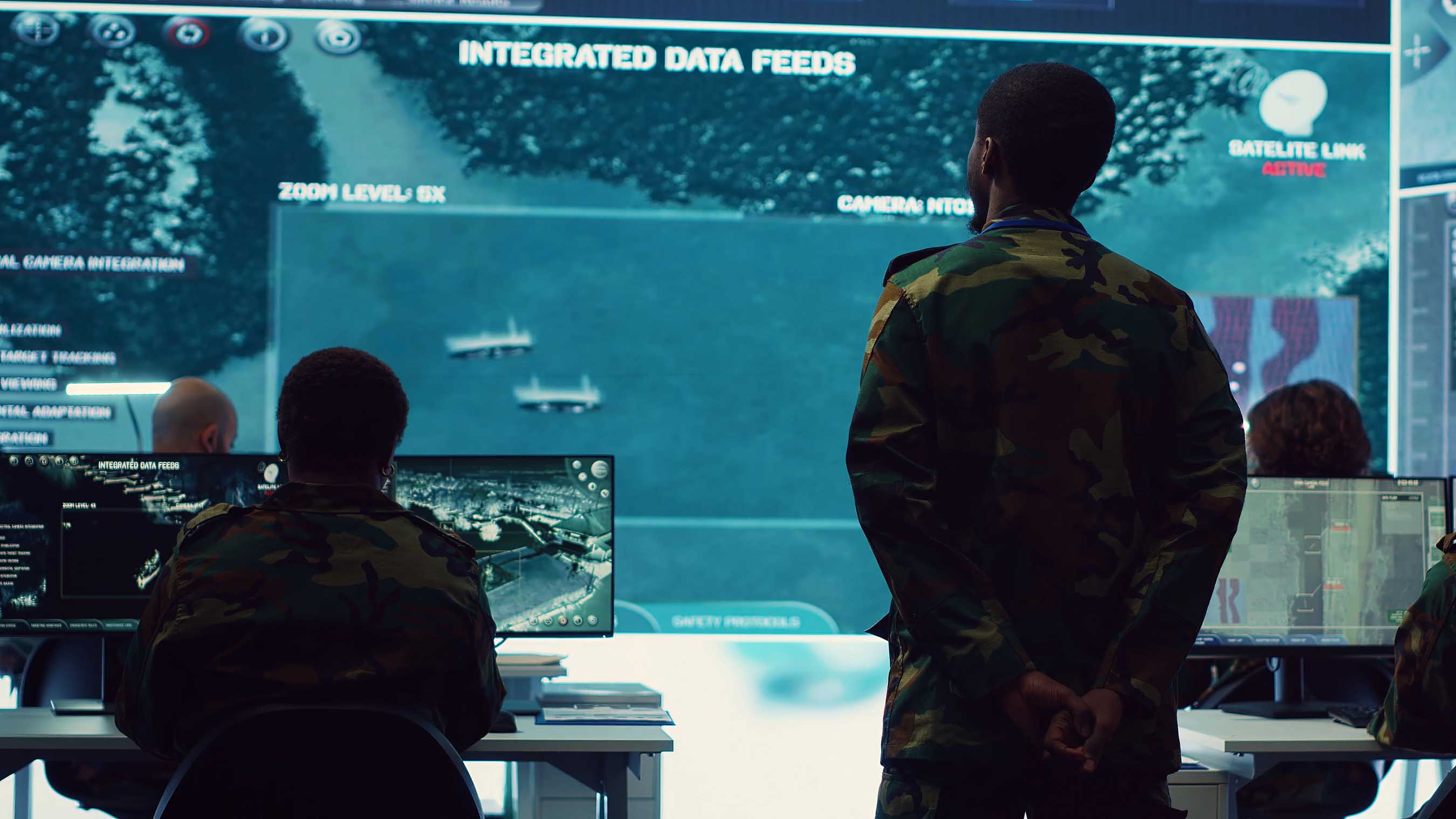
Choosing a Defense Command Center Platform in 2026 will require more than comparing dashboards, licenses, or artificial intelligence claims. Defense organizations need a system that connects sensors, communications, incident workflows, and human decisions under pressure. A commander may need one reliable view while teams investigate a disrupted network, a false alarm, or a supply-chain warning. The platform must support secure collaboration without creating another isolated data silo.
Recent industry research shows why this decision matters. IBM’s Cost of a Data Breach Report 2024 reported an average global breach cost of $4.88 million. Verizon’s 2025 Data Breach Investigations Report found ransomware appeared in 44% of analyzed breaches. Its findings also showed that third-party involvement had doubled to 30%. These figures cover broad organizations, not only defense agencies. Still, they expose practical weaknesses in fragmented monitoring and slow response. NIST Cybersecurity Framework 2.0 also emphasizes governance, identification, protection, detection, response, and recovery. A capable platform should support these outcomes, not merely display alerts.
The 2026 evaluation should examine interoperability, zero-trust alignment, auditability, resilience, deployment options, and operator workload. Ask how quickly an analyst can trace an event from a map to its original telemetry. Test whether the system remains useful during degraded connectivity. Review data ownership, retention, and supplier support. No platform is perfect. Some impressive demonstrations fail during noisy, low-bandwidth operations. Independent testing, realistic exercises, and feedback from experienced users should guide the final decision. The right choice is not the platform with the most features. It is the one that helps authorized teams make timely, defensible decisions when conditions become uncertain.

Define Mission Scope Using NATO’s 2024 23-of-32 2%-GDP Benchmark
How to Choose a Defense Command Center Platform in 2026?
Define mission scope before comparing features. NATO reported that 23 of 32 allies were expected to meet the 2%-of-GDP defense spending guideline in 2024. This figure is a planning benchmark, not a complete measure of readiness. A command center platform should connect funding decisions with real operational needs, such as air surveillance, maritime response, logistics, and crisis coordination.
Start with the mission map. Identify decision owners, response times, data sources, and continuity requirements. Then test whether the platform provides a shared operating picture without hiding uncertainty. It should combine sensor feeds, asset status, personnel availability, maintenance records, and approved intelligence workflows. Audit trails matter. So does offline access.
Test it under pressure.
In practical evaluations, request a scenario involving a sudden infrastructure outage and limited communications. Watch how quickly teams verify information, assign tasks, and record decisions. A useful platform should support interoperability, role-based access, strong encryption, and transparent data governance. It must also show how spending supports measurable capability, rather than merely displaying budget totals. A polished dashboard can still conceal weak data.
Be cautious with scoring models. The 2% benchmark offers helpful context, but national missions differ widely. I would document assumptions, invite independent reviewers, and repeat testing with imperfect data. That extra step may feel inefficient. It often exposes the platform’s real limits.
Map Interoperability to STANAGs and DoD CJADC2 Data Standards
How to Choose a Defense Command Center Platform in 2026?
A capable command center platform must exchange data beyond its own software environment. Map every operational data flow to relevant STANAG requirements and DoD CJADC2 data principles. Do not accept broad claims of “interoperability.” Request evidence from controlled tests, interface documents, and recent deployment records.
The mapping should cover message formats, metadata, identity, time synchronization, and data ownership. STANAG applicability depends on the mission. Imagery, unmanned systems, tactical messaging, and geospatial data may require different profiles.
A platform should support machine-readable data, discoverable services, versioned schemas, and secure access controls. These details matter when a unit receives an incomplete track through a congested network.
Test the platform in realistic conditions. Introduce delayed feeds, lost connections, duplicate reports, and conflicting coordinates. Measure whether operators can still find, verify, and share useful information. CJADC2 is not one universal interface. It is a data-centric approach requiring disciplined governance and continuous integration. That distinction is easy to miss.
Keep a record of failed tests. They often reveal more than successful demonstrations. A spreadsheet can expose an unmapped field, an outdated STANAG profile, or unclear data authority. No test plan is perfect. Review it with operators, engineers, security specialists, and standards experts before procurement. A strong platform proves interoperability under pressure, not only in a polished briefing.
Assess Cybersecurity with NIST SP 800-207 and CISA Zero Trust Guidance
A defense command center platform should support zero trust, not merely display alerts.
NIST SP 800-207 requires continuous verification of users, devices, applications, and data. Trust cannot depend on network location alone. Each access request needs context, policy enforcement, and updated risk signals. During a practical pilot, test a contractor login from an unmanaged laptop. The platform should detect the device condition and adjust access immediately. That gap matters.
CISA zero trust guidance emphasizes identity, device security, network controls, applications, data, visibility, and automation.
Choose a platform that connects these areas without hiding them behind one dashboard. Ask whether analysts can trace an alert from identity activity to a blocked request. Check whether policies change quickly when a device becomes vulnerable. Short demonstrations are not enough. Use simulated credential misuse, unusual data movement, and delayed sensor reporting. Record every decision.
Strong platforms provide detailed audit trails, time-synchronized logs, role-based administration, and tested recovery procedures.
They should expose useful APIs for existing security and operational tools. Measure detection time, policy accuracy, false positives, and analyst workload. Do not accept vague claims about artificial intelligence or complete automation. Human review still matters. One uncomfortable lesson is that strict controls can disrupt urgent missions. Treat that tension as test evidence, not failure. Revisit exceptions regularly, because temporary access often becomes permanent.
Benchmark Scale Against SIPRI’s $2.718T Global Spending in 2024
How to Choose a Defense Command Center Platform in 2026?
SIPRI reported global military spending of approximately $2.718 trillion in 2024. That figure changes the scale of platform selection. A command center cannot be judged only by screen design or purchase price. It must support distributed operations, secure data exchange, and sustained decision-making across large organizations.
During platform evaluations, I would test three practical conditions: response time, data continuity, and operator workload. Can the system connect radar, logistics, communications, and intelligence feeds without creating confusion? Can authorized teams work during network disruption? Can commanders trace why an alert appeared? These questions reveal capability better than a polished demonstration.
Scale matters more than impressive features.
A platform should handle expanding users, sensors, locations, and historical records without slowing critical workflows. It also needs clear access controls, audit trails, encryption, and resilient backup procedures. Independent testing and documented security practices strengthen trust, especially when procurement decisions involve public funds.
My own evaluation process has a weakness: technical teams often overvalue integration depth. Operators may prefer fewer tools and faster choices. That tension deserves measurement, not assumptions. I would observe personnel during realistic exercises, record task completion times, and review avoidable errors. The best platform may not be the most advanced one. It may be the one that remains understandable at 3 a.m., when information is incomplete and pressure is high.
How to Choose a Defense Command Center Platform in 2026?
Benchmark platform scale against SIPRI’s estimated global military expenditure of $2.718 trillion in 2024. Regional spending indicates where interoperability, data integration, cybersecurity, and operational scalability may matter most.
Estimated 2024 military expenditure by region, shown in billions of current US dollars. Regional values are rounded and sum to approximately SIPRI’s reported global total of $2.718 trillion.
Select by Lifecycle Cost Within the U.S. FY2025 $849.8B Defense Context
How to Choose a Defense Command Center Platform in 2026?
The U.S. FY2025 defense context, valued at approximately $849.8 billion, makes disciplined spending essential. That figure signals scale, not unlimited purchasing power. A command center platform should be evaluated through its full lifecycle cost, not its initial contract price. Procurement teams should examine deployment, integration, training, cybersecurity, staffing, upgrades, energy use, and eventual retirement.
Look beyond the first invoice.
Build a ten-year total-cost model with conservative, expected, and adverse scenarios. Include specialist labor for configuration and mission-data changes. Record integration hours during trials, not after deployment. Measure uptime during exercises, response time under heavy data loads, and the effort required to add new sensors. Small delays can become expensive operational habits. A spreadsheet can look precise and still be wrong.
Technical resilience also affects cost.
Open interfaces can reduce future migration expenses, while closed dependencies may increase them. Assess interoperability, access controls, audit records, backup procedures, and security accreditation evidence. Request documented test results and customer references from comparable environments. The cheapest platform may create hidden training or maintenance burdens. That risk deserves a visible line item. I would also reserve contingency funding, because deployment assumptions often fail under real operational pressure. Senior users, engineers, finance officers, and security specialists should review the model together before approval.
Conclusion
Choosing a Defense Command Center Platform in 2026 requires a mission-first evaluation that connects operational needs, technical standards, cybersecurity, scalability, and long-term affordability. Begin by defining the platform’s mission scope against the evolving defense environment, including the NATO 2024 benchmark in which 23 of 32 members reached the 2%-of-GDP defense spending target. Next, assess interoperability through support for relevant STANAGs and DoD CJADC2 data standards, ensuring that information can move securely across services, domains, and allied networks.
Cybersecurity should be tested against NIST SP 800-207 principles and CISA Zero Trust guidance, with strong identity controls, continuous verification, segmented architecture, and resilient operations. Scale the solution against the global defense spending context of $2.718 trillion in 2024, while evaluating performance, availability, and expansion capacity. Finally, compare total lifecycle cost—including integration, training, upgrades, maintenance, and decommissioning—within the U.S. FY2025 defense context of $849.8 billion. The best platform is the one that delivers dependable mission value, secure interoperability, measurable scalability, and sustainable cost control.