What Are the Best Military Smart Glasses from China?
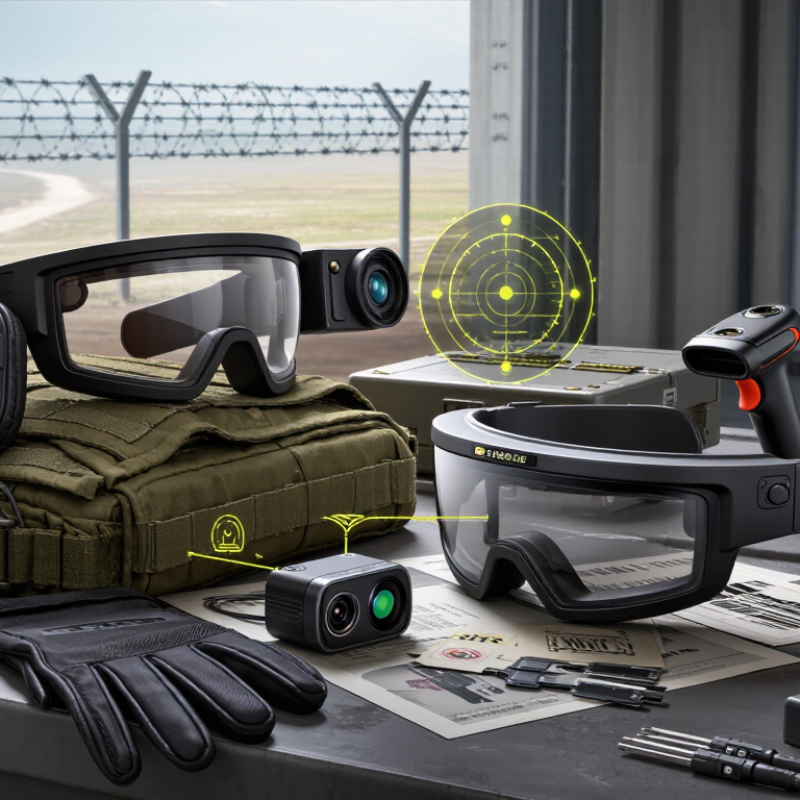
China’s military smart glasses increasingly rely on compact optical systems and rugged computing. Their core technology is often a waveguide display, which places digital information near the user’s natural field of vision. This reduces the need to look down at a separate screen. Brightness control matters outdoors. Poor calibration can still cause eye strain.
Low-light sensors, thermal imaging modules, and inertial measurement units support navigation in difficult environments. Some designs combine these inputs through edge computing, limiting dependence on distant servers. Secure wireless links can transfer maps, equipment status, or team messages. However, connection quality may fall inside concrete structures or during heavy interference. That weakness deserves honest testing.
Power management remains a practical challenge. A smaller battery improves comfort, but shortens operating time. Engineers may use replaceable power units, efficient processors, and automatic display dimming. Protective housings also need resistance to dust, rain, vibration, and sudden temperature changes. Comfort is not optional. An experienced evaluation should measure weight balance, heat around the face, lens clarity, and control accuracy after extended wear.
Reliable assessment requires more than impressive demonstrations. Independent laboratories should examine optical safety, electromagnetic compatibility, cybersecurity, and data handling. Operators should test the glasses during movement, low visibility, and noisy communication conditions. Interoperability with existing navigation and communication systems is equally important. No single configuration is best for every mission. Some early designs may still trade visual range for battery life, while advanced features can increase training demands.