
Hardware Innovation
Standalone Hands-Free Solutions
Discover how standalone Android smart glasses improve productivity across industrial environments.
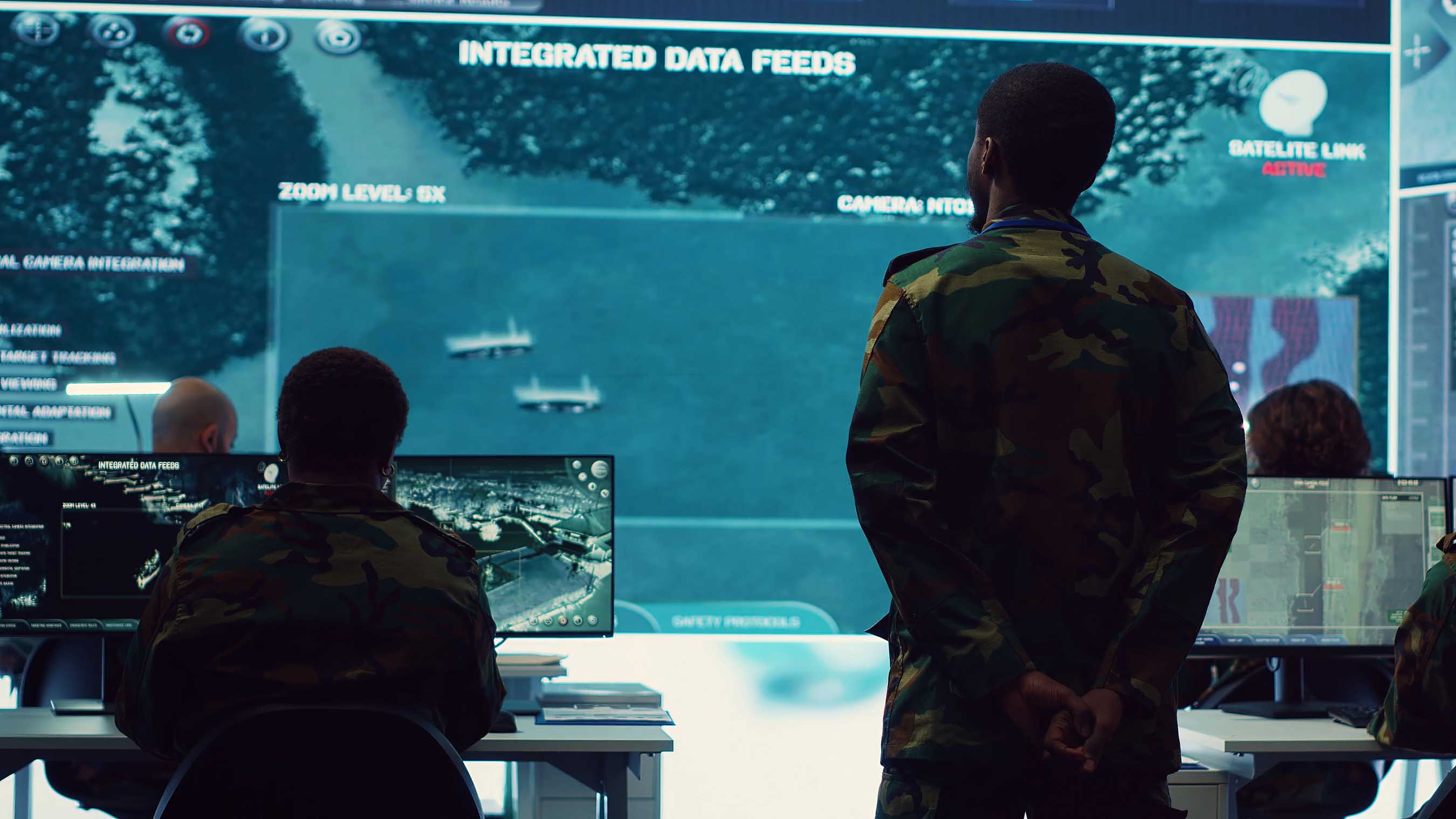
Command Center
Real-Time Field Intelligence
Live video feeds, telemetry, and central monitoring for multi-operator teams.
Extended reality is moving beyond demonstrations and gaming rooms. It now supports design reviews, medical training, industrial maintenance, and remote collaboration. That growth creates a difficult question: which platforms can protect users, devices, identities, and spatial data at the same time?
This guide examines the 2026 top types of Secure Extended Reality Software. It considers secure XR browsers, identity management tools, device control platforms, encrypted collaboration systems, and spatial privacy solutions. Each category addresses a visible risk. A headset may record voices, eye movements, room layouts, and hand gestures. A weak permission setting can expose more than expected. Small details matter. For example, an administrator should know which application accessed a warehouse scan, when it happened, and why.
Security technologist Bruce Schneier wrote, “Security is a process, not a product.” His warning fits extended reality especially well. Software updates, access reviews, employee training, and incident testing must continue after deployment. Trust cannot rest on a polished interface.
The market remains imperfect. Some vendors promise privacy without explaining retention periods. Others provide strong encryption but weak account recovery. This comparison looks beyond feature lists. It considers practical controls, independent testing, usability, vendor transparency, and compliance readiness. Readers should still verify current certifications and regional requirements before making a purchase. No single platform removes every risk. That uncomfortable fact deserves attention.
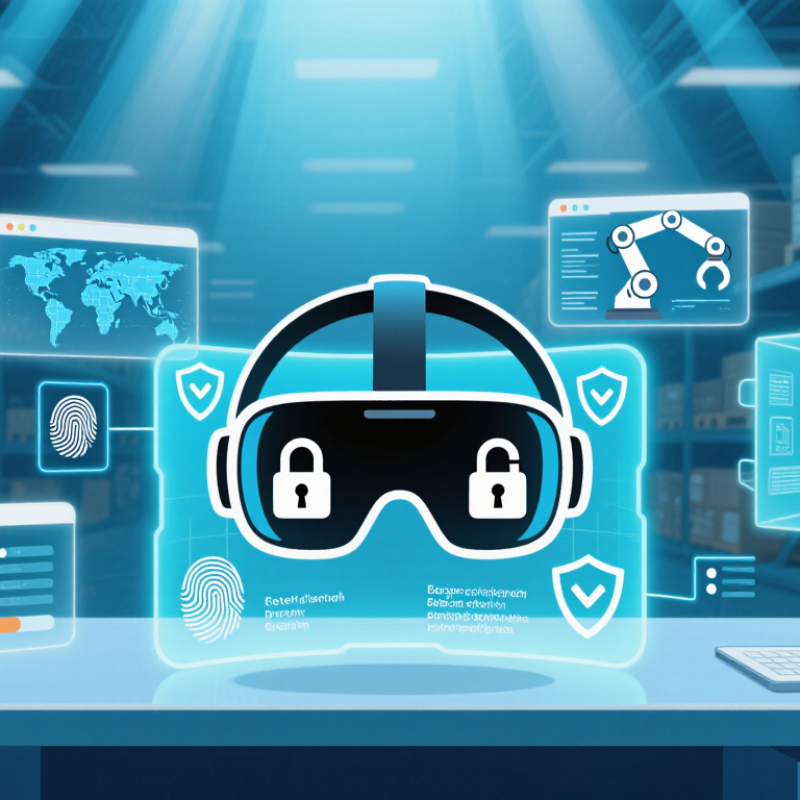
Definition and Scope of Secure Extended Reality Software
Secure extended reality software covers the systems that protect augmented, virtual, and mixed reality environments. Its scope reaches beyond passwords and device encryption. It includes identity control, secure applications, spatial mapping, biometric data, voice commands, cloud connections, and developer interfaces. A headset may record a room’s walls, movement patterns, and nearby conversations. That information needs strict collection, storage, and deletion rules.
The 2024 Global Cybersecurity Outlook reported that 93% of cyber leaders expect generative technologies to worsen cyber risks. XR software can widen that exposure through realistic social engineering and manipulated virtual scenes. A 2024 global breach report found human involvement in 68% of reported incidents. Therefore, secure XR design should include clear user prompts, permission layers, session monitoring, and rapid account recovery. Technical controls alone are not enough.
Secure XR software also covers content integrity and operational safety. Developers should verify digital objects before deployment, isolate sensitive environments, and protect application programming interfaces. Independent testing can examine tracking accuracy, access logs, encryption, and unexpected data leakage. Yet the boundary remains fuzzy. Some platforms treat spatial data as ordinary analytics, which may underestimate its sensitivity. The 2024 industry risk outlooks repeatedly emphasize resilience, governance, and workforce readiness. Those ideas apply directly to XR, although sector-specific benchmarks remain limited. That gap deserves more careful research.
| No. | Secure XR Software Type | Definition and Core Scope | Primary Security Functions | Typical XR Environments | Key Security Priority |
|---|---|---|---|---|---|
| 1 | Secure XR Identity and Access Management | Software that controls user, device, application, and service access to extended reality environments and related data. | Multi-factor authentication, role-based access control, single sign-on, session management, credential protection, and least-privilege authorization. | Enterprise training, healthcare, industrial operations, education, and public-sector deployments. | Identity assurance |
| 2 | XR Data Protection and Privacy Software | Software designed to protect personal, biometric, spatial, behavioral, and operational information collected or processed by XR systems. | Encryption in transit and at rest, data minimization, consent management, retention controls, anonymization, and privacy auditing. | Head-mounted displays, augmented reality applications, virtual environments, and mixed-reality collaboration platforms. | Sensitive data control |
| 3 | Secure XR Device and Endpoint Management | Software that secures and administers headsets, controllers, sensors, mobile devices, workstations, and other endpoints used in XR deployments. | Secure configuration, patch management, device enrollment, remote lock or wipe, firmware validation, asset inventory, and compliance monitoring. | Managed enterprise fleets, classrooms, field service operations, laboratories, and production facilities. | Endpoint resilience |
| 4 | XR Application and Content Security | Software that protects XR applications, 3D assets, virtual spaces, plugins, scripts, and downloadable content from unauthorized modification or abuse. | Application testing, code signing, secure software updates, content integrity checks, permission controls, vulnerability scanning, and malicious-content detection. | Simulation software, digital twins, immersive learning, gaming, design visualization, and remote assistance. | Content integrity |
| 5 | XR Network and Cloud Security | Software that protects communication channels, cloud services, edge systems, and APIs supporting connected XR experiences. | Network segmentation, secure API gateways, traffic monitoring, intrusion detection, secure tunnels, cloud access policies, and denial-of-service protection. | Cloud-rendered XR, multi-user virtual environments, remote collaboration, and distributed industrial systems. | Secure connectivity |
| 6 | XR Threat Detection and Security Monitoring | Software that identifies, analyzes, and responds to suspicious activity across XR devices, applications, accounts, networks, and virtual environments. | Security event collection, behavioral analytics, anomaly detection, alerting, incident correlation, automated response, and forensic logging. | Large-scale enterprise deployments, critical infrastructure training, healthcare systems, and regulated environments. | Continuous detection |
| 7 | XR Safety and Trust Management Software | Software that manages user safety, trusted interactions, moderation, and harmful behavior risks within shared immersive environments. | Identity verification, access policies, content moderation, harassment reporting, boundary alerts, user blocking, and administrator escalation workflows. | Social virtual spaces, collaborative workrooms, education, events, and customer engagement environments. | User and interaction safety |
| 8 | XR Governance, Risk, and Compliance Software | Software that helps organizations document, assess, and manage security, privacy, safety, and regulatory requirements for XR programs. | Risk assessments, policy management, audit trails, control mapping, vendor reviews, compliance reporting, and incident documentation. | Financial services, healthcare, government, defense-related training, manufacturing, and multinational organizations. | Accountability and compliance |
FAQS
It protects identities, applications, spatial maps, biometric information, voice commands, cloud links, and developer interfaces. A headset may capture walls, movement patterns, and nearby conversations. Those details need strict collection, storage, and deletion rules. Security covers more than passwords.
Human actions contribute to many security incidents. Realistic virtual scenes can support convincing social engineering. Clear prompts, layered permissions, session monitoring, and account recovery reduce mistakes. Technical controls alone are not enough.
Start with the work, not the headset. Training systems need role controls, session records, and quick account removal. Remote assistance requires encrypted voice, video, and spatial data. Design tools should protect models during storage, sharing, and export.
Look for single sign-on, multi-factor authentication, detailed audit logs, and independent security testing. Ask about vulnerability response procedures. Confirm that administrators can revoke access within minutes. A polished interface proves little.
Test it inside a real room. Check what the camera captures and where the room scan travels. Review how long logs remain available. Use separate administrator, instructor, and learner accounts. Try failed logins, lost devices, weak networks, and software updates.
Ask why movement data, voice recordings, and spatial maps are collected. Request written retention and deletion rules. Confirm who can access live collaboration data. Some systems collect precise movement information without explaining its purpose clearly.
Independent testing can examine tracking accuracy, access logs, encryption, and unexpected data leakage. Staff training supports safer daily decisions. Compliance documents may look reassuring but miss practical weaknesses. That assumption can fail.
Review permissions every quarter and record every exception. Involve security, legal, accessibility, and training staff. Recheck data flows after updates. Keep the system understandable when something goes wrong. No checklist catches everything.
Conclusion
Secure Extended Reality Software refers to platforms and tools that protect immersive digital experiences across virtual, augmented, and mixed reality environments. In 2026, these solutions will increasingly combine identity management, encryption, secure data storage, privacy controls, device authentication, network protection, and continuous monitoring. Strong security will also include permission management, safe content handling, user activity logging, and methods for reducing risks related to sensitive visual, audio, biometric, and spatial information.
The leading types of Secure Extended Reality Software will include secure collaboration platforms, protected training and simulation systems, privacy-focused healthcare and industrial applications, managed content environments, and enterprise tools with integrated threat detection. Their uses will span education, manufacturing, healthcare, logistics, public services, and remote teamwork. When selecting a solution, organizations should assess security architecture, regulatory alignment, interoperability, scalability, usability, support capabilities, total cost, and the provider’s approach to updates and incident response. A balanced evaluation can help organizations adopt immersive technology while maintaining trust, confidentiality, and operational resilience.